Porcelain pool tiles are the best all-round choice for the parts of a Dubai pool that people walk on, such as the deck, steps and shallow floor. Glass mosaic usually works better on the walls and along the waterline, where it adds colour and is easier to keep clean. Ceramic can also work well, but it is less dense than porcelain, so it needs more care in a hot, sunny climate. The right finish depends on where the tile goes, how much sun it gets, and how the water is treated.
Which pool tiles are best for Dubai?
Most pool tile choices come down to two questions. Where will people walk or stand barefoot? And which parts of the pool will the water touch all year? Surfaces that people walk on need grip. Surfaces under the water and at the waterline need to hold their colour and resist chemicals.
A common approach is to use textured porcelain on walking areas and glass or porcelain mosaic on the walls and waterline. This keeps the slippery surfaces away from where feet go, and the pool still looks finished. Your installer may suggest a different mix, but the reasoning should follow the same logic.
What are the main types of pool tile?
Three types of tile cover most pools. Each has a different surface, weight and job, so it helps to know what each one does well before you compare prices.
Glass mosaic
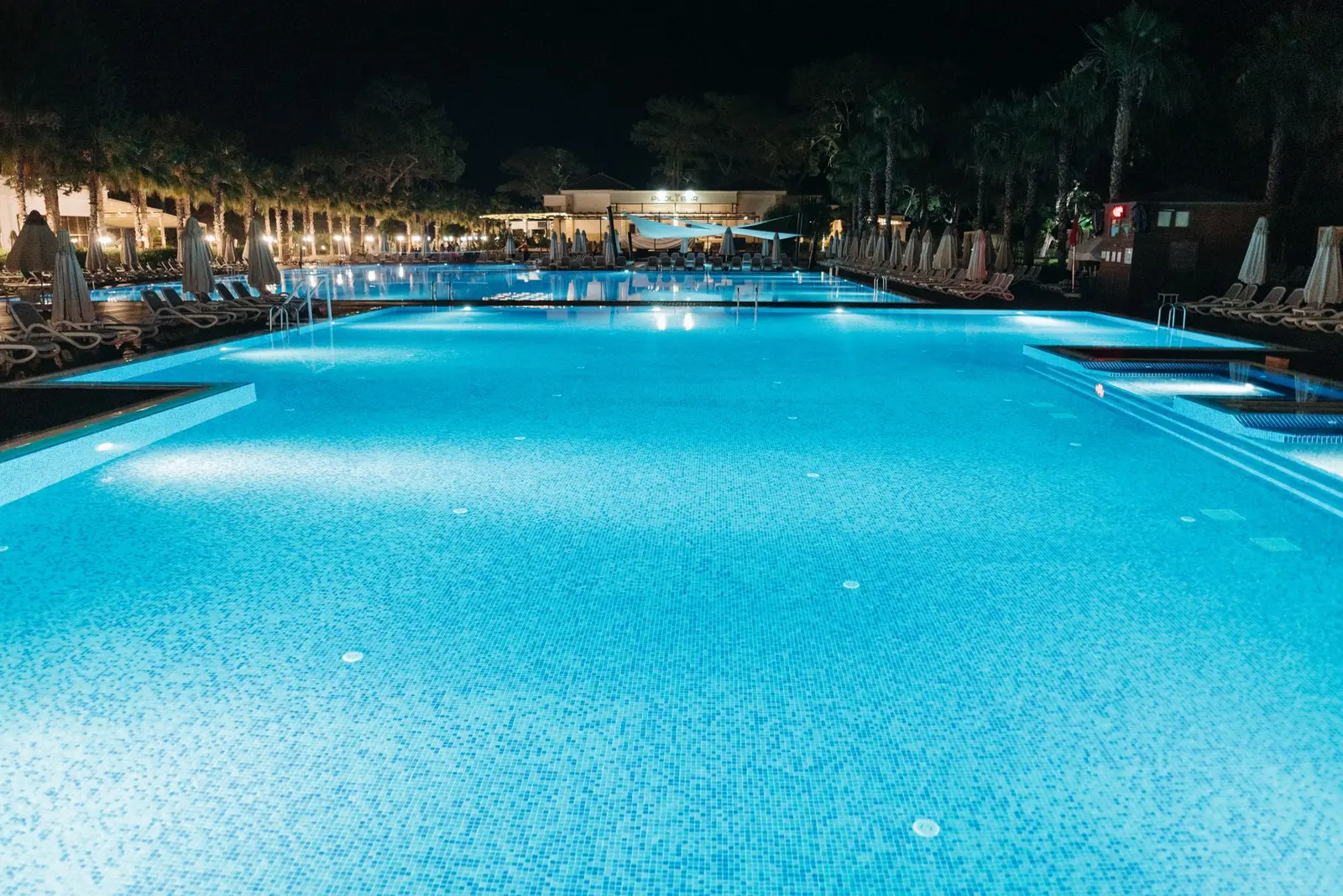
Glass mosaic is made of small glass pieces, usually set on a mesh sheet. It reflects light and gives the water a bright, rippled look, which is why it is popular for waterlines and feature bands. Glass is not a good choice for walking surfaces, because wet glass can be slippery. Glass is also non-porous, so it does not soak up water in the way some other materials do.
Porcelain
Porcelain is a dense, fired clay tile. Its low water absorption makes it strong and hard to damage, which suits decks, steps and floors. It comes in matte, textured and polished finishes. A polished surface looks sharp, but it can be slippery when wet, so most pool decks use a textured or matte finish instead.
Ceramic
Ceramic tile is usually less dense than porcelain and often costs less. It can look good on walls and inside the pool. Because it absorbs more water, it is less suited to areas that will face strong sun and large temperature changes every day. A textured ceramic can still work around the pool if the product data sheet supports that use.
| Tile type | Best used for | Main limitation |
|---|---|---|
| Glass mosaic | Waterline, walls, feature bands | Slippery, so it should not be used where people walk |
| Porcelain (textured or matte) | Deck, steps, shallow floor, walls | Polished finishes are slippery when wet |
| Ceramic | Walls, pool interior, lower-traffic areas | Less dense, so it absorbs more water than porcelain |
How does Dubai's heat affect pool tiles?
Dubai's heat is the main reason tile choice matters here. The 1991 to 2020 NOAA normals for Dubai International Airport show average daily highs of around 41 to 42 °C in July and August, with nights that stay near 31 °C. Surfaces expand in the sun and shrink as they cool, and that movement happens every day for months.
Two effects matter most. The first is colour fading. Strong sun can fade weaker pigments, so ask the supplier whether the colour is UV stable. The second is movement. Large tiled areas need movement joints, which are small gaps filled with a flexible material, so the surface can expand and contract without cracking. Your installer should show where these joints go on the plan.
Dark and glossy tiles can feel very hot in direct afternoon sun. A simple check is to place a sample on the spot where it will be used, leave it in the sun in the afternoon, and touch it with a bare foot before you commit. Lighter colours and textured finishes usually stay cooler.
How do pool water and chemicals affect tile?
Tile sits in water treated with chlorine and other chemicals, so the water balance affects how long the tile keeps its look. The main factor is pH, which measures how acidic or alkaline the water is. The US Centers for Disease Control and Prevention (CDC) advises keeping public pool water between pH 7.0 and 7.8, with free chlorine at a minimum of 1 part per million (ppm). These are public pool guidelines rather than Dubai rules, but they give a clear reference point.
When pH runs high, chlorine works less well and the water can turn cloudy. When pH runs too low, the water can wear down cement grout and some finishes over time. Keeping the water balanced helps the tile last longer, and it is easier than repairing damage later. For the wider routine, see the pool maintenance checklist for Dubai.
The waterline needs the most attention. Minerals in the water and dirt from oils and sunscreen can build up in a band where the water meets the tile. Cleaning this line regularly is much easier than removing a thick layer later. Use a pool-safe cleaner, and follow the product instructions before using any acid, because strong acid can damage grout and some tile finishes. If the water has already turned green, read how to fix green pool water before you start scrubbing tile.
Grout, joints and edges
Grout is the material between tiles, and it is often the first part to fail. Many pool installers use epoxy grout because it generally absorbs less water than standard cement grout and holds up better to chemicals. Cement grout can still be used in some places, but it usually needs more care and more frequent attention. Ask your installer which grout they plan to use and why.
Edges and corners need planning too. The coping, which is the cap around the top edge of the pool, should be fixed firmly and sealed where it meets the tile. Movement joints should also follow the tile layout, so the pattern does not crack along a random line when the surface moves.
How to choose slip-resistant pool tiles
Slip resistance depends on more than the tile type. The surface texture, whether the area is wet, and whether people walk barefoot or in shoes all matter. A surface that feels safe when dry can become slippery when wet, and pool areas are almost always wet.
Ask the supplier for the slip rating on the product data sheet. Check that the rating was tested for wet conditions and for barefoot use, since that is what most pool decks face. Slip ratings such as R10 or R11 are common in the tile industry, but a number is only useful when you also know the test standard behind it.
When do pool tiles need repair or resurfacing?
Pool tile problems usually start small. A few loose or cracked tiles are a repair job. Damage that covers large areas, or that keeps coming back in the same place, may point to a bigger issue, such as movement in the pool shell, poor adhesive, or water that has been out of balance for a long time.
Signs that point to tile repair
- A few tiles are loose, cracked or lifting at the edges.
- Grout is missing or crumbling in small patches.
- Stains or scale sit in one area rather than across the whole pool.
Signs that point to resurfacing
- The finish feels rough across most of the pool, even after cleaning.
- Staining or etching returns soon after cleaning.
- Cracks appear in many places, or the same area keeps failing.
Resurfacing replaces the pool's interior finish, which may be plaster, aggregate or tile. It costs more than a repair, and how long the new finish lasts depends on the material and on how well the water is cared for. Plaster finishes are often reported to need attention sooner than pebble or quartz aggregate finishes, so the choice can affect how often you need this work. If you are unsure, a site visit is the best way to find out. Your installer can check the shell, the tile bond and the water balance before recommending a fix.
Before any major renovation, check the requirements with your community developer or Dubai Municipality. Approval rules can differ between communities, and it is better to confirm them first than to find out halfway through the job.
How to check pool tiles before you buy
- Ask for a sample of each tile and check the colour in daylight and in afternoon sun.
- Read the product data sheet for slip rating, water absorption and UV stability. If the supplier cannot give you these details, treat that as a warning sign.
- Confirm the batch number. Tiles from different production runs can vary slightly in colour, so order all the tile for one area from the same batch.
- Ask the installer for a written plan that shows the tile layout, the movement joints and the grout type.
Pool deck tiles and deck design ideas
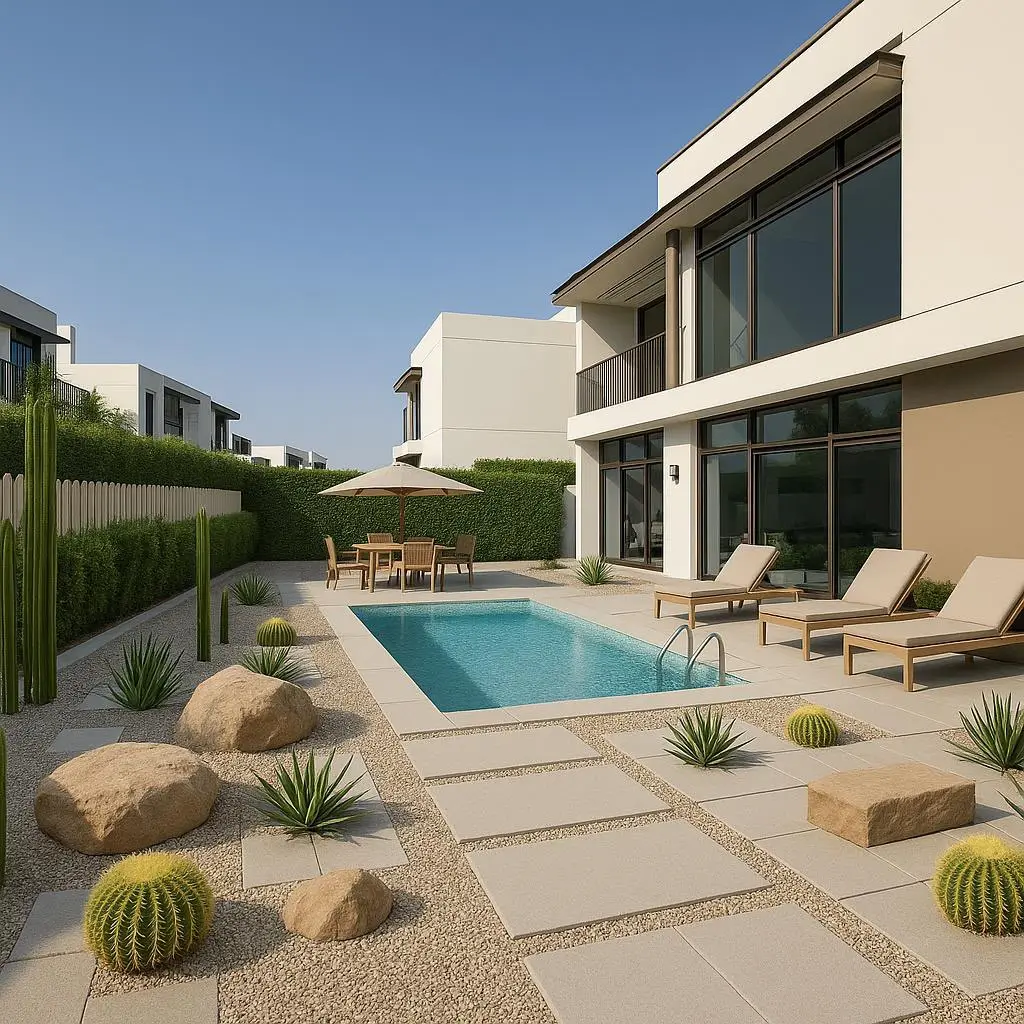
The deck around a pool gets the most foot traffic, sun and water splashing, so it needs its own tile choice. Many people choose the same tile for the pool and the deck, but the deck usually needs a finish with more grip and a lighter colour that reflects heat.
- Textured or matte porcelain: a common choice for decks because it gives grip when wet.
- Light colours: they stay cooler underfoot than dark stone or tile.
- Natural stone with a textured finish: a good option where a more natural look is wanted, if it is sealed and checked for slip.
- Drainage: the deck should slope away from the pool so water drains off, not back in.
Check the slip rating and the data sheet for any tile before you buy it, and ask the supplier whether it was tested for wet, barefoot use.
Getting help with pool tiles in Dubai
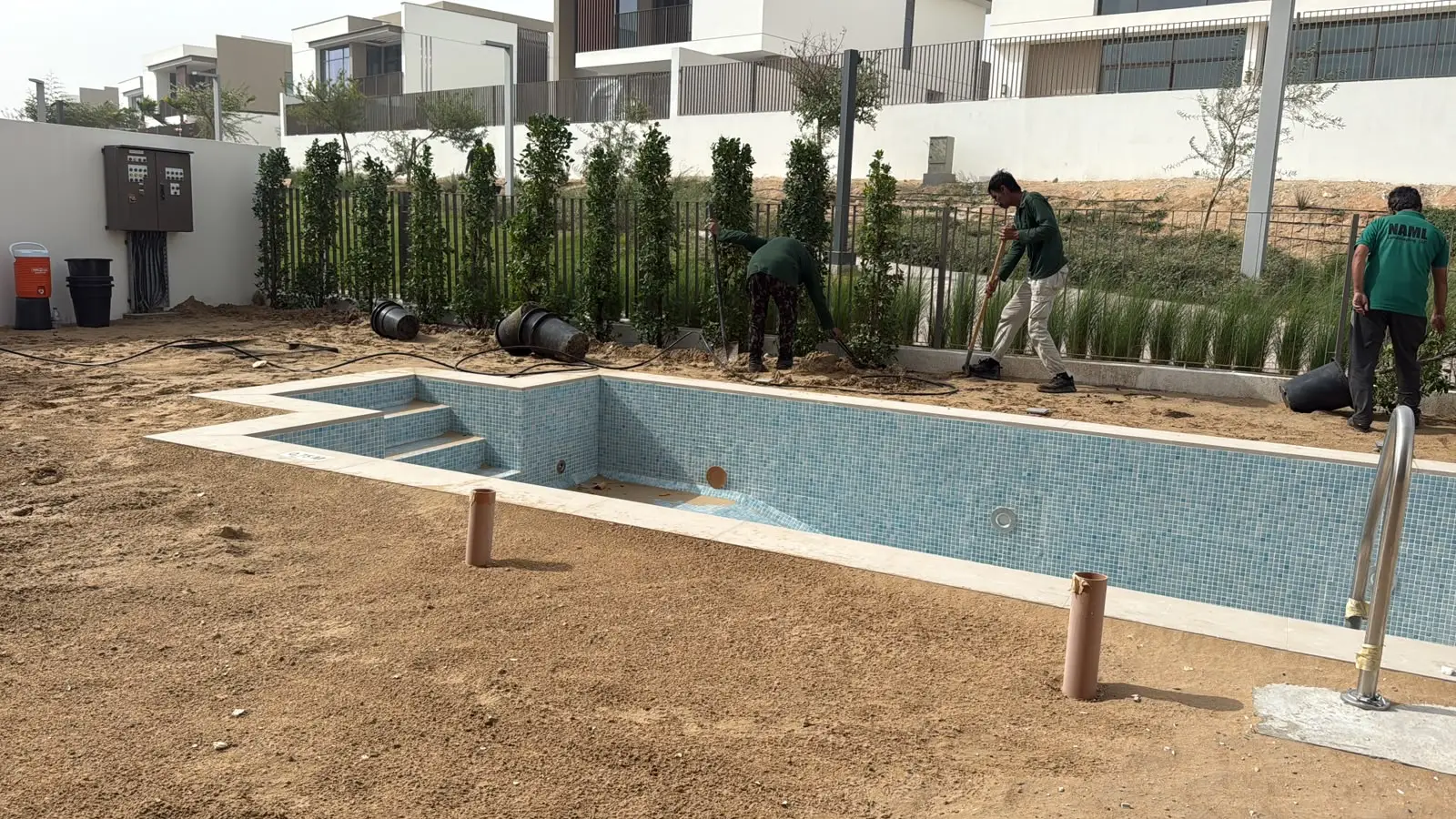
NAM Landscaping handles pool construction and renovation in Dubai, and tile and finish work can be part of that scope. Every project starts with a free site visit and a written, itemised quote, so you can compare tile options and their costs on paper before work begins. New pool construction starts from AED 65,000 per project, and the final price is confirmed after the site visit.
If you are planning a larger project, the guide to swimming pool construction costs in Dubai explains what affects the budget. For repairs to an existing pool, see pool repair in Dubai.