
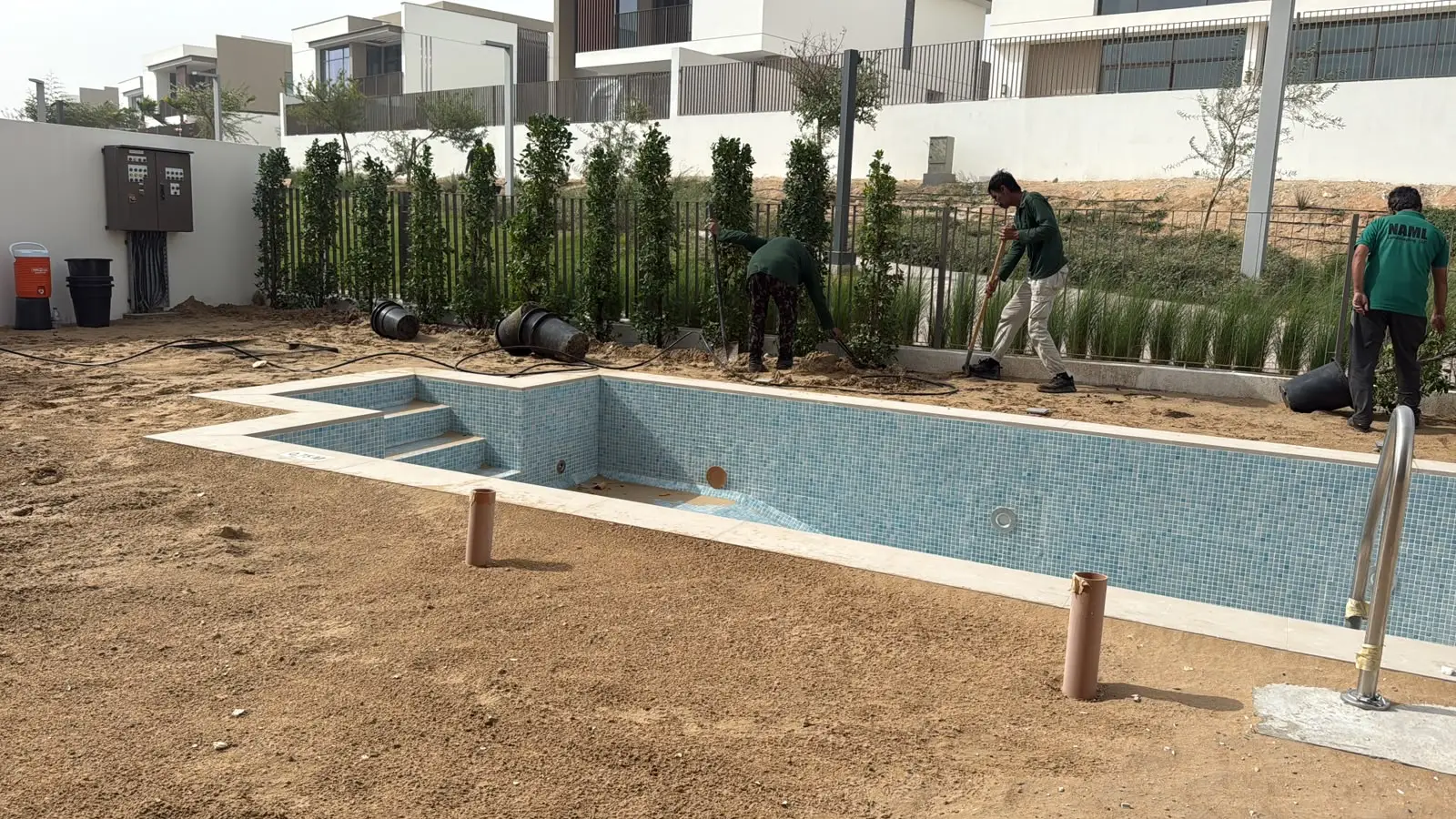
Decades, not seasons
Correct structure and waterproofing are invisible on day one and priceless in year ten. We build for the long term because we also maintain pools for a living.
Swimming Pool Construction in Dubai
A pool is the heart of a Dubai backyard, and a structure that has to be right the first time. We design, engineer and build villa pools with quality finishes, efficient equipment and a clean, documented handover.
Overview
Building a swimming pool in Dubai involves more than digging a hole: community NOCs and authority approvals, structural engineering for local soil conditions, waterproofing that must be perfect before finishes go on, and equipment sized for a climate where the pool runs hard ten months a year. Skipping steps here is how pools end up leaking in year three.
As your swimming pool builders in Dubai, we manage the full sequence, design and visualisation, approvals, excavation and structure, waterproofing, premium tile or aggregate finishes, plant room and commissioning. Most clients build the pool as part of a wider landscape project, pairing it with decking, shade and lighting so the whole space is finished together, then keep it perfect on a maintenance plan from day one.
Why It Matters
Correct structure and waterproofing are invisible on day one and priceless in year ten. We build for the long term because we also maintain pools for a living.
Right-sized variable-speed pumps, efficient filtration and smart automation can halve a pool's energy bill versus builder-grade equipment.
Family splash zone, lap lane, plunge pool for a compact courtyard or a showpiece with a sunken seating edge, designed around how you'll actually use it.
Structure, finishes, equipment and surrounding landscape from one team, no gaps between contractors for problems to hide in.
Problems We Solve
What It Costs
Every pool is quoted by design and scope after a free site visit, because size, structure and finishes vary so much between villas. The main cost drivers:
Indicative starting price for a compact villa pool. Your figure is fixed in a staged, written quotation after the site visit.
Competitive, transparent pricing. A staged quotation before we excavate, so you can adjust scope with full visibility.
In Depth
Swimming pool construction in Dubai follows a fixed order: design, approvals, excavation, structure, waterproofing, finishes, equipment and commissioning. Pool installation is often used to mean the same full job. Each stage covers up the one before it, so a mistake in the structure or waterproofing becomes very expensive to fix once the tiles are on.
Below you'll find what happens at each stage, the design, finish and equipment choices you'll make along the way, and how to compare pool construction companies before you sign. If budget is your main question, the guide to swimming pool construction costs in Dubai covers price drivers and running costs in detail.
Start with how you'll actually use the pool, then fit the shape to the garden. Most villa pools fall into one of these types:
Placement matters as much as shape. Check where the afternoon sun falls, which neighbours can see in, where the plant room (the small room or enclosure for the pump and filter) will sit, and how the pool connects to the house, deck and shade. A 3D visualisation at this stage lets you test sight lines and walkways before anything is dug. For ideas on planting, paving and lighting around the water, see these pool landscaping ideas.
Approvals come before any digging, and there are usually two of them. Most gated communities ask for a no-objection certificate (NOC) from the master developer or community management, based on drawings that show the pool's position, setbacks and equipment. Separately, Dubai Municipality's private swimming pool safety guidelines say every pool at a private villa must be registered with the Municipality before construction starts, and later changes such as adding a slide or diving board need approval too.
The same guidelines set out the safety enclosure. These rules affect the layout, so build them into the first sketch rather than adding a fence at the end:
Requirements differ between communities and can change, so confirm the current rules with your developer and Dubai Municipality before you sign a build contract. A builder who manages the paperwork should tell you which approvals your plot needs and how long they typically take in your community.
Once approvals are in, the pool is marked out and dug. Site access is the first practical issue: a villa with a narrow side passage may need smaller machines or more hand digging, which adds time. Loose sand or a high water table can also mean the sides need temporary support or the hole needs pumping dry.
Most Dubai villa pools are built in reinforced concrete. Steel bars are fixed to the engineer's drawings, pipes and light fittings are set in place, and then the concrete shell is cast. Ask to see the steelwork before the concrete goes in, because it can't be checked afterwards.
Concrete holds the pool's shape, but it is not fully watertight on its own, so a waterproofing layer goes on the shell before any tiles. This layer has to seal the corners, the steps and every point where a pipe or light passes through the wall, because those joints are where leaks usually start.
A careful builder then fills the bare shell and watches the water level for several days. If the level drops with no other explanation, the leak is found and fixed while the surface is still exposed. Ask whether this water test is in the programme and whether you'll receive photos of it.
The finish is the part you see and touch, and in Dubai it has to cope with strong sun, warm water and constant pool chemicals. The three main options compare like this:
| Finish | Look and feel | Points to weigh |
|---|---|---|
| Porcelain or ceramic pool tiles | Clean and uniform, with a wide colour range | Cost-effective and easy to repair one tile at a time. Use tiles, adhesive and grout made for permanent immersion. |
| Glass mosaic | Reflective, rich colour, follows curves well | Costs more and takes longer to lay. Often used on the waterline or one feature wall to control the budget. |
| Aggregate (pebble or quartz) | Textured and natural, with no grout lines | Rougher underfoot than tile. The shade of the aggregate changes the colour of the water. |
The coping (the edge stones around the pool) and the deck matter as much as the pool tiles. Choose light-coloured, slip-resistant stone or porcelain, because dark surfaces get very hot in summer. Planning the deck with our hardscaping and paving team at the same time avoids levels and drainage being worked out twice.
The equipment in the plant room (where the pump and filter sit) runs the pool every day, so these choices affect your electricity bill for years. The main parts are:
A pool build runs through these stages in order. Larger pools, infinity edges and detailed mosaic work take the longest on site, so expect those projects to sit at the upper end of the build time.
Because each stage hides the one before it, agree inspection points in advance, for example after the steelwork and after the water test. A problem found at one of those points costs far less to fix than one found in a finished pool.
Many older villas already have a pool that looks tired or loses water. The deciding factor is the concrete shell. If it is sound, renovation usually means new waterproofing, resurfacing with fresh tiles or aggregate, and replacing old pumps and filters with efficient equipment. Smaller problems, such as a few loose or cracked tiles, can often be handled as a pool repair, including pool tile repair, without a full renovation.
A rebuild makes more sense when the shell has cracked right through or moved, when leaks return after repairs, or when you want a very different size or shape. An inspection with the pool drained shows which option fits your pool.
Pool builders in Dubai range from design-and-build companies to contractors who handle only part of the job, and a quote for "pool installation" may cover very different scopes. Ask every company the same questions so you can compare quotes on equal terms:
The lowest quote often leaves out items that others include, such as the safety enclosure, coping, deck repairs or a chiller connection. Line the quotes up item by item before you compare totals. Once the pool is running, a pool maintenance checklist for Dubai helps you protect the finish and equipment from the first month.
If you'd like these questions answered for your own garden, a free site visit gives you a design direction and a written, itemised quote before any work starts.
Our Process
Site survey, brief, concept design and a detailed fixed quotation.
We prepare drawings and handle community and authority permissions for you.
Excavation, structure, waterproofing, finishes and plant room, supervised daily, documented weekly.
Water balanced, systems tuned, full walkthrough, and your first month of care included.
Why NAM Landscaping
Recent Work
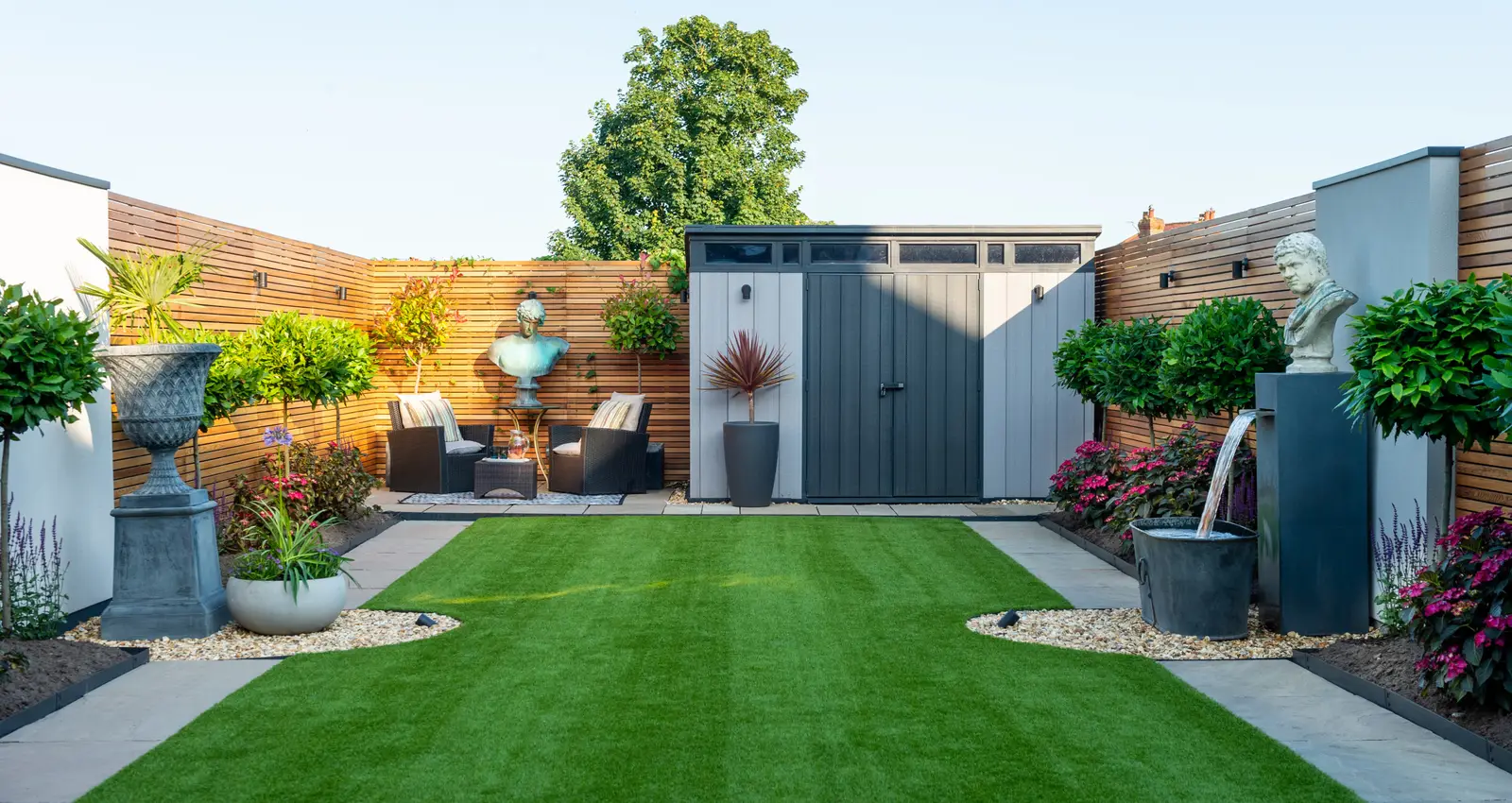
An 11-metre family pool with shallow kids' ledge, sunken seating and integrated lighting, designed and built alongside the villa's new landscape.
See all projects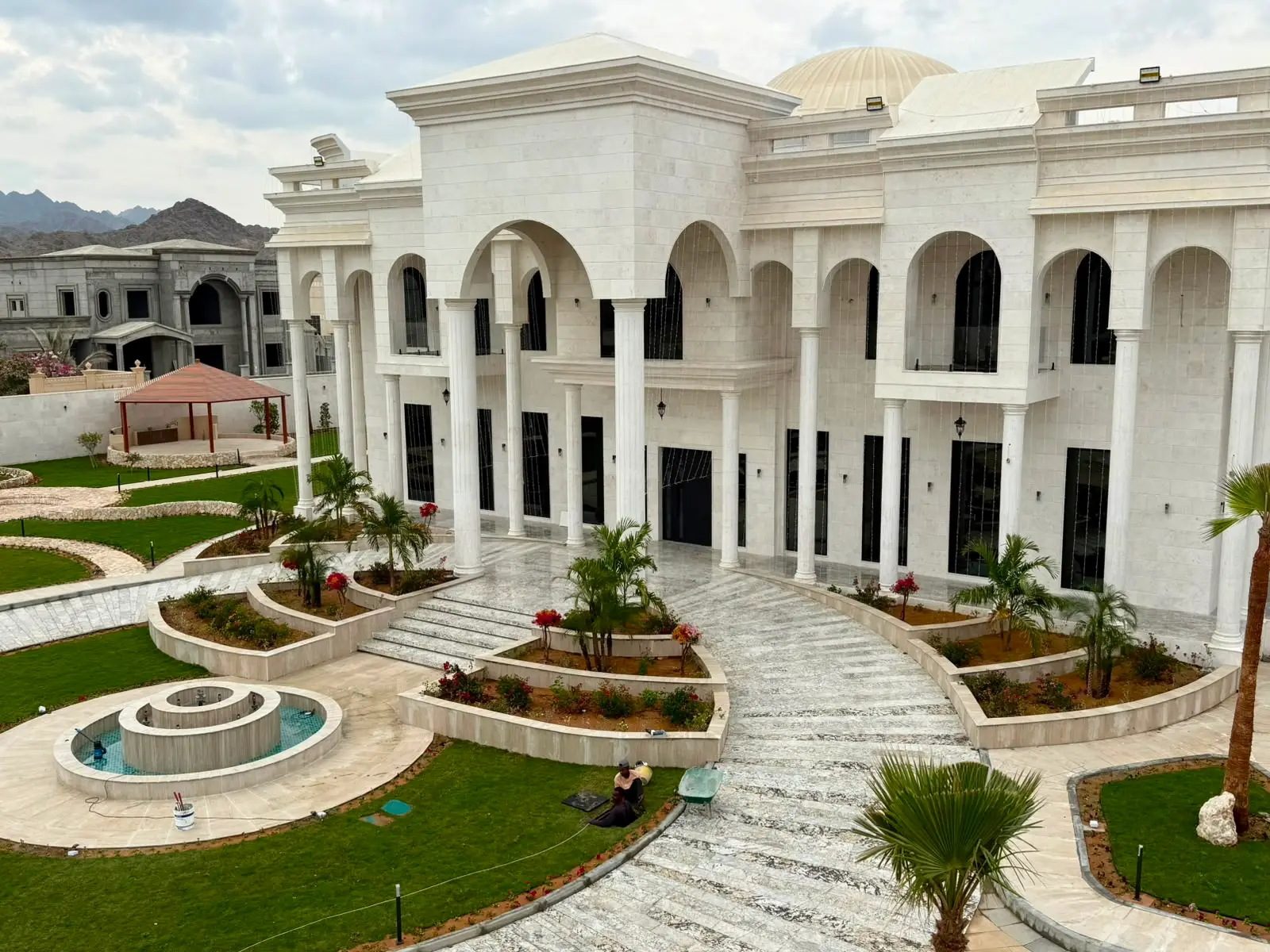
Full renovation of an ageing pool: new waterproofing, mosaic finish, energy-efficient plant and a glass-edge water feature.
See all projectsGood to Know
Typically 8–14 weeks on site once approvals are in place, depending on size and finishes. Approvals themselves vary by community, we start that paperwork immediately so it overlaps with design time.
Yes, your community developer (and in some cases Dubai Municipality) must approve the design before work starts. We prepare the engineering drawings and manage the application as part of every build.
Villa pools span a wide range depending on size, structure, finishes and equipment. After a site visit we provide a detailed fixed quotation broken down by stage, so you can adjust scope with full visibility.
Reinforced concrete remains the standard for Dubai villas: fully custom shapes, premium finishes and proven longevity in local conditions. We'll discuss alternatives honestly where a different approach genuinely suits your site and budget.
Often, yes, new finishes, waterproofing and modern equipment can transform a structurally sound older pool at a fraction of new-build cost. Our assessment tells you honestly which side of the line your pool is on.
Often yes, with a plunge pool or a compact rectangular pool, but the garden still needs room for the safety enclosure, a plant room for the equipment and access for machinery. A site survey shows what fits. Check the setback and approval rules with your community developer and Dubai Municipality before you settle on a size.
It is not essential, but outdoor pool water can become uncomfortably warm in July and August, and a chiller brings the temperature down. Many units can also warm the water in winter. If you may want one later, plan the power supply and plant room space during construction, because adding them afterwards usually means opening up finished work.
Yes. Dubai Municipality's private swimming pool safety guidelines require an enclosure around villa pools: a wall or fence at least 1.20 metres high, with gates that open away from the pool and close and latch by themselves. A safety cover or net is recommended as an extra layer. Confirm the current rules and your community's design requirements before construction starts.
Resurfacing means removing a worn pool finish and applying a new one, such as fresh tiles, mosaic or an aggregate finish. A pool usually needs it when tiles are loose, cracked or stained beyond cleaning, or when the surface feels rough underfoot. If the pool is also losing water, the waterproofing behind the finish should be checked and repaired at the same time.
Related Services
Book a free design consultation and get a clear, staged quotation for your villa pool.