
Natural cooling and calm
Moving water cools the air around seating areas and replaces traffic hum with something you actually want to hear.
Fountains & Irrigation in Dubai
A garden fountain or wall cascade brings the sight and sound of water to your home. Our smart irrigation keeps the whole garden alive through the Dubai summer.
Overview
NAM Landscaping designs and installs fountains and water features across Dubai, from wall cascades to garden fountains, plus the drip and sprinkler irrigation that keeps Dubai gardens green. Both services are detailed below.
Water Features in Dubai
Most failed water features fail predictably: evaporation outpaces top-up, hard-water scale chokes pumps, algae blooms in warm still corners, and the 'relaxing' feature becomes a weekly chore. Every one of those problems is solvable at the design stage, auto-fill systems, accessible pump chambers, correct flow rates and finishes that hide mineral marks.
We build wall cascades and spillways, freestanding and sculptural fountains, reflecting pools, pondless waterfalls (all the sound, none of the open water) and feature walls that double as privacy screens. Paired with underwater lighting they become the garden's evening centrepiece, and as part of a full landscape design or pool build, they tie the whole space together.
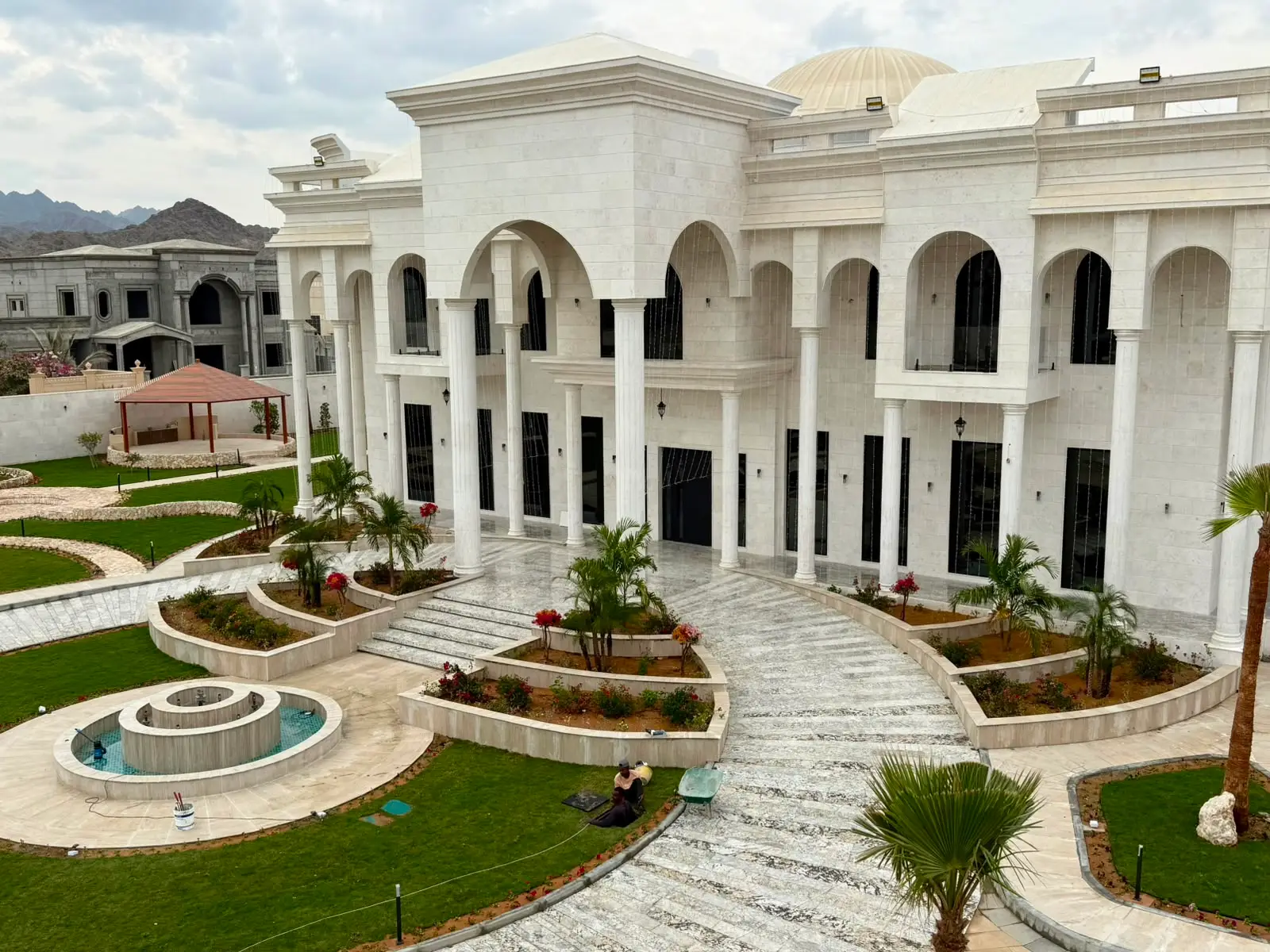
Moving water cools the air around seating areas and replaces traffic hum with something you actually want to hear.
Falling water is the most elegant sound-masking there is, conversations stay private and the city fades.
Gardens need a heart. A well-placed feature draws the eye from inside the house and anchors the whole design.
Auto top-up, accessible pumps and correct treatment mean minutes of care a month, not hours a week.
Irrigation Installation & Repair in Dubai
Most struggling Dubai gardens share one root cause: irrigation that was never designed, only installed. Identical emitters on palms and ground cover, zones that flood one bed and starve the next, controllers still on winter timing in July. The plants get the blame; the pipework deserves it.
We design zoned systems matched to planting, drip for beds and trees, pop-ups for lawns, with smart controllers that adjust seasonally and stop watering when it rains. Existing system playing up? We trace leaks, replace clogged emitters, rebalance zones and reprogram schedules. Irrigation is also where every landscaping project of ours begins, and checking it is built into every maintenance visit.
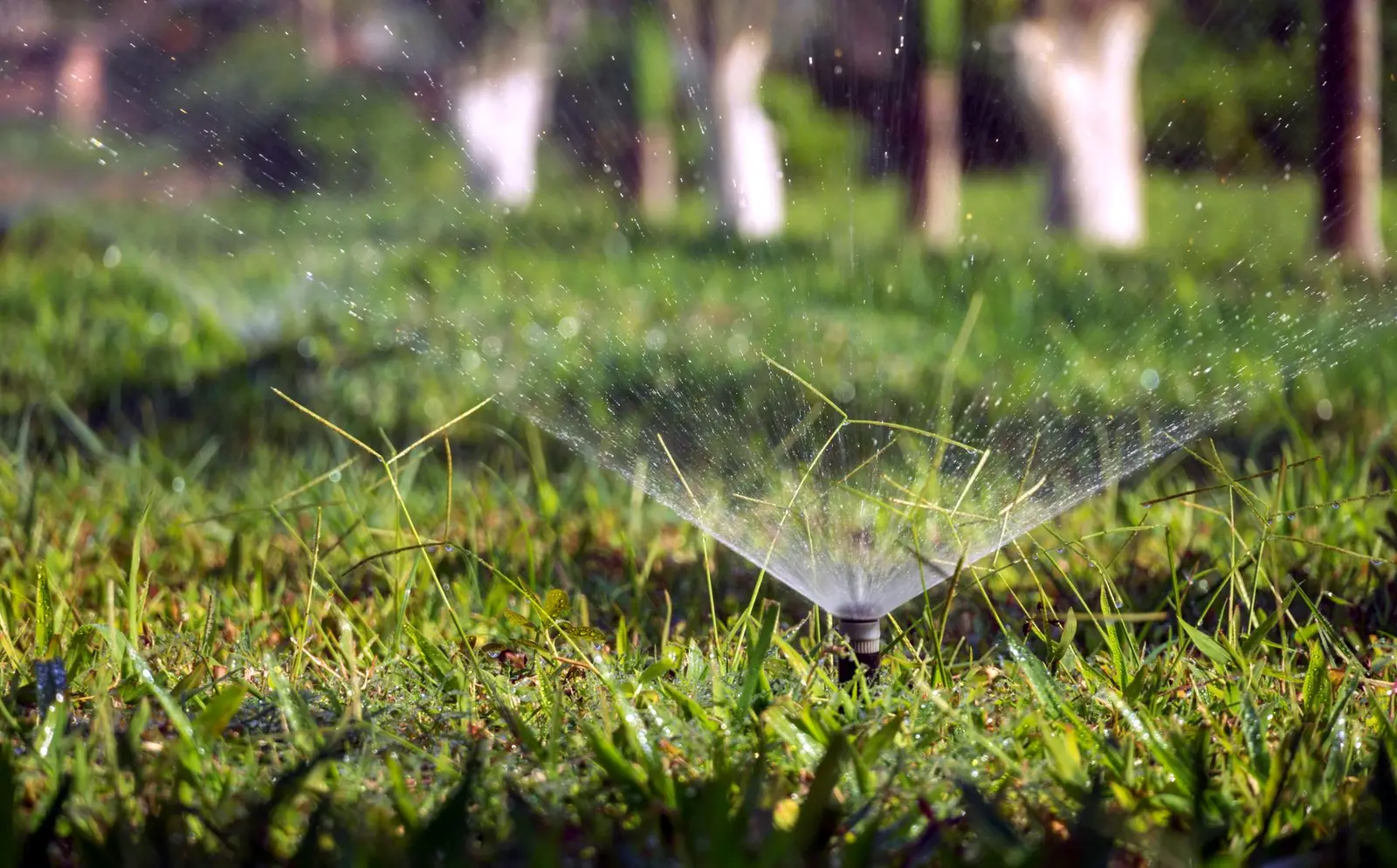
Right water, right place, right time, the difference between surviving August and sailing through it.
Drip irrigation puts water at the roots instead of the air. Paired with smart scheduling, savings of 30–50% on garden water are routine.
Holidays, busy weeks, summer peaks, the system adapts and waters correctly whether you think about it or not.
Balanced zones and clean emitters end the cycle of overwatered corners and dying edges.
What It Costs
Fountains and cascades are quoted by design and scale, while irrigation is priced by garden size and system type. The main cost drivers:
Indicative starting prices for a typical Dubai villa. Fountains, cascades and ponds vary with size, pump, lighting and stonework, all fixed in writing after a free assessment.
Competitive, transparent pricing. An itemised quote before installation, with efficient pumps and smart controllers that cut your running costs.
In Depth
Water features in Dubai work best when they are planned around three local facts: strong summer sun, high evaporation and the cost of running a pump every day. Choose the right type, size and pump for your space, and a fountain, water wall or pond becomes one of the easiest parts of the garden to live with.
Irrigation needs the same planning, because it shares the water supply, the power and often the trenches with any feature you add.
Start with the space you have and where you will see the feature from, not with a photo of someone else's garden. A feature that suits a courtyard can look lost on a large lawn, and a pond squeezed into a narrow side return is hard to clean.
| Feature type | Best for | What to plan for |
|---|---|---|
| Wall fountain | Courtyards, front garden entrances, small terraces | A wall that can take the weight, and a basin deep enough to stop splash in the wind |
| Water wall | Privacy screens, boundary walls, seating areas | Even water flow across the full width, a wider catch basin and a stronger pump |
| Freestanding garden fountain | Focal points on a lawn, at the end of a path or in a front yard | A level, solid base and a hidden route for the cable and top-up pipe |
| Fish pond or koi pond | Larger back gardens with some natural shade | Depth, filtration, aeration and regular water testing |
| Garden waterfall or rock cascade | Sloping plots, poolside areas, larger landscapes | Stone selection and a reservoir that holds the water when the pump stops |
For a front garden water feature, think about the view from the street and from the main door, and keep the scale in proportion to the entrance. Where space is tight, our guide to small garden ideas for Dubai shows how to fit a feature in without crowding the garden. A compact outdoor fountain or a small raised pond often suits these spaces, and low planting around it keeps leaves out of the pump.
Around a pool, a cascade or water wall can link the pool and garden visually, as shown in these pool landscaping ideas.
A fish pond in Dubai holds living animals, so it needs more planning than a fountain. The main summer problem is oxygen. The US Geological Survey explains that warm water holds less dissolved oxygen than cold water. Fish also generally need more oxygen as the water warms, so the hottest weeks carry the most risk.
Every design choice for a koi pond in Dubai therefore aims to keep the water cooler and better supplied with oxygen:
If you want the sound and movement of water without caring for fish, a pondless waterfall or a planted pond without fish is simpler.
Every recirculating feature runs on a pump, so check what that pump will cost to run before you choose one. Multiply the wattage by the hours it runs to get energy use, then multiply that by your tariff to get the cost.
For example, take a small fountain pump rated at 100 watts that runs 24 hours a day:
The pump's extra units are charged at whichever slab your household already reaches, so a home with high overall use pays the higher rate. A larger 400 watt waterfall pump running 12 hours a day would use 144 kWh a month, or about AED 33 to AED 55 before surcharges.
These figures are illustrations, not quotes, but they show why pump sizing matters. An oversized pump costs more every month, and it can also make the feature splash and lose water faster.
Two easy savings: put the feature on a timer so it runs when you are actually outside, and choose a pump with the flow rate the design needs rather than the biggest one available. Fish ponds are the exception, because their filtration and aeration must run all the time.
Good irrigation design starts by grouping plants with similar water needs into the same zone. A zone is a section of pipework controlled by one valve, so everything on it is watered for the same length of time.
Palms in full sun, shaded shrubs and a lawn all need different amounts of water. Put them on one zone and at least one of them will be overwatered or underwatered.
When planning zones, look at:
Timing matters as much as layout. The US EPA's WaterSense programme advises against midday watering, because the sun evaporates much of the water before it reaches the plants. It also describes smart controllers that use weather or soil moisture data to skip watering when plants do not need it.
After a heatwave or a power cut, check that the controller still holds the right run times, because some controllers can lose their settings. Our Dubai garden irrigation guide covers drip spacing and schedules in more detail.
Both water features and irrigation stay reliable when small checks happen on a regular rhythm. This calendar shows what to check and when.
| How often | Water features | Irrigation |
|---|---|---|
| Weekly | Clear leaves and sand from the basin, check the auto-fill is working | Walk each zone while it runs and look for dry patches or puddles |
| Monthly | Rinse the pump intake and pre-filter, test pond water if you keep fish | Clean the main filter, check sprinkler heads are not tilted or blocked |
| Each season | Descale nozzles and spillways, check lighting seals | Change controller run times for summer or winter |
| Yearly | Full drain, clean and pump service | Flush the lines, replace worn emitters, pressure-test each zone |
If you would rather not keep track of this yourself, both jobs can be added to a regular garden maintenance plan. A feature's lights can also be planned with the wider landscape lighting, so they are safe and easy to service.
To find out which feature and irrigation layout suits your garden, book a free site visit and you will receive a written, itemised quote before any work starts.
Why NAM Landscaping
Good to Know
Designed responsibly, no. Recirculating features reuse the same water continuously; losses come only from evaporation and splash, which good design minimises. A typical feature uses a small fraction of what a natural lawn of the same footprint would drink.
With auto-fill and proper treatment built in: topping up chemicals occasionally, a seasonal pump-chamber clean, and a yearly service. Features we design are deliberately boring to own, that's the point. We can also fold care into a maintenance contract.
Moving water doesn't, mosquitoes need still water to breed. Circulation, skimming and correct treatment keep features mosquito-free; stagnant neglected ponds are the culprit, and we don't build those.
Small spaces are where water works hardest, a slim wall cascade or ceramic fountain transforms a courtyard. Scale and proportion matter more than size; that's a design job, and it's ours.
We specify scale-tolerant finishes, dose against mineral build-up and design pump access for easy descaling. White crusty fountains are a specification failure, avoidable from day one.
Usually both, zoned separately: drip lines for planting beds, trees and hedges (precise, low-evaporation watering at the roots) and pop-up sprinklers for lawn areas. A mixed, properly zoned system is the Dubai standard we install.
It changes through the year, typically early-morning daily watering in summer, reduced frequency in winter. Smart controllers handle this automatically; it's also exactly what we tune on every maintenance visit.
Dubai's hard water leaves calcium deposits inside emitters, and fine sand finds its way into lines. Filters at the source, periodic flushing and pressure-compensating emitters largely solve it, we build all three into our installs.
Yes, including pump selection and pressure setup, tank float protection and filtration. Many villas run irrigation from a dedicated tank, and we configure the whole chain.
Unexplained water bills, persistently damp paving, unusually lush patches or pressure drop across a zone are the classic signs. We pressure-test zone by zone to locate the fault before any digging.
It depends on size, pump, stonework and lighting. A small wall fountain in a courtyard costs far less than a multi-tier cascade or a filtered koi pond. As an indicative starting price, NAM Landscaping quotes garden water features from AED 6,000 per project, and every quote is confirmed in writing after a free site visit that checks space, power and water access.
Yes, but the pond has to be designed for the heat. Warm water holds less oxygen while fish need more of it, so a koi pond in Dubai needs good depth, shade over part of the surface, constant aeration and biological filtration sized for the number of fish. A shallow, sunny pond with a small pump is the setup most likely to lose fish in August. In a heatwave, add extra aeration and test the water more often.
A wall fountain usually has one spout or spillway that pours into a basin, so it suits small courtyards, entrances and balconies. A water wall is a wider surface, often stone, glass or tile, with a thin sheet of water running down its face. Water walls make a bigger visual statement and work as privacy screens, but they need a wider basin and more pump capacity.
Multiply the pump's wattage by the hours it runs. A 100 watt pump running all day uses about 72 kWh a month, which is roughly AED 17 to AED 27 at DEWA's residential slab rates of 23 to 38 fils per kWh, before the fuel surcharge and VAT. A timer and a correctly sized pump keep this figure low.
Related Services
Guides
Book a free site visit for a fountain, cascade or efficient irrigation system across Dubai.
Choose your scope so the team can prepare a relevant site visit and written quotation. The survey confirms the equipment, quantities, access, approvals and final price.