
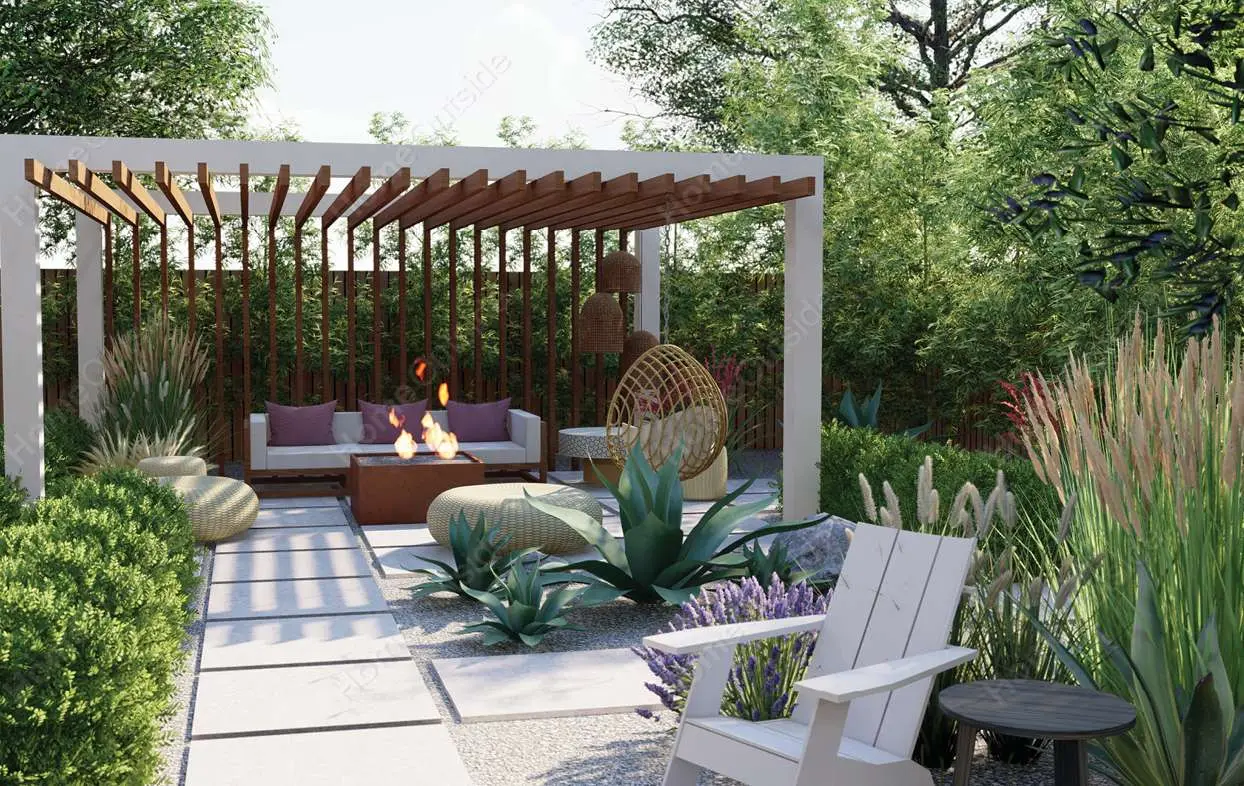
Months more outdoor living
Shade drops perceived temperature dramatically, breakfast outside in May and dinner outside in September stop being heroic.
Pergola & Shade Structures in Dubai
Shade is the difference between a garden you look at and a garden you live in. We design and build aluminium and wooden pergolas, canopies and shade sails that turn Dubai terraces into genuine outdoor rooms.
Overview
A pergola in Dubai has a harder job than anywhere temperate: intense UV that bleaches cheap finishes, summer surface temperatures that punish bad material choices, and wind loads that demand proper fixing, plus a community NOC before anything goes up. Done right, it adds an entire room to your home for most of the year.
We build powder-coated aluminium pergolas (including motorised louvred roofs that open to the winter sky and seal against summer sun), treated wooden pergolas for a softer look, and tensioned shade sails for pools and play areas. Most projects integrate lighting, fans and planting, and a pergola is the natural anchor of any outdoor living upgrade.
Why It Matters
Shade drops perceived temperature dramatically, breakfast outside in May and dinner outside in September stop being heroic.
Outdoor furniture, decking, kitchens and even artificial grass last visibly longer out of direct UV.
A well-proportioned pergola gives the garden structure and the house a better silhouette, it's the feature photos get taken under.
Louvred roofs let you choose: open stargazing nights, sealed shade at noon, rain protection on the five days a year it matters.
Problems We Solve
What It Costs
Every pergola is quoted to its span, structure and finish after a site visit. The main cost drivers are:
Indicative starting prices. Motorised louvred roofs cost more than fixed aluminium; your exact price is fixed in writing after a site visit.
Competitive, transparent pricing. Fixed in writing before fabrication begins, with no hidden extras.
In Depth
The right pergola in Dubai depends on three things: how you will use the space, how much upkeep you will accept, and what your community allows. Powder-coated aluminium suits most villa gardens because it copes with heat, UV and humidity and needs little care. Timber, WPC, fabric roofs and shade sails each suit a narrower set of needs. The sections below compare those options, then explain what drives the price and how approvals work.
Each material reacts differently to strong sun, coastal humidity and sand. The table compares the common choices on the points that affect how you use and look after the space.
| Type | Best for | Upkeep | Main limitation |
|---|---|---|---|
| Fixed aluminium pergola | Dining and seating areas that need reliable shade all year | Low: rinse off dust, check fixings | A solid roof can trap warm air if there is no gap or fan |
| Louvred (bioclimatic) aluminium | Spaces used both at noon and in the evening | Low to moderate: clean blades and gutters, check the motor | Higher cost; sand can collect in the blade channels |
| Retractable fabric roof | Owners who want the full sky open in winter | Moderate: fabric cleaning and eventual replacement | Usually needs retracting in strong wind |
| Wooden (timber) pergola, treated | A warm, natural look next to planting | Higher: periodic sanding and re-finishing | Can crack, warp or grey under strong sun if finishing is skipped |
| WPC (wood-plastic composite) | A timber look with less maintenance | Low: washing only | Can feel hot to the touch and fade; usually needs a metal frame for long spans |
| Bamboo or reed screening | Light, decorative shade on a small patio | High: often replaced after a few seasons | Weathers quickly in direct sun and dry heat |
| Shade sails | Pools, play areas and wide or irregular spaces | Moderate: re-tensioning and fabric checks | Needs very strong anchor points; fabric has a shorter life than metal |
If you are still choosing a look rather than a material, our guide to pergola and shade ideas for Dubai gardens shows how each type sits in different villa layouts.
A pergola is not always the answer. A tensioned shade sail can cover a pool or a children's play area that would otherwise need a very large, costly pergola. Because sails are angled, where you place them matters more than their size: set them to block the afternoon sun, which comes from the west.
A freestanding gazebo works when you want a separate seating spot at the end of the garden, away from the house walls. A wall-mounted awning or canopy is the lightest option for a single window or a narrow terrace.
All three are useful, but cheap versions are the most likely to fade, rust or blow loose. Judge them by frame thickness and fixings, not by the fabric alone.
You do not need a large garden for a pergola. A small pergola over a patio or a corner seating area can give a defined shaded spot without crowding the lawn. Keep posts slim, choose a roof that suits the space, and leave a clear walkway around it.
For privacy, side screens, slatted panels, outdoor curtains or climbing plants on one or two sides can block views from neighbouring plots. Check community rules first, since screens can change how the structure looks from the street.
A shade structure is only as safe as its foundations and anchors. Strong gusts and sandstorms push hard on a roof or a tight sail, and that force passes straight into the posts and fixings. So a sail needs posts set in proper footings, and bolting a pergola onto thin paving tiles is not enough.
For a louvred roof, ask how the blades behave in high wind and whether a wind or rain sensor closes them automatically. For a fabric roof, check the highest wind speed the manufacturer allows with the fabric extended, and plan to retract it when the weather turns.
Most Dubai villa communities treat a pergola as an exterior modification that needs the developer's or community manager's No Objection Certificate (NOC) before work starts. The rules differ by community. A 2018 Gulf News report found that Emaar and Nakheel set different conditions for pergolas and shades. Emaar asked for them to match the villa's wooden material, Nakheel capped them at 15 sq m in Jumeirah Village, and significant changes could also need Dubai Municipality approval.
Those examples are several years old and may have changed, so always check the current guidelines for your own community. Typical points to confirm are maximum size and height, distance from the plot boundary, colour and material, and whether the structure can be seen from the street.
Fitted aluminium pergolas from NAM Landscaping start from AED 650 per m², so begin by measuring the area you actually want covered. For example, a 4 m by 5 m dining area is 20 m². At that rate, a fixed aluminium pergola starts from AED 13,000 before any extras.
The price rises with a motorised louvred roof, longer spans, lighting or fans, or new footings. AED 650 per m² is an indicative starting price. Your exact figure is confirmed in a written, itemised quote after the free site visit. When you compare pergola companies in Dubai, ask each for an itemised quote covering the same size, material and fixings, so the totals are comparable.
If you are planning shade alongside paving, planting and lighting, our landscaping cost guide for Dubai helps you budget the whole garden rather than one feature at a time.
Many Dubai homeowners also search for car parking shades. These are a different type of structure from a garden pergola, with their own design rules. For shades over reserved parking beside roads, the Roads and Transport Authority sets technical requirements for external parking shades, including a minimum height of 2.5 m, a set distance from the road edge and approved shapes and colours. The same applies to a garage or car shade: check with your community developer for anything inside your plot. NAM Landscaping does not build car parking shades, but you can ask about shade for the rest of your garden during the site visit.
The quickest way to narrow these choices is to look at your own garden's sun path and fixing points, which is what the free site visit covers.
Our Process
We assess sun paths, sight lines and fixing options, then sketch the right structure for the space.
Detailed drawings and finishes for your sign-off, and your community's NOC, handled by us.
Precision-fabricated components installed with engineered footings, typically within days on site.
Lighting and accessories commissioned, structure cleaned and demonstrated.
Why NAM Landscaping
Recent Work
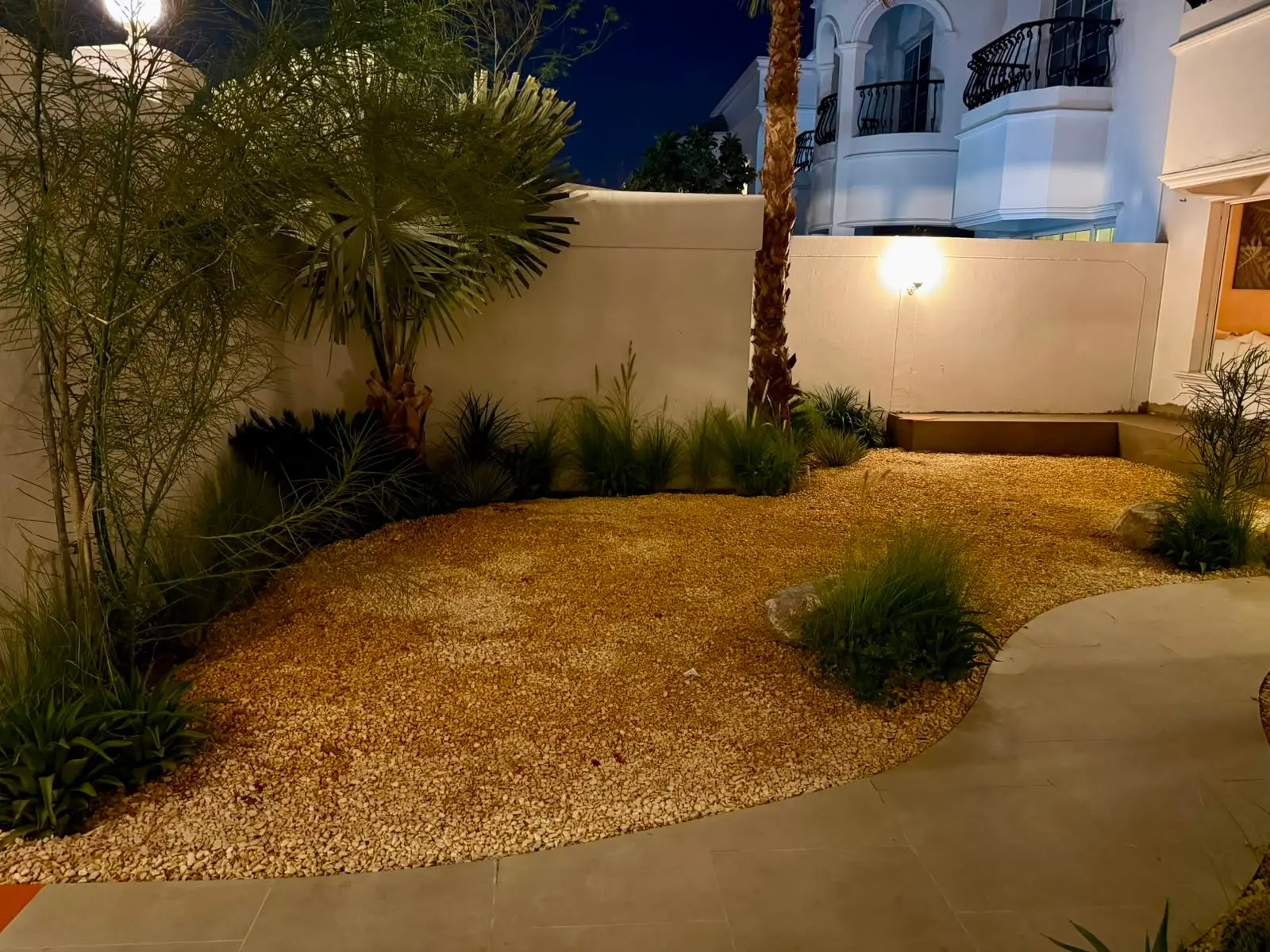
A 5×4 m motorised louvred pergola with integrated LED lighting and fan, open in winter, sealed at summer noon, used daily either way.
See all projects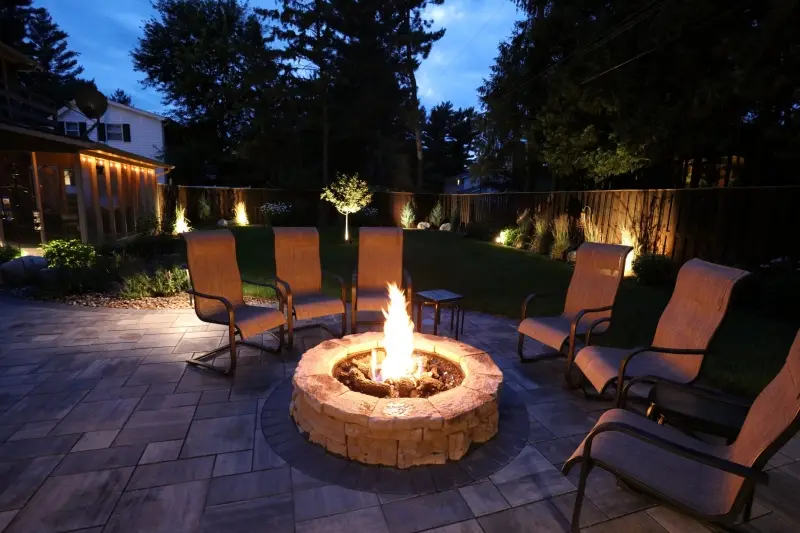
Tensioned UV sails angled for afternoon coverage turned a too-hot pool into the family's all-day summer spot.
See all projectsGood to Know
A fitted aluminium pergola starts from AED 650 per square metre. A fixed roof costs less than a motorised louvred system, and integrated lighting or fans add to the figure, all confirmed in a written quote after a site visit.
In nearly all villa communities, yes, developers require an NOC with drawings before installation, and there are height and setback rules. We prepare the documents and manage the approval as part of every project.
Powder-coated aluminium wins on longevity: no warping, no termites, minimal maintenance under intense UV. Quality treated timber offers warmth and looks beautiful but needs periodic re-finishing. We'll show you both honestly, including what each looks like after five summers.
A pergola whose roof blades rotate, open for breeze and stars, closed for full shade or rain. Motorised louvred systems cost more than fixed roofs but transform usability, and they're our most requested structure for dining areas.
Once design and NOC are approved, fabrication takes two to four weeks and on-site installation typically two to five days. We confirm the full timeline in your quotation.
Yes, integrated LED lighting, ceiling fans, drop-down screens and privacy slats are all designed in from the start, which always looks better than retrofitting them later.
A WPC (wood-plastic composite) pergola gives you a timber look without regular staining or sealing, which suits owners who want warmth with less upkeep. The trade-offs are that composite boards can feel hot in direct sun, can fade over time, and usually need a steel or aluminium frame behind them for longer spans. Ask to see a board that has been outside for a few years before you decide.
Choose a shade sail when you want to cover a large or awkward area, such as a pool or play space, at a lower cost and with a light, open look. Choose a pergola when you want a permanent outdoor room with lighting, fans or a solid roof. Sails need strong anchor points and periodic re-tensioning, while a pergola needs a firm base and, in most communities, an approved drawing.
A retractable pergola has a fabric roof that slides or folds back along rails, so you can open the whole sky. A bioclimatic pergola is the name many manufacturers give to an aluminium louvred roof with rotating blades. Louvred roofs are often more rigid in wind, while fabric roofs are typically lighter and lower in cost. Check each product's stated wind limits before you choose.
Dubai's Roads and Transport Authority (RTA) publishes technical requirements for external parking shades and handles the No Objection Certificate, including minimum height, setback from the road and approved shapes and colours. For any shade inside your plot, check with your community developer first. Car parking shades are a separate type of structure from garden pergolas, so ask about them separately.
Related Services
Guides
Book a free site visit and get a design concept for a pergola or shade structure that fits your home.
Choose your scope so the team can prepare a relevant site visit and written quotation. The survey confirms the equipment, quantities, access, approvals and final price.