The outdoor plants that do best in Dubai are the ones built for heat, strong sun and dry air. Bougainvillea, the ghaf tree, desert rose and Rangoon creeper are common choices in UAE gardens. Most of them need full or mostly full sun, water deeply but not too often once they are established, and do best when planted in the cooler months from October to March.
This guide explains why some plants cope with Dubai conditions and others do not, which plants are worth considering, and how to care for them through the year.
Why Dubai gardens need different plants
Dubai has long, hot summers. Average highs in July and August are around 40°C or higher, according to long-term weather data for Dubai International Airport, and humidity along the coast makes the heat feel heavier. Sand and dust can settle on leaves and block light. Many plants that grow well in cooler countries scorch, wilt or need far more water than a Dubai garden can comfortably supply.
Plants that cope well usually share a few traits. They tolerate strong sun without burning, they lose water slowly through their leaves, and they recover after a dry spell. Some also store water in thick stems or roots. These traits matter more in Dubai than the flower colour or the way a plant looks in a catalogue photo.
Which outdoor plants suit Dubai gardens?
The table below lists four widely grown options. Each one needs a suitable spot and regular care, so check the notes against your own garden before you buy.
| Plant | Type | Light needs | What to know |
|---|---|---|---|
| Ghaf (Prosopis cineraria) | Tree | Full sun | The UAE's national tree since 2008. Drought tolerant and able to stay green in harsh desert conditions. Check its full size before planting in a small garden. |
| Bougainvillea | Climber or shrub | Full sun | Known for bright papery flower bracts. Needs well-drained soil, because waterlogged roots cause problems. |
| Desert rose (Adenium) | Shrub | Full sun | Thick, swollen stems store water. Overwatering is a common cause of rot, so it suits gardens where watering is kept measured. |
| Rangoon creeper | Climber | Sun to partial shade | Fragrant flowers that change colour as they age. It needs a support, such as a wall, fence or pergola, to climb. |
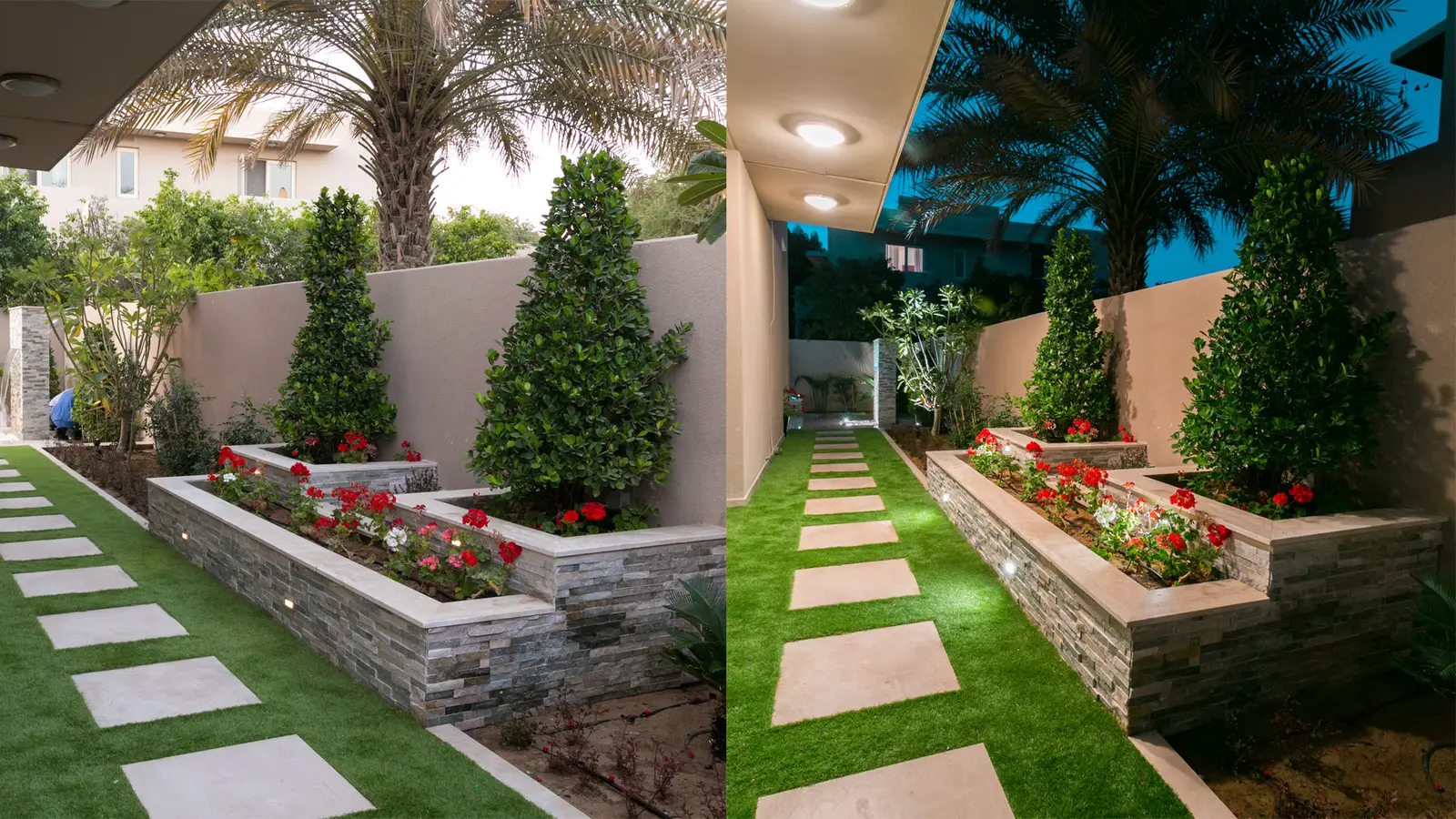
Ghaf is the most useful of these in a larger landscape, because it is native to the region and suits the local climate. Bougainvillea is one of the most common flowering plants in UAE gardens, and it is often used on walls, pergolas and in large containers. If you want more options, the guide to the best outdoor plants in Dubai covers more shrubs and flowering plants.
The ghaf deserves a special note. The Environment Agency UAE states that it was declared the national tree in 2008 because of its cultural and traditional significance. It also describes the tree as drought-tolerant, able to remain green even in harsh desert environments. Read the Environment Agency UAE page on the ghaf tree for more detail on its status and protection.
How much sun do outdoor plants need in Dubai?
Full sun means a spot that gets direct light for most of the day. In Dubai, the afternoon sun is the harshest, so the direction a garden faces makes a real difference. A garden that gets gentle morning sun and some afternoon shade may suit a wider range of plants than one that faces the afternoon sun all day.
Look at the spot at different times before you buy. If a plant looks wilted by midday but recovers by evening, the spot may be too exposed for that plant. If the leaves turn pale or brown along the edges during the hottest hours, the plant may need shade cloth or a spot that gets less direct afternoon sun. Moving a container is an easy test, because you can see the effect within a few weeks.
Balconies and courtyards can be hotter than they look. Walls and paving reflect heat back onto plants, so a plant near a bright white wall can suffer more than one in an open garden. This is one reason many plants in Dubai do better in a container that you can move.
How much water do outdoor plants need in Dubai?
New plants need the most attention. Most plants need regular watering while their roots spread into the soil, which usually takes a few months. Once the roots are established, the right approach is usually deep watering less often, so the water reaches the roots and the top of the soil can dry out between waterings.
Check the soil before you water. Push a finger into the soil near the root zone. If the top few centimetres are still damp, wait. This simple check protects plants from both problems: wilting in dry soil and root rot in soil that stays wet.
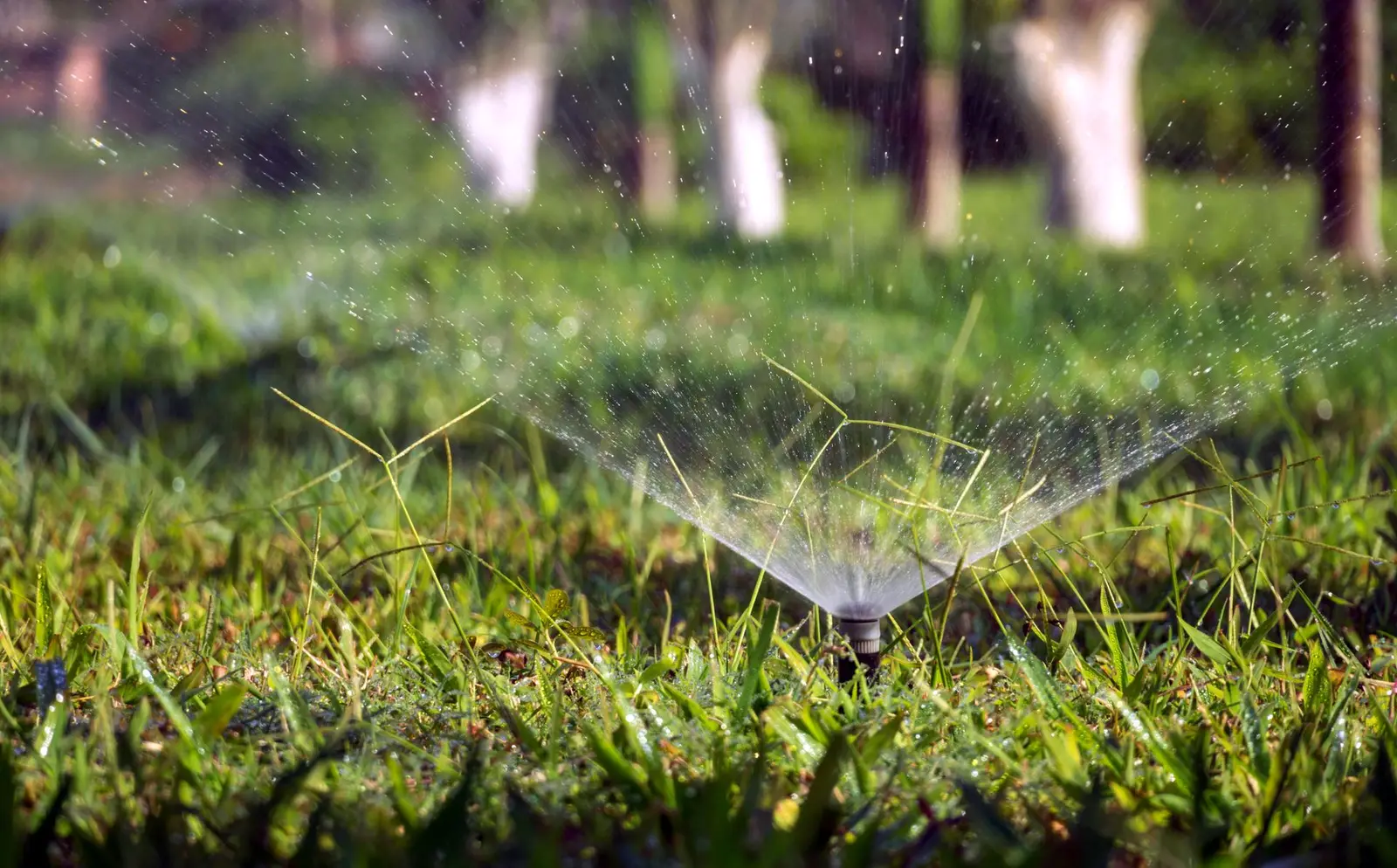
Water type and soil also matter. Sandy soil drains quickly, so water can pass straight through before the roots absorb it. Heavy soil holds water for longer and can stay wet for days. Drip irrigation delivers water slowly to the root area, which many gardeners find easier to control than hand watering. If you want to plan a system, the garden irrigation guide for Dubai explains the main options, and NAM Landscaping's irrigation service covers design and installation.
When is the best time to plant outdoor plants in Dubai?
Planting outdoors from about October to March is usually the easiest window in the UAE. The reason is temperature. In June, July and August, the air and ground are very hot, and a newly planted root system has to cope with that heat while it tries to grow. Plants that go in during the cooler months have time to settle before the next summer.
The best timing also depends on the plant and the garden. A shaded courtyard may stay cooler than an open lawn, and a plant grown in a container may need a different timing from one planted in the ground. Check the planting advice from a local nursery for the plants you choose.
Some plants can be planted in autumn and winter with less risk. Others need warmer soil and are best planted later in the season. The plant label or nursery staff should tell you which group a plant belongs to.
Plants to check carefully before planting
Some attractive garden plants are poisonous if eaten. Oleander is a common example in UAE gardens, and it should be kept away from children and pets. If young children or pets use the garden, check each plant's toxicity before you buy it and place it away from play areas.
Some plants also need a cool period to flower well or to stay healthy, so they may struggle in Dubai's climate even if they look suitable. Ask the nursery whether a plant is adapted to heat and whether it needs any special winter care. A plant that struggles every summer will cost more in water, replacement and time than one that suits the site from the start.
Salt spray is a factor for coastal gardens. Plants near the sea can develop salt burn on their leaves, which is why a regular rinse of the foliage is often recommended in coastal areas. The effect varies with the plant and the distance from the sea.
How to tell if your outdoor plants are struggling
Yellow or drooping leaves can have several causes, so it helps to check the soil first. If the soil is dry and the leaves are wilted, the plant probably needs water. If the soil is wet and the leaves are yellow or soft, the plant may be getting too much water or the drainage may be poor.
Look at the stems and the base of the plant too. Soft, dark or mushy stems suggest rot, which usually comes from overwatering. Brown, crispy edges on the leaves point more often to heat stress, strong sun or a lack of water in the hottest part of the day.
Address the cause before you change anything else. Moving a plant to a shadier spot or adjusting the watering schedule is usually a better first step than adding fertiliser or replacing the plant. If the problem continues after two or three weeks of corrected care, a local nursery or landscape team can examine the plant in person.
Caring for outdoor plants through the year
Good care in Dubai is mostly about water, soil and timing. Mulch helps keep the soil cooler and reduces evaporation, so the water you give stays in the root zone for longer. Keep the mulch a little away from the stem, because moist material against the stem can encourage rot.
Regular checks make the biggest difference over time. Walk through the garden once a week and look at the leaves, the soil and the irrigation system. If you cannot do this yourself, a maintenance plan can handle it for you. NAM Landscaping's garden maintenance service includes regular visits, and a small villa garden plan starts from AED 240 per month, confirmed in writing after a free site visit.
Plant care also changes with the seasons. In the cooler months, plants usually need less water and can be planted or pruned. In summer, the focus shifts to protecting plants from the hottest sun and keeping the soil moist enough for the roots. For a plant-by-plant guide to one popular desert plant, see the desert rose care guide for the UAE.