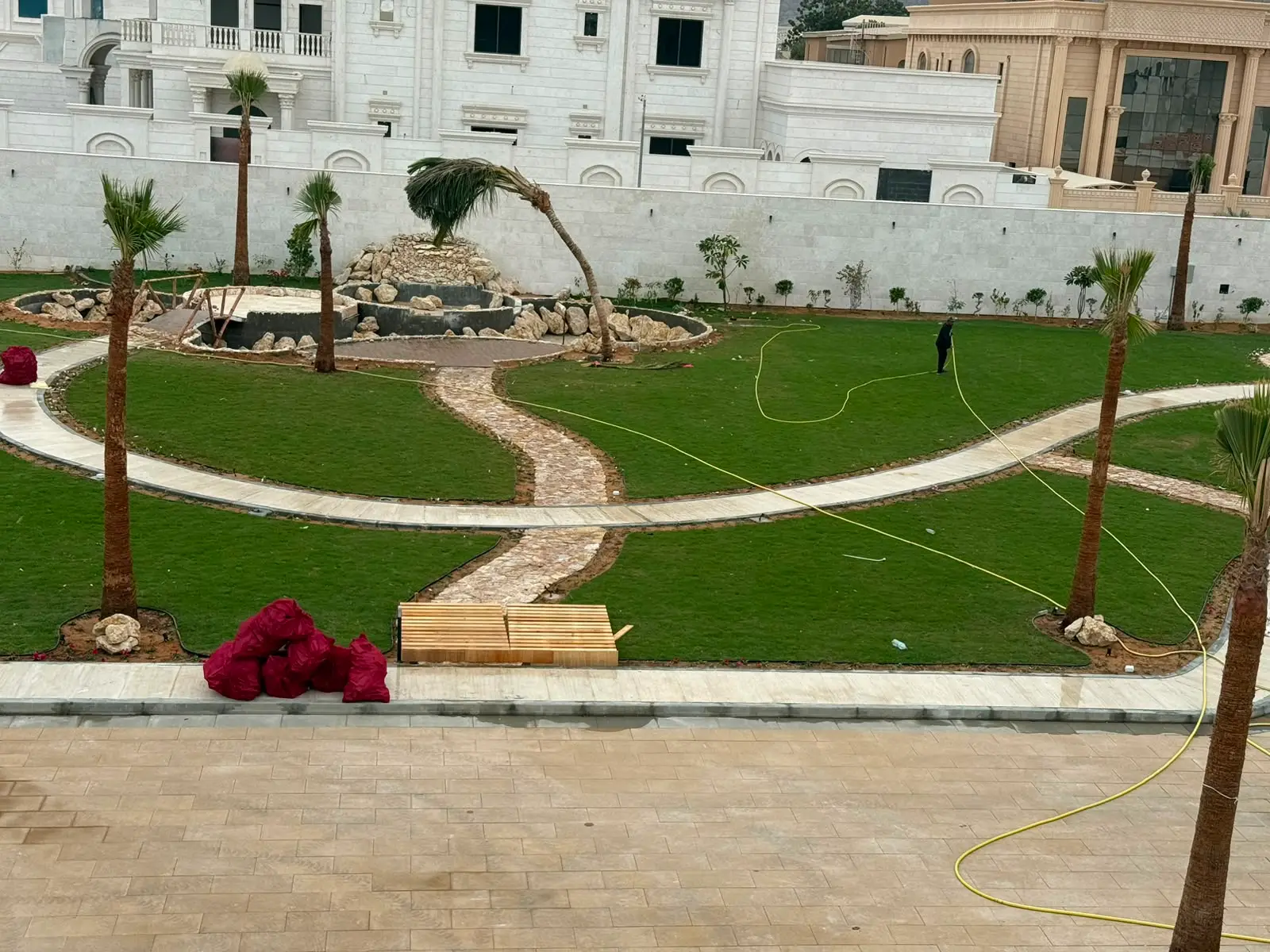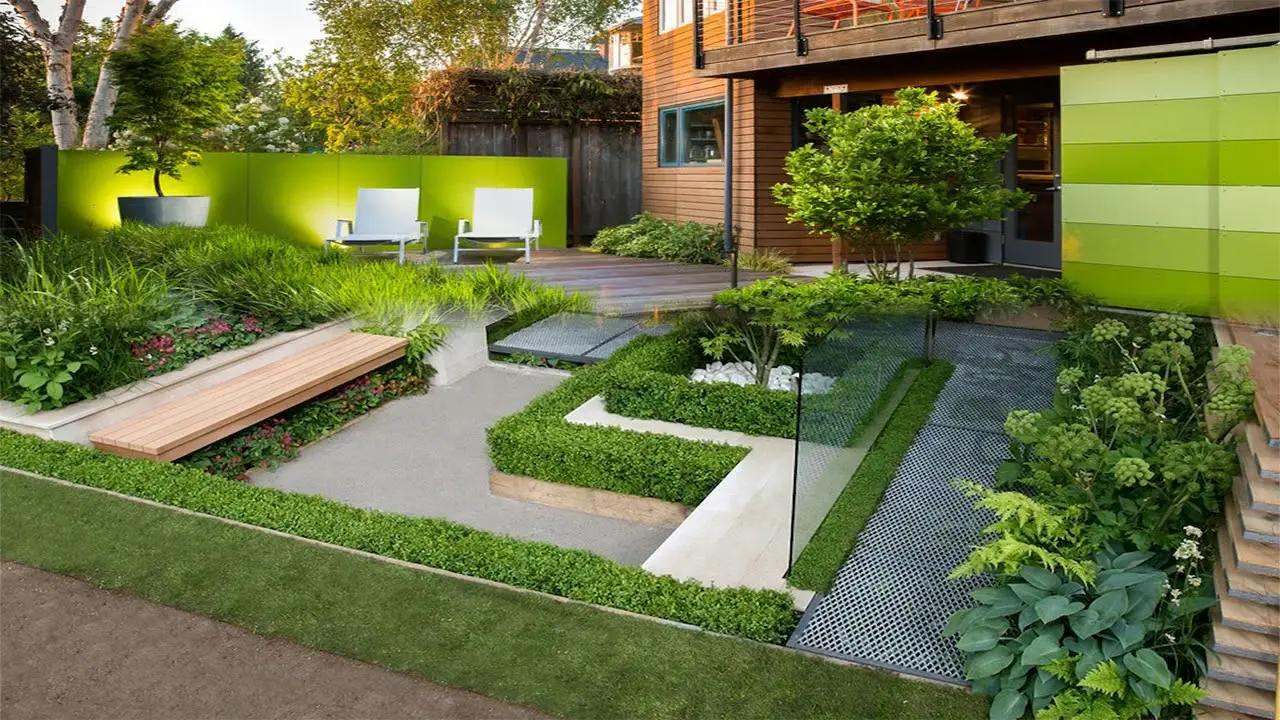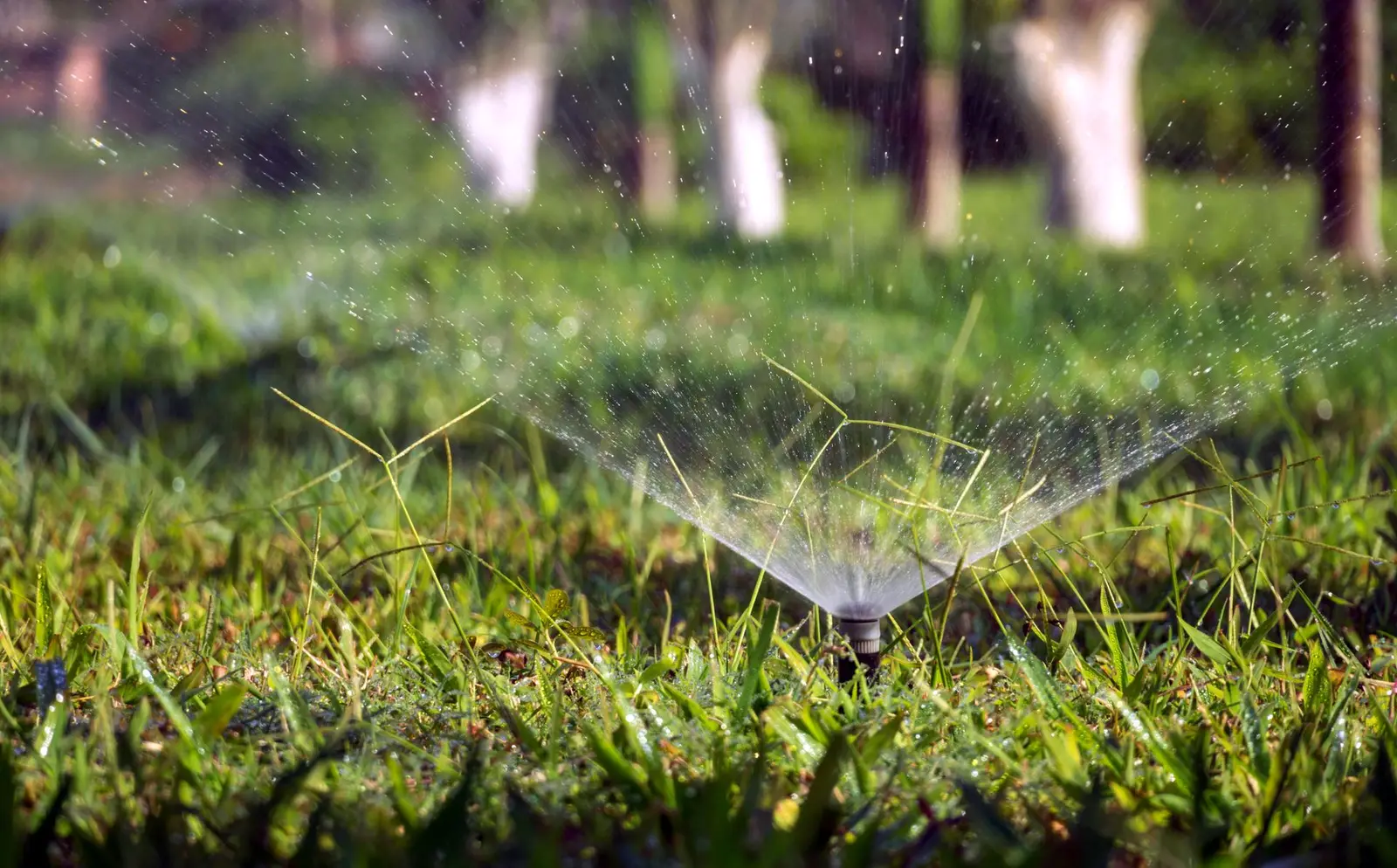
The best garden irrigation system for most Dubai villas is a zoned, automatic system that uses drip lines for shrubs, beds and pots, bubblers for trees and palms, and pop-up sprinklers only on lawns. A controller runs each zone at its own time, ideally in the early morning, and changes the schedule as the seasons change.
That mix matters more in Dubai than in milder climates. With summer heat, sandy soil, dust and metered water, a badly designed system wastes water, leaves dry patches and clogs quickly. A well-designed one keeps the garden alive through August with less effort and a lower water bill.
How an irrigation system works in a Dubai garden
An automatic irrigation system takes water from your supply, splits it into separate circuits called zones, and delivers it to plants through pipes and emitters on a schedule. You set the schedule once per season instead of watering by hand every day.
Most villa systems share the same main parts:
- Controller: the timer that decides when each zone runs and for how long. Smart controllers can also adjust the schedule automatically.
- Valves: one electric valve per zone, which the controller opens and closes.
- Filter: catches sand and particles before they reach small emitters.
- Pressure regulator: lowers the pressure for drip zones, which work at much lower pressure than sprinklers.
- Pipes: a main line from the supply to the valves, then smaller lateral lines to the plants.
- Emitters: the parts that release water, such as drippers, bubblers and sprinkler heads.
Some villas feed the system from a storage tank with a small pump, others from the mains supply. Your installer should check the available flow and pressure first, because they decide how many emitters each zone can run at once.
Drip irrigation, sprinklers or bubblers: which suits each part of your garden?
Each emitter type suits a different kind of planting. The table compares them for a typical Dubai villa garden.
| Type | Best for | Main advantage | Main limitation |
|---|---|---|---|
| Drip lines and drippers | Shrubs, hedges, flower beds, vegetable beds, pots and planters | Water goes straight to the roots, so little is lost to sun and wind | Small outlets clog without good filtering and regular flushing |
| Bubblers | Trees, palms and large shrubs | Delivers a larger volume to a single root area | Needs a basin or level ground so water soaks in rather than running off |
| Pop-up spray heads | Small and medium lawns | Even coverage across grass | Loses more water to evaporation and wind drift, and wets paths and walls if badly aimed |
| Rotor sprinklers | Larger lawn areas | Covers a wide area with fewer heads | Needs space and good pressure to work properly |
Drip irrigation for beds, hedges and pots
A drip irrigation system releases water slowly through small outlets placed at the base of each plant. Because the water soaks in where the roots are, less of it evaporates from leaves or bare soil. Penn State Extension's guide to drip irrigation notes that drip may need less than half the water of sprinkler irrigation, and keeping foliage dry can also reduce disease.
The same guide calls clogging the most serious threat to a drip system and says filters are essential. That warning matters in Dubai, where fine sand blows into open fittings and minerals in the water can build up inside drippers over time.
Drip suits almost everything except lawns. It is also the practical choice for hedges along boundary walls, raised beds and container plants, which dry out quickly in summer. If you grow food, our vegetable garden guide for Dubai explains how to lay drip lines along beds.
Sprinklers for lawns
Sprinklers in Dubai are mainly for lawns, because grass needs water spread evenly across its whole surface. Pop-up spray heads suit smaller lawns and narrow strips. Rotors throw water further and suit larger open areas.
The weakness of sprinklers is loss. Washington State University Extension puts drip at about 90 to 95 percent efficient and sprinklers at about 70 percent, with the rest lost to wind drift and evaporation. Fine spray drifts in wind and evaporates in hot, dry air before it reaches the soil. Good design reduces this: heads matched to the lawn's shape, coverage that reaches from one head to the next, and no spray hitting walls, paving or windows.
If you are still deciding between a real lawn and an artificial one, our guide to the best grass for Dubai lawns compares the water and upkeep each one needs.
Bubblers for trees and palms
Bubblers release a larger flow of water close to the trunk area, filling a shallow basin that then soaks down to the roots. They suit trees and palms that need a deep, occasional soak rather than a light daily sprinkle.
Many trees used in UAE landscapes tolerate dry spells once established. Our guide to desert plants and trees for the UAE explains which species need the least water once their roots have spread.
Why zoning your irrigation system saves water
Zoning means grouping plants with similar water needs onto the same valve, so each group gets the right amount. Without zones, everything gets watered for as long as the thirstiest plant needs, which overwaters the tougher plants and wastes water.
A typical villa garden might have zones like these:
- Lawn on sprinklers.
- Sunny shrub and flower beds on drip.
- Shaded beds on drip, with shorter run times.
- Trees and palms on bubblers.
- Pots, planters and vertical planting on their own drip zone, because containers dry out fastest.
Sun and shade change water needs as much as the plant type does. A bed against a west-facing wall gets heat reflected off the wall all afternoon, so it may need more water than an identical bed in the shade of the house.
Never mix sprinklers and drip on the same zone. They release water at very different rates and pressures, so one type will always get too much or too little.
Smart irrigation controllers: are they worth it?
A smart controller changes your watering schedule automatically instead of running the same program every day. The US Environmental Protection Agency's WaterSense programme describes two kinds on its irrigation controller page: weather-based controllers, which use local weather and landscape conditions to set the schedule, and soil moisture-based controllers, which skip watering when the soil is already moist.
The same EPA page estimates that replacing a standard clock timer with a WaterSense-labelled controller can save an average home up to 15,000 US gallons of water a year. That figure comes from US homes and gardens, so treat it as an indication of what is possible rather than a Dubai prediction.
In Dubai, the biggest benefit is seasonal adjustment. Plants need far more water in July than in January, and a basic timer only changes if someone remembers to change it. It is easy to set the summer schedule once and leave it running all winter, which overwaters the garden for months.
Smart controllers usually connect to your home Wi-Fi and an app, so you can also pause watering while you travel or check that every zone actually ran. They do not replace inspections, though. A controller cannot see a broken pipe or a dripper blocked with sand.
When and how much to water in Dubai
Water in the early morning. University of Florida guidance on watering lawns says early morning is the best time, that daytime watering wastes water through evaporation, and that watering later in the day can extend the time grass stays wet, which raises disease risk. The same logic applies to beds and shrubs.
DEWA gives similar advice for the evening. In its 2021 summer advice, reported by Gulf News, it suggests light sprinklers between 6pm and 8pm to avoid over-evaporation, and it recommends smart irrigation and soil moisture sensors. Evening is a fallback if early morning is not possible, but keep the cycle short on lawns so the grass is not left wet all night.
Dubai's summer makes timing especially important. Coastal UAE daytime temperatures typically reach 41°C to 43°C at the peak of summer, and inland areas often pass 45°C, according to Khaleej Times reporting on the UAE's peak summer temperatures. Water applied in the middle of such a day can evaporate before much of it reaches the roots.
How your schedule should change through the year
There is no single correct schedule, because soil, sun, plant type and emitter flow differ in every garden. The table shows the direction in which to adjust, not fixed minutes.
| Season | Conditions | How to adjust |
|---|---|---|
| Summer (roughly June to September) | Peak heat, highest evaporation | Most frequent watering of the year. Containers and new plants may need more than one short cycle a day. Water early. |
| Autumn (October and November) | Temperatures falling, and new plants are often added | Reduce gradually as days cool, but keep new plantings well watered while their roots establish. |
| Winter (December to February) | Mild days, lowest evaporation | Lowest watering of the year. Many established shrubs and trees need water far less often. Pause after rain. |
| Spring (March to May) | Warming quickly, often dusty | Increase step by step so plants are not shocked when the first very hot days arrive. |
The simplest way to know whether your schedule is right is to check the soil. Dig a small hole a few centimetres beside a plant an hour or two after watering. If the soil is moist around the roots, the run time is enough. If it is dry below the surface, run longer. If the ground stays soggy until the next cycle, cut back.
Signs of underwatering are leaves wilting in the morning (not just in the afternoon heat), brown leaf edges and dry patches in the lawn. Signs of overwatering include yellowing leaves, puddles, green algae on paving and a sour smell from the soil.
Deep and less often beats light and daily
For established plants, a longer soak at wider intervals encourages roots to grow deeper, where the soil stays cooler and moister. Short daily sprinkles keep water near the surface, so roots stay shallow and struggle in the heat. New plants and containers are the exception: their roots are small or confined, so they need more frequent watering until they establish.
What irrigation water costs you on your DEWA bill
Garden water is billed through your normal DEWA account. DEWA's slab tariff prices residential water in bands, so the rate you pay rises once your monthly use moves into a higher band. Check that page and your own bill for the current rates, units, VAT and any surcharges, because they can change.
This is the main money reason to irrigate efficiently. In summer, garden watering can push a villa into higher slabs, so every litre lost to evaporation, overspray or a leak costs more than the first litres you used. Fixing leaks and switching beds from sprinklers to drip usually brings the quickest savings.
Watch for sudden jumps on your bill when nothing in the garden has changed. That is often the first sign of a hidden leak in an underground pipe or a valve that does not close fully.
Common irrigation problems and how to fix them
Most irrigation faults show up as a dry patch, a wet patch or a bill that rises without explanation. The list below connects each symptom to its usual cause.
- Dry patches in one bed: often a clogged dripper, a kinked or cut drip line, or a fitting that has pulled apart. Walk the line while the zone runs and look for drippers that are not wetting the soil.
- Whole zone not running: check the controller program first, then the valve. A valve with a faulty solenoid or a cut wire will not open even when the controller says it is running.
- Puddles or a constantly wet spot: usually a leak in an underground pipe or a broken fitting. A zone that keeps dribbling after it should have stopped points to a valve that is not closing properly.
- Weak spray or uneven lawn coverage: low pressure, too many heads on one zone, or nozzles blocked with sand. Clear the nozzles and check that heads pop up fully and are not tilted.
- Sprinklers watering the wall or the path: heads knocked out of line by mowers, foot traffic or pets. Readjust the arc and direction.
- Drippers slowly delivering less over months: mineral scale or fine sediment inside the outlets. Clean the filter, flush the line ends and replace drippers that will not clear.
- Garden overwatered after the weather cooled: the summer program is still running. Update the controller at the start of each season, or use a smart controller.
Animals and pests can also damage pipes. If one section of drip line keeps getting holes, check whether it is exposed at the surface and bury or cover it with mulch.
Irrigation system maintenance: a simple routine
Regular checks catch small faults before plants die or the water bill climbs. A practical routine looks like this:
- Monthly: run each zone for a few minutes and walk the garden. Look for dry plants, puddles, broken heads and spray hitting paving.
- Monthly: clean the main filter, especially after a dusty or sandy spell.
- Every few months: open the ends of drip lines and let the water run until it flows clear. Penn State Extension describes periodic flushing as an excellent maintenance practice.
- At each change of season: update the controller schedule and check that the date and time are correct after any power cut.
- Before summer: do a full inspection, replace worn drippers and nozzles, and add emitters for plants that have grown larger.
If you would rather not do these checks yourself, ask your maintenance provider to include them. NAM Landscaping sends a photo report to your WhatsApp after every scheduled maintenance visit (see garden maintenance in Dubai), so you can see what was done.
Installing an irrigation system in Dubai: DIY or professional?
You can fit a small drip kit to a few pots or a single bed yourself. A whole-villa system is a different job, because it involves sizing pipes to your water pressure, laying valves and cables underground, and planning zones so every area gets the right amount.
Parts matter too. Drip kits, filters, valves and controllers are sold by irrigation equipment suppliers in Dubai, so a DIY job is realistic for a small area. Make sure the parts are compatible: drip emitters, pressure regulators and sprinkler heads work at different pressures and flow rates.
Before any installation, check whether your community needs approval for external works. Some Dubai communities require a no-objection certificate (NOC) before landscaping work, so ask your developer or community management office what applies to your villa.
What a good irrigation installer should do
When comparing irrigation companies in Dubai, look for these signs of a careful installer:
- A site visit to check water supply, pressure, sun and shade before quoting.
- A zone plan that separates lawns, beds, trees and pots.
- A written quote that lists the controller, valves, filter, pipe and emitter types, not just one total.
- A clear handover: how to change the schedule, where the valves and filter are, and who to call for repairs.
- Coverage of your area, so repairs and seasonal visits are quick. If you search for irrigation installation near me or sprinkler system installation near me, check the company's areas we serve page or ask directly.
Irrigation is usually best planned together with the planting, which is why many homeowners look for landscaping and irrigation companies rather than separate contractors. NAM Landscaping's smart irrigation systems start from AED 2,500 per villa, confirmed in a written, itemised quote after a free site visit. For a wider view of project budgets, see our guide to landscaping costs in Dubai.
If you are planting at the same time, choose plants first and design the irrigation around them. Our list of the best outdoor plants for Dubai is a good place to start grouping plants by how much water they need.