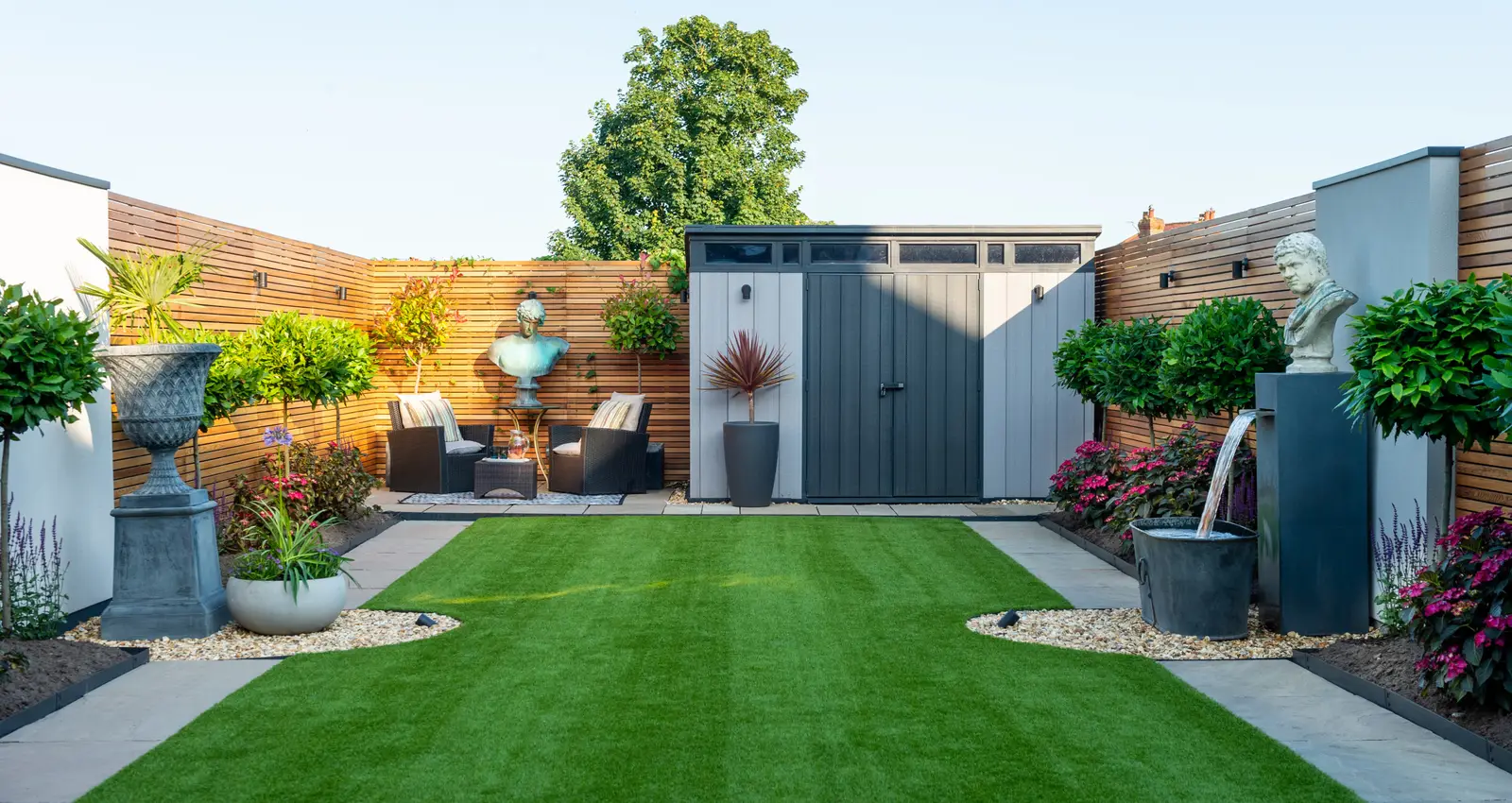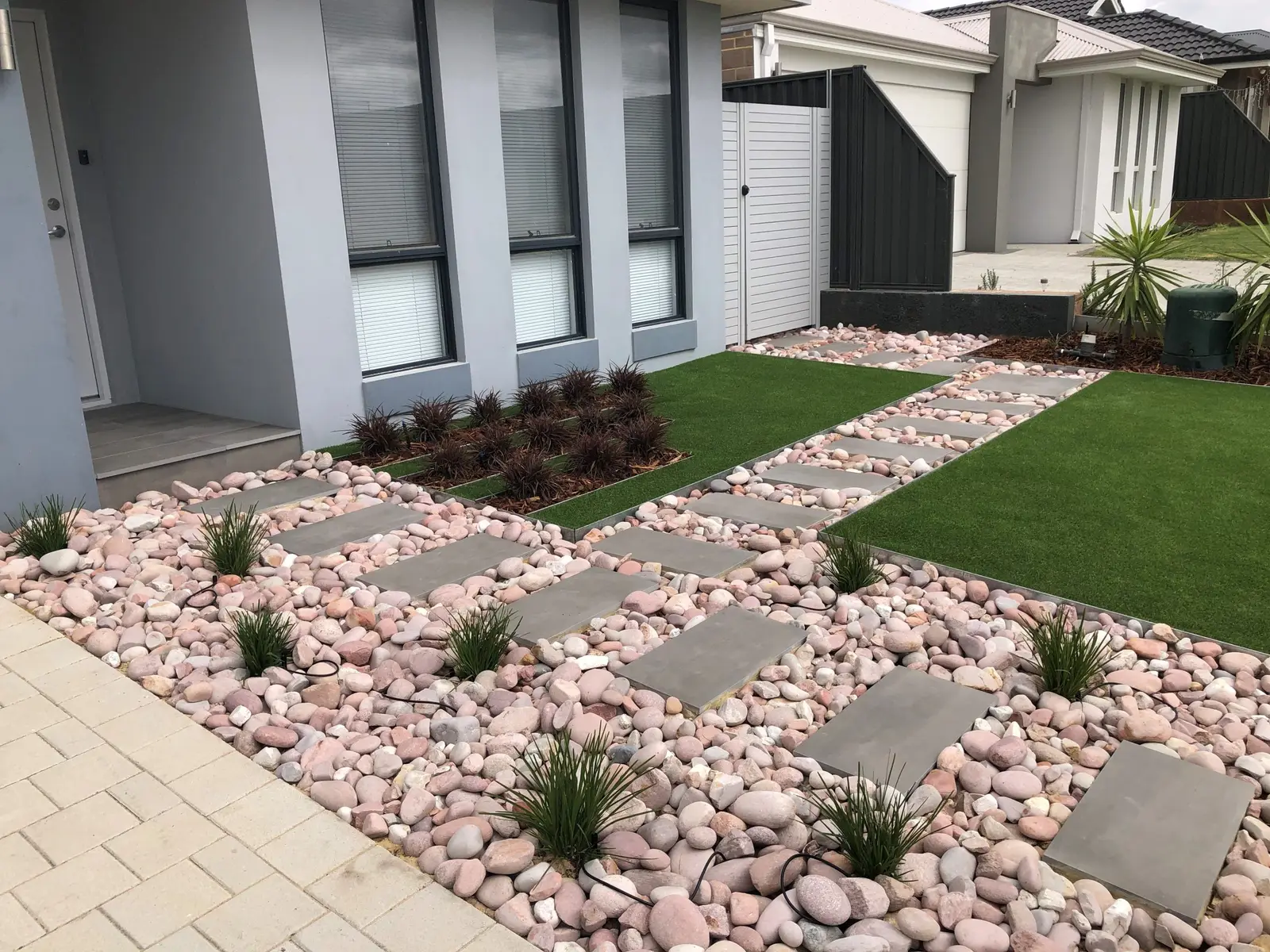
Garden paving in Dubai is the hard surface you walk on, sit on or drive over outside your home. The most common choices are concrete pavers, porcelain tiles, natural stone and gravel. The right one depends on three things: how hot the surface gets in the sun, how safe it is when wet, and how you plan to use the area.
What does garden paving in Dubai include?
Garden paving covers any hard, flat surface outside the house. That includes walkways, patios, driveway edges, pool surrounds and the floor around a seating or barbecue area. In most gardens it is laid over a prepared base of compacted stone and sand, so the top layer stays level and does not sink.
Paving does two jobs. It gives you a usable surface where grass or soil would wear out, and it sets the look of the whole garden. A pale paver can make a small garden feel brighter, while a dark stone can make a large lawn look more formal.
Which paving materials work best in a Dubai garden?
Each material has a different mix of cost, look, heat and upkeep. The table compares the four you will hear about most. These comparisons are general, so check the data sheet for any product before you buy it.
| Material | Best for | Heat in direct sun | Slip risk when wet | Main drawback |
|---|---|---|---|---|
| Concrete pavers (interlocking blocks) | Driveways, paths, patios | Depends on colour. Light shades run cooler. | Depends on the finish. Textured finishes grip better. | Can fade and stain over time |
| Porcelain pavers and outdoor tiles | Patios, pool surrounds, balconies | Light colours stay cooler than dark ones | Low when the surface is textured and rated for outdoor use | Costs more per square metre. Large slabs need careful laying. |
| Natural stone (limestone, sandstone, granite) | Feature areas and entrances | Varies widely by stone and colour | Depends on the surface. Polished stone is slippery. | Often needs sealing, and the surface can be uneven |
| Gravel and pebbles | Borders, drainage strips and low-traffic beds | Depends on the colour and depth of the stones | Loose and unstable underfoot | Shifts, gets kicked out and needs topping up |
Concrete pavers
Concrete pavers are the most common choice for garden paths and driveways. They come in many shapes, including rectangles, hexagons and interlocking patterns, and in several shades. If you want a traditional look, concrete is the usual starting point. It often costs less than porcelain, although prices vary between suppliers.
Porcelain pavers and outdoor tiles
Porcelain pavers are dense and hard. Check that the product is labelled for outdoor use, because some indoor tiles may not suit strong sun, wet conditions or heavy foot traffic. Large-format porcelain slabs give a clean, modern look, but they need a flat, well-prepared base and more careful cutting around edges and drains.
Natural stone
Natural stone such as limestone and sandstone gives a warm, natural look that suits many Dubai villa gardens. Each piece varies in colour and texture, so ask to see a sample in daylight before you order. Polished stone looks elegant but becomes slippery when wet. For areas where people walk barefoot or where water collects, choose a flamed, brushed or honed finish instead.
How hot does garden paving get in Dubai?
Dubai is hot for much of the year. According to the climate data for Dubai on Wikipedia, the average daily high is about 41 to 42°C in July and August. These are air temperatures. The surface of your paving can feel much hotter in direct sun, and dark, dense materials usually get hotter than light ones.
That heat matters in two ways. A hot surface can burn bare feet, which is a problem for children and pets. It can also make a pool deck or seating area unpleasant to use from late morning until evening. Keep both points in mind when you choose a colour.
A rough home check is to leave a sample in full sun for a while, then rest your bare hand on it. If you cannot keep your hand there comfortably, the surface is likely too hot for bare feet at midday in summer. This is a simple guide, not a test standard. Compare a light sample and a dark sample side by side, since the difference is easy to feel.
What makes a paving surface safe around a pool?
A pool surround needs a surface that stays grippy when wet and is comfortable with bare feet. These two needs can pull in different directions. A very rough texture grips well but can be uncomfortable barefoot, while a smooth one feels pleasant but can be slippery. Balance both when you choose.
Start by asking the supplier for the slip rating and the test method. Ratings are measured in different ways in different countries. Australia, for example, uses the AS 4586 standard, so a rating from one system cannot be compared directly with another. Ask whether the rating was tested on wet samples, because a dry rating tells you little about a poolside surface.
Finish matters more than the material itself. A smooth, polished porcelain or stone tile can become slick once water sits on it, while a textured or matt outdoor finish keeps its grip. Algae, leaves and dirt also make any surface slippery, so the area needs regular cleaning, especially where pool splashes land. For more on the planting and edges around the water, see the guide to pool landscaping ideas.
NAM Landscaping's paving and hardscaping service covers pool-surround paving. When the pool and garden are built or updated together, one team working under a single contract can plan the paving, drainage and pool edge at the same time, which can help avoid gaps between trades.
Are gravel and pebbles a good choice for garden paving?
Gravel and pebbles suit borders, drainage strips and areas with little foot traffic. They are often cheaper than pavers or tiles, and water passes through the gaps between the stones instead of running off the surface. They are less suitable where people walk often, sit on chairs or push wheeled items, because loose stones shift under weight.
Gravel around a pool
Gravel near a pool is common, but it needs care. Loose stones can be kicked into the water, where they can end up in the filter and cause problems over time. Use a firm edge, such as a kerb or pool coping, to keep the stones in place. Keep the gravel a short distance from the water, and choose a larger stone size that does not wash or blow away easily.
Gravel edging and borders
A border or edging strip is the simplest use of gravel. It keeps the stones inside a bed, separates a lawn from a path and gives a neat line. Set a metal, plastic or stone edge into the base so the gravel cannot spread. Without an edge, gravel slowly moves into lawns and walkways.
Pebbles, boulders and fire pit areas
Decorative pebbles and boulders work well around fire pits and in dry, low-water beds. Choose stones that will not crack from heat. Pavers laid around a fire pit give a firm, level edge that is easy to sweep. Check the fire pit maker's guidance on clearance from plants and furniture before you choose the surround, because the required distance depends on the unit.
What are good paving designs for a Dubai garden?
Paving design is the pattern, shape and colour arrangement of the surface. A simple layout often looks better than a busy one, and it costs less to lay because there are fewer cuts. Your choice should also match the shape of the garden and how the space is used. For wider ideas on patios and paved outdoor rooms, see the guide to patio and paving ideas.
Running bond, where each row is offset by half a paver, is a simple layout for paths and patios. Herringbone, where pavers meet at right angles, adds movement and suits driveways and feature areas. Circular paving designs look good around a tree or a fire pit, but every curved edge needs cut pavers, so expect more labour and more waste.
Mix two colours for a border or a feature strip rather than laying a busy pattern across the whole area. A darker border around a lighter centre defines the space without making it look crowded. Some gardens also combine paving with artificial grass, using paving around the edges of a lawn to give a clean line. Lay out a sample on the ground before anything is fixed, so you can see the pattern in real light next to the planting.
How is garden paving built to drain water?
Good paving sheds rainwater and keeps it away from the villa, and the base underneath decides how well it does that. Dubai gets little rain, but heavy showers do happen. The paving should be laid with a slight fall so water moves towards a drain, a planted bed or the lawn, not against the wall of the house. Boundary walls and fences can also change how water flows, so check them when you plan the levels. For that side of the garden, see the guide to garden wall and fence ideas.
Permeable paving works differently. It uses porous material or blocks with gaps, so water passes through into a bed of crushed stone below. This can reduce runoff, but the gaps need clearing. Fine sand and dirt can fill the pores over time, and then the surface behaves more like solid paving. Ask the installer how often the joints should be cleaned and how deep the base should be for your soil. You can read a general overview of how permeable paving works and where it has limits.
The base is the hidden part of the job. A typical base uses compacted crushed stone, then a thin layer of bedding sand, then the paver on top. A light patio needs a thinner base than a driveway that carries a car. A thin or poorly compacted base is a common reason paving sinks, cracks or rocks under weight.
How much does garden paving cost in Dubai?
NAM Landscaping's hardscaping and paving service starts from AED 75 per square metre, supplied and laid. Treat that as an indicative starting price. The final figure depends on the material you choose, the area, how much cutting is needed, the depth of the base and how easy the site is to reach. The price is confirmed in writing after a free site visit.
Material is the biggest variable. Concrete pavers often cost less than porcelain or natural stone, and gravel is often the cheapest surface to lay. If you are looking for cheap garden paving ideas, start with a small area, a simple layout and concrete or gravel in the parts that get the least use. Then spend more on the surfaces people walk on most.
Ask for an itemised quote that shows the material, base, bedding sand, edging, cutting and removal of any old paving as separate lines. That lets you compare quotes on the same basis rather than on a single total. A quote that is much lower than the others often leaves out one of these lines.
How do you plan garden paving step by step?
- Measure the area and mark its edges on a plan. Note where the sun falls at midday, where water collects and where people will walk, sit or park.
- Decide what each area is for. A path needs a firm, flat surface, a seating area needs a comfortable finish for bare feet and chairs, and a pool surround needs a reliable slip rating.
- Check the rules for your community. Your community developer or Dubai Municipality can confirm whether an approval is needed before you change ground levels or build near a boundary.
- Choose the material using the heat and slip checks above. Get samples and test them in full sun and in wet conditions.
- Ask for a written, itemised quote after a site visit, and check that the base depth, drainage fall and edging are all included.
How do you look after garden paving in Dubai?
Sweep paving regularly and rinse it with water when dust builds up. Sand and dirt grind into the surface and dull the finish. Dust from sandstorms can leave a film that needs a regular clean, so plan for extra cleaning after a dusty week.
Check the joints every few months. If sand has washed out from between concrete pavers, top it up so the blocks stay locked together. Weeds in the joints can be pulled out by hand or treated with a product suitable for paving. Around a pool, clean away algae and leaves promptly, because a wet, dirty surface is far more slippery than a clean one.