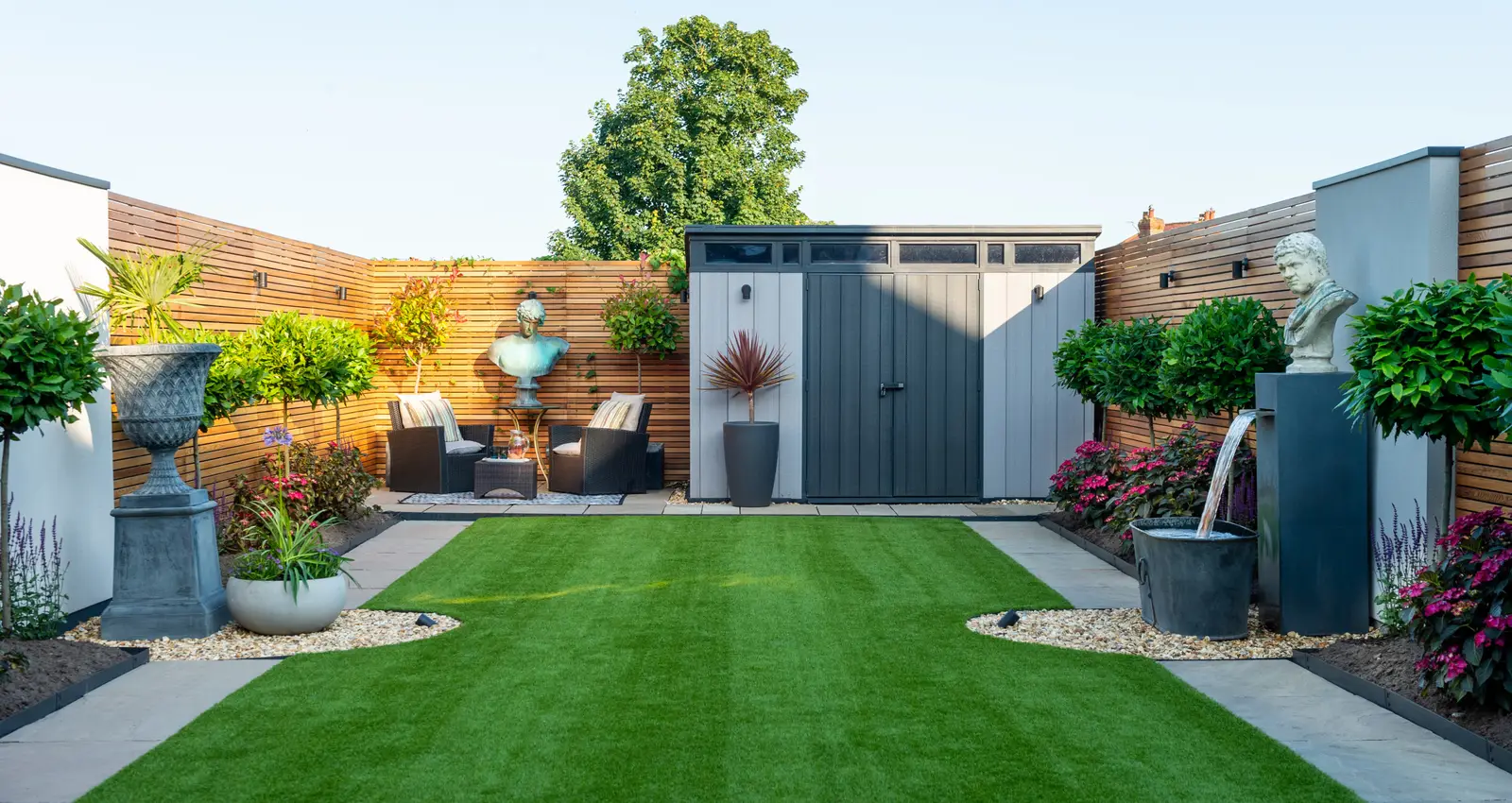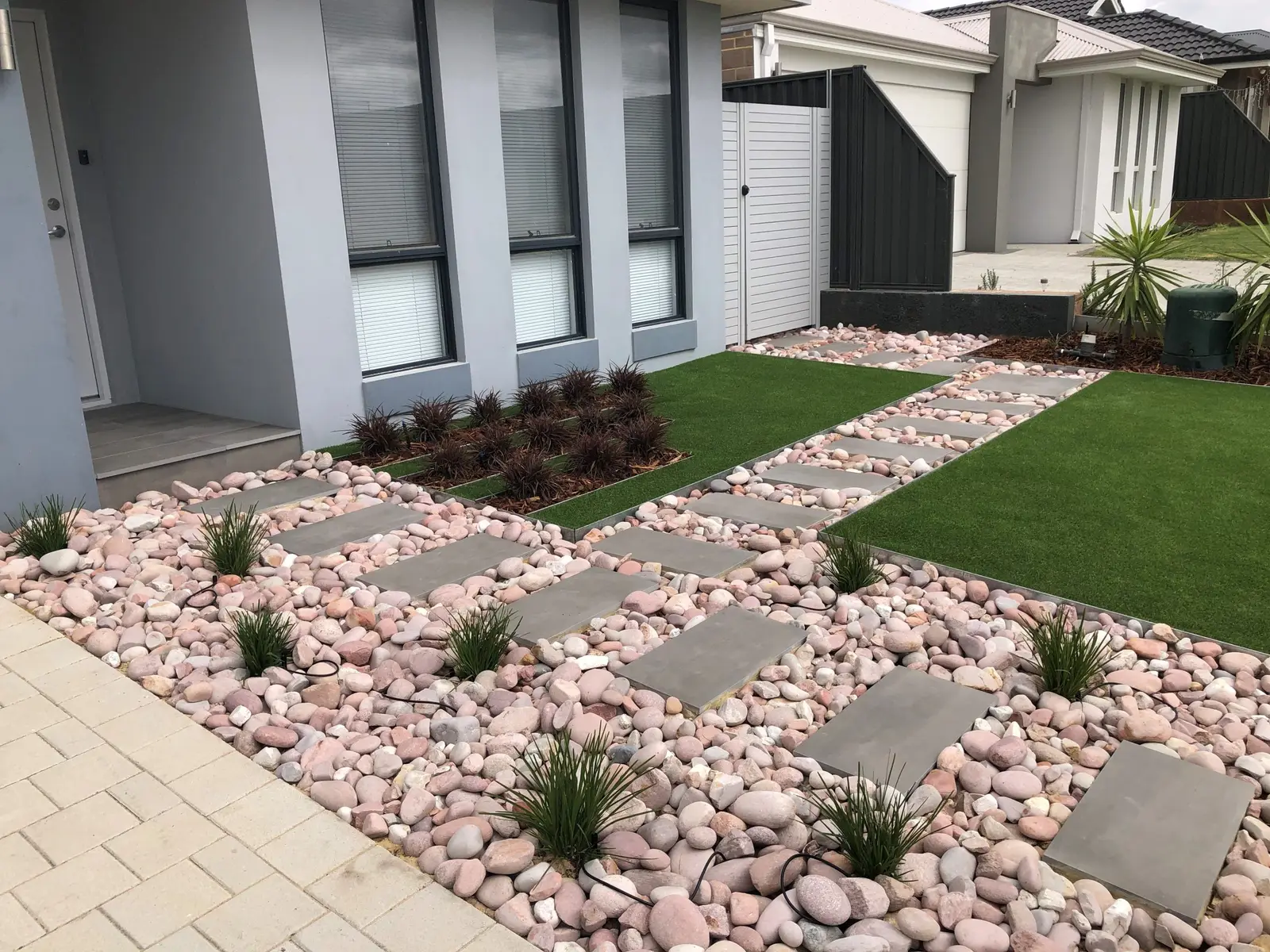
The best patio design ideas for Dubai share three things: a surface that stays usable in summer heat, a finish that does not become slippery with pool water or dust, and a base laid with a proper fall so water drains away from the villa. Get those right and almost any style works, from large-format porcelain terraces to gravel courtyards with stepping stones. This guide walks through the tile designs, paver layouts and other flooring options that suit Dubai villas, with the trade-offs of each.
What a patio has to cope with in Dubai
A patio in Dubai lives in conditions most paving catalogues never mention. In early August, coastal daytime temperatures ran between 41°C and 43°C, and the National Centre of Meteorology recorded 50°C at Al Shawamekh in Abu Dhabi on 1 August 2026, according to Khaleej Times. Paving in direct sun gets hotter than the air around it, as the colour section below shows.
Three other local factors shape the choice of material:
- Dust and sand. Fine dust settles on every surface and works into open joints, so wide sand-filled joints and rough textures need more sweeping.
- Hard water and pool splash. Irrigation and pool water leave white mineral marks on dark or porous surfaces. Non-porous materials wipe clean; porous stone slowly stains.
- Community rules. Many communities have rules about external works and may ask for a no-objection certificate (NOC), so check with your developer or owners association before ordering. Also check with Dubai Municipality whether anything structural needs approval.
Patio design materials and paving types compared
The table gives a quick comparison. Heat ratings here follow colour: lighter surfaces reflect more sunlight and stay cooler than darker ones, so ask for a sample and test it in the afternoon sun.
| Material | Heat underfoot | Slip when wet | Staining and cleaning | Best for |
|---|---|---|---|---|
| Porcelain pavers (20 mm outdoor tiles) | Cooler in light colours, hotter in dark | Good with R11 textured finish | Very low absorption, wipes clean | Main terraces, pool surrounds, modern patios |
| Interlock concrete pavers | Light greys stay cooler than dark ones | Good, textured by nature | Can stain; sealing helps | Budget patios, paths, driveways |
| Natural stone (limestone, travertine, granite) | Pale stone stays cooler than dark granite | Good when honed or tumbled, poor when polished | Porous types need sealing | Classic villa gardens, feature areas |
| Poured or stamped concrete | Follows the colour of the finish | Depends on finish; brushed is safest | Easy to clean, can crack | Large plain areas, under outdoor kitchens |
| Gravel and stepping stones | Follows the colour of the stone | Good | Dust and leaves collect; needs raking | Courtyards, side paths, low-use zones |
| Composite decking | Hotter in dark shades, cooler in light shades | Fair to good with grooved boards | Low; hose off | Shaded decks, raised platforms |
| Timber decking | Follows the colour of the finish | Poor when wet and worn | Needs regular oiling; moves in heat | Small shaded accents only |
Porcelain pavers and outdoor tile design
Porcelain is the material behind most modern outdoor tiling in Dubai. It is defined as ceramic tile with water absorption of 0.5 percent or less under the ANSI A137.1 tile standard. That near-zero absorption is why pool water, hard-water marks and spilled drinks sit on the surface instead of soaking in.
For outdoor use, choose 20 mm thick porcelain pavers rather than 10 mm indoor tiles. The thicker format is usually laid on a mortar bed or on pedestals, and some installers also dry-lay it on compacted gravel, so ask what your supplier recommends. Popular outdoor floor tile designs are large formats (60 by 60 cm, 60 by 120 cm) in pale limestone, sand or light grey tones, which hide dust better than white and stay cooler than charcoal.
Interlock and backyard paver ideas
Interlock pavers are the pressed concrete blocks you see on most Dubai driveways and community paths. They are the practical choice when you want a durable patio without the porcelain price. Paver designs range from plain rectangular grey blocks to shot-blasted or tumbled finishes that look like stone.
Two design moves lift interlock from "driveway" to "patio". First, use a larger format (for example 40 by 40 cm or 30 by 60 cm) rather than small 10 by 20 cm bricks, because fewer joints look calmer. Second, add a contrasting border course to frame the seating area.
Interlock is laid on compacted sub-base and sharp sand, with sand swept into the joints, so it is easy to lift and relay if you need access to pipes or cables underneath. The trade-off is that sand joints collect dust and weed seeds, so plan to top up the jointing sand or ask about polymeric sand that sets hard.
If you like the look of backyard brick patio ideas, clay brick pavers in terracotta or buff tones give a warm, traditional finish. As with any paving, the darker the brick, the more heat it holds, so choose the lighter shades for areas you walk on barefoot.
Natural stone and garden stone design
Limestone, travertine and sandstone suit traditional and Mediterranean villa gardens, and pale stone feels cooler underfoot than dark materials. Granite is the hardest-wearing but heavy, expensive and hot in dark colours.
The weak point of most natural stone in Dubai is porosity. Limestone and travertine absorb water and oils, so pool splash, irrigation overspray and barbecue drips leave marks unless the stone is sealed and resealed. Honed or tumbled finishes give grip; polished stone is slippery when wet and should stay indoors.
Concrete patio ideas
Poured concrete covers a large area in one go and is the usual base under outdoor kitchens and heavy structures. Backyard concrete patio ideas that look good rather than industrial include a light broom finish (which also adds grip), saw-cut control joints laid out as a grid, and an exposed-aggregate finish that shows pale pebbles.
Stamped and coloured concrete imitates stone or pavers, but colour coats may need resealing or recolouring over time, so ask the installer what the finish needs. Any concrete slab also needs movement joints, because concrete expands and contracts with temperature and a large unjointed slab is more likely to crack.
Gravel, stepping stones and courtyard ideas
Gravel is the material behind many pleasant small courtyards in Dubai. It drains freely and suits desert planting. Pair a 10 to 20 mm washed gravel with large porcelain or concrete stepping stones set at a comfortable stride (about 60 cm centre to centre) so you can walk through without the gravel shifting.
Gravel needs a proper edge restraint (metal, concrete or a paver border) or it spreads onto lawns and into the pool. It also collects leaves and dust, so it works best where there is little foot traffic. An all-gravel front yard is a low-water option that community design rules may or may not allow, so check before you strip a lawn.
Decking: timber versus composite in Dubai heat
Decking gives a different feel from paving, and a raised deck can solve a level change or hide a sloping plot. In Dubai the question is heat. Composite decking gets hot in direct sun, especially in darker colours, according to decking manufacturer Trex. For hot, sunny climates it recommends lighter colours that reflect more sunlight and retain less heat, and it advises avoiding prolonged skin contact on hot days.
The practical rule for backyard deck ideas in Dubai is to put decking in the shade. For back deck covering ideas, a pergola or louvred roof over the deck works well, while an unshaded dark deck beside the pool will be the surface nobody walks on in July. Shade options are compared in the pergola and shade ideas guide.
Outdoor tile design: colours and textures that stay cooler
Colour matters more than material for how hot a patio feels. Conventional paving can reach peak summer surface temperatures of 48°C to 67°C, and one of the main ways to keep it cooler is to use paving that reflects more sunlight, according to the US Environmental Protection Agency's guidance on cool pavements. The EPA figures describe conventional paving in general, so treat them as a guide to how much hotter than the air a dark surface can get, not as a Dubai measurement.
In practice this means:
- Choose pale sand, beige, light grey or off-white paving for the areas you walk on barefoot.
- Avoid charcoal, black and dark brown over large areas; use dark tones only as narrow borders or feature strips.
- Pure white reflects the most sunlight but shows every dust mark and can cause glare, so a warm off-white is usually the better compromise.
Texture is mainly a grip question: a lightly textured finish gives better traction than a smooth one. Shade still beats any paving choice: a pergola or sail over the seating area does more for summer comfort than the surface underneath.
Patio slip resistance near pools: what R ratings mean
Outdoor tiles and pavers are sold with slip ratings, and understanding them stops you buying an indoor tile for a pool surround. There are two separate tests, and a pool patio should pass both.
R ratings (DIN 51130) for shoes
The R rating comes from a ramp test done in shoes on an oil-coated surface. The ramp is tilted until the tester slips, and the angle reached sets the class, from R9 (least grip) up to R13 (most grip). Tile maker Keope says that for most exposed outdoor residential projects, R11 is the safer and more reliable specification, though it is a recommendation and not a legal obligation, in its guide to R11 outdoor tiles.
A, B and C classes (DIN 51097) for bare feet
The R test does not measure barefoot grip. A second ramp test, done barefoot on a wet surface, gives the A, B or C class. Per the same Keope guide, class A suits changing rooms and dry-side pool areas, class B is recommended for pool surrounds and shower floors, and class C is for submerged steps and sloped wet surfaces. It adds that a tile with both R11 and a B or C barefoot class gives the most complete safety coverage for a pool deck.
When you buy for a pool surround, ask for the test certificate showing R11 and class B or C. Polished stone and smooth porcelain, whatever the sales description says, do not belong beside a pool. More ideas for the area around the water are in the pool landscaping ideas guide.
Patio drainage falls, edging and the base you cannot see
A patio that puddles will stain, grow algae in the shade and push water toward the villa. The fix is built into the base, not the surface.
How much fall a patio needs
Paving manufacturer Tobermore recommends a minimum fall of 1.25 percent (1 in 80) along the paving and 2.5 percent (1 in 40) across it so that surface water runs off, in its guidance on recommended falls for slab paving. Over a 4 metre run that is about 5 cm along the paving and about 10 cm across it. This is UK manufacturer guidance, not a Dubai rule, so ask your installer what they will use. Keep the fall gentle, because a steep slope makes a table and chairs feel uneven.
The fall should run away from the villa toward a planted border, a lawn, or a linear channel drain connected to the garden drainage. Where the paving meets a door threshold, keep the finished level below the internal floor and add a channel drain if the fall cannot go away from the house.
Steps and level changes
For back patio steps, make every step in a run the same height and depth, use a non-slip finish on the treads, and light them for evening use. Uneven steps are a common trip hazard. A threshold step from the door to the patio also keeps water out, and a raised patio or deck may need extra approvals, so check with your community and Dubai Municipality first.
Sub-base and edging
Under the pavers you need a compacted sub-base (typically crushed aggregate) and a bedding layer of sand or mortar, with the thickness depending on the material and whether cars will drive on it. Installers often add a geotextile membrane on sandy ground to keep the layers separate; ask whether your project needs one. Every loose-laid surface (interlock, gravel, dry-laid porcelain) also needs a solid edge restraint, otherwise the edges tend to creep outward.
Backyard edging ideas that double as restraint include a concrete haunch hidden under soil, a line of contrasting pavers set in mortar, a low brick kerb, or a steel edge for gravel and planting beds. Garden walls and raised borders can do the same job and are covered in the garden wall and fence ideas guide.
Small patio ideas and layouts that work
Most Dubai villa patios are smaller than their owners would like, especially in townhouse communities. The rule for small patio design is one surface, one main use and enough clear floor space to use it.
Sizing by use
As a rule of thumb, use these minimums when you lay out the space:
- 3 by 3 metres (about 10 by 10 feet): a four-seat dining table, or a two-seat sofa with a coffee table. Not both.
- 4 by 4 metres (about 12 by 12 feet): a corner sofa set with room to walk around it, or a six-seat table. This is the usual 12 by 12 furniture layout question: pick the sofa or the table, not both.
Behind any chair, leave about 90 cm so someone can pass while people are seated. That measurement often decides whether a small patio feels comfortable or cramped.
Layout ideas for tiny patios and courtyards
- Arrange patio furniture against a wall or the house, and keep walkways along the open sides.
- Run large-format pavers in one direction, following the longest side, so the eye travels down the space.
- Build a bench into the boundary wall for seating without free-standing chairs.
- Put the shade over the whole patio (pergola or sail) rather than a central umbrella.
- Use one line of tall planters along one edge instead of scattered pots. For planting around the patio edge, drought-tolerant choices are covered in the best outdoor plants guide.
For an apartment patio garden or balcony, where weight limits and drainage rules differ, see the balcony garden ideas guide, and for the wider plan the small garden ideas guide.
Budget patio ideas for Dubai villas
You can cut patio cost without ending up with a surface that fails. The money that matters is in the base and the drainage; the savings are in material choice and area.
- Pave less, not cheaper. Lay porcelain or good interlock only under the seating or dining zone, and use gravel with stepping stones for paths and the rest.
- Choose plain interlock in a large format. A 40 by 40 cm light grey paver with a simple darker border looks better than its price suggests.
- Ask what a stamped finish needs. Colour coats may need resealing over time, so compare the upkeep with plain pavers before you choose it.
- Shade with a sail first. A tensioned shade sail often costs less than a pergola and makes a budget patio usable; a pergola or louvred roof can come later.
The one place not to save is the fall and the sub-base. A modest paver on a properly compacted, correctly sloped base will outlast an expensive porcelain tile laid flat on loose sand.
Paving cost in Dubai and how a patio project works
As an indicative figure, NAM Landscaping lists hardscaping and paving from AED 75 per square metre supplied and laid, with the exact price confirmed in writing after a free site visit. The final price depends on the material, the base and any extras, so ask for an itemised quote. A broader breakdown of garden budgets is in the landscaping cost in Dubai guide.
A typical patio design and build runs in this order:
- Site visit, design and samples. Measure levels, thresholds and drains, then agree the layout, paver and colour. View samples outdoors in afternoon sun. A 3D visual or scaled layout drawing helps you judge furniture space before you commit.
- Approvals. Check with your community developer or owners association whether a NOC is needed, and with Dubai Municipality about any structural element such as a raised deck or retaining wall.
- Excavation and sub-base. Strip, set out the falls, lay and compact the aggregate, and install edge restraints and any channel drains.
- Laying and finishing. Bed and lay the pavers, fill the joints, clean down, and add lighting conduits, planters and shade fixings while the crew is on site. If a barbecue counter is planned, the outdoor kitchen guide explains what needs to go in before the paving closes over.
NAM Landscaping's hardscaping and outdoor upgrades service covers paving, decking, seating areas and boundary walls with one in-house team. If you are weighing up contractors, the guide to choosing a landscaping company in Dubai explains how to check licences, insurance, itemised quotes and guarantees before you sign.