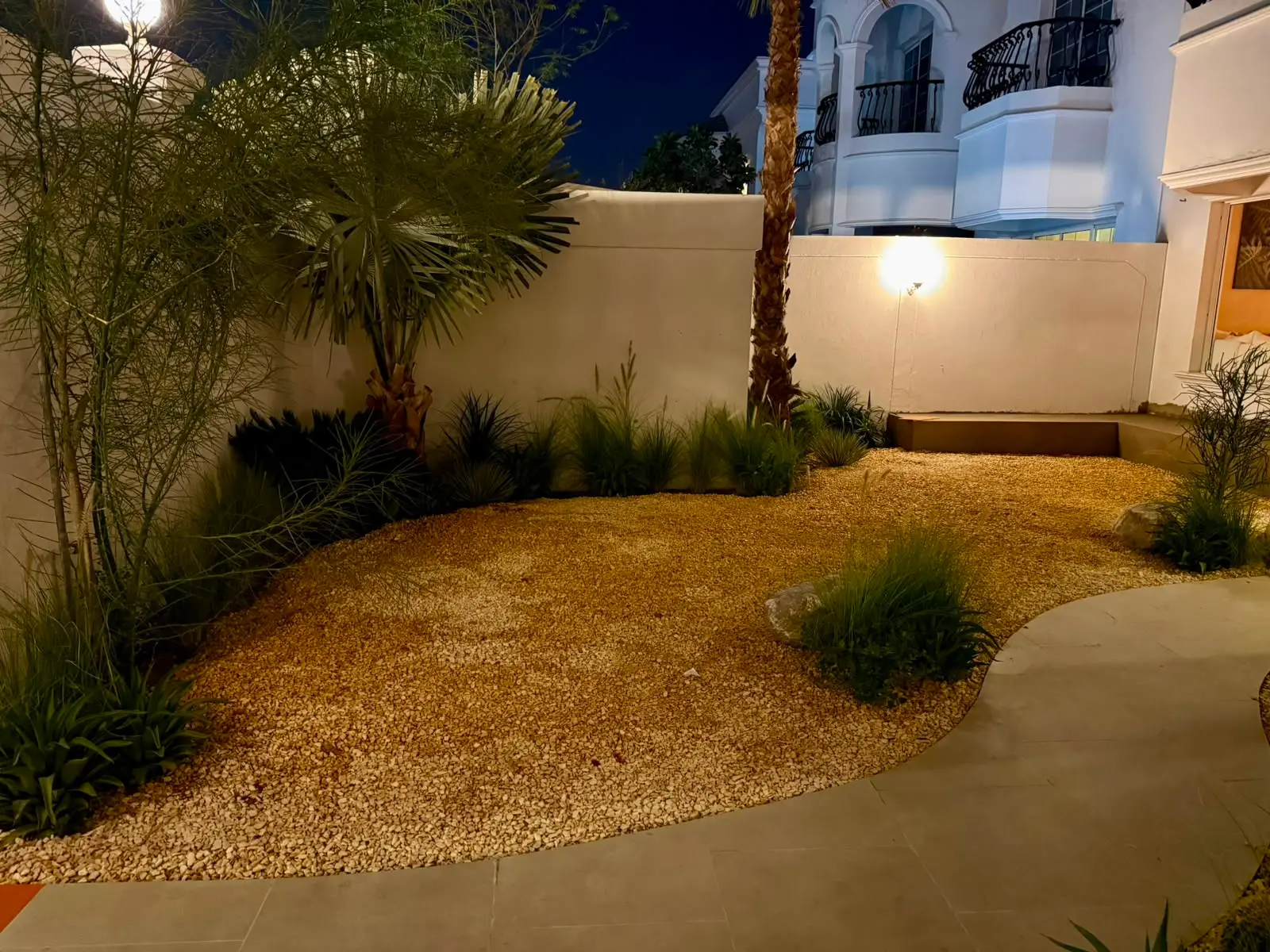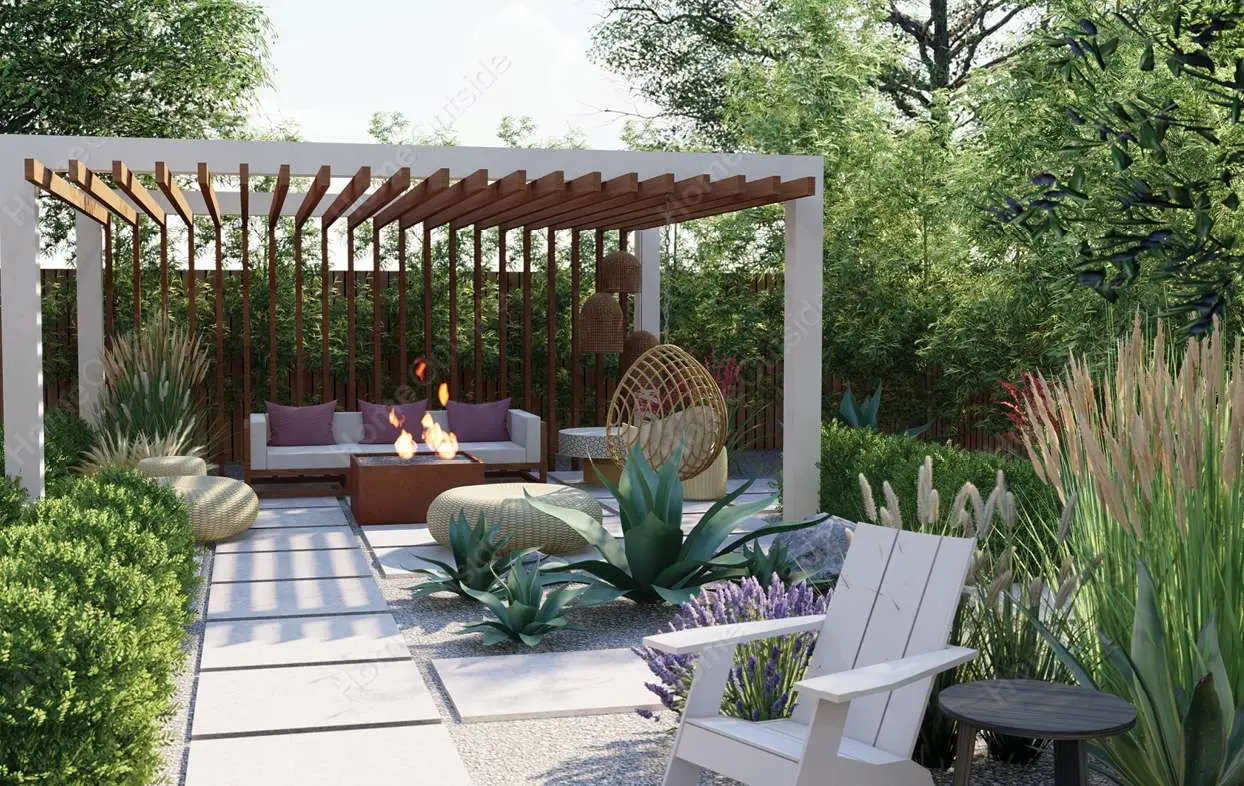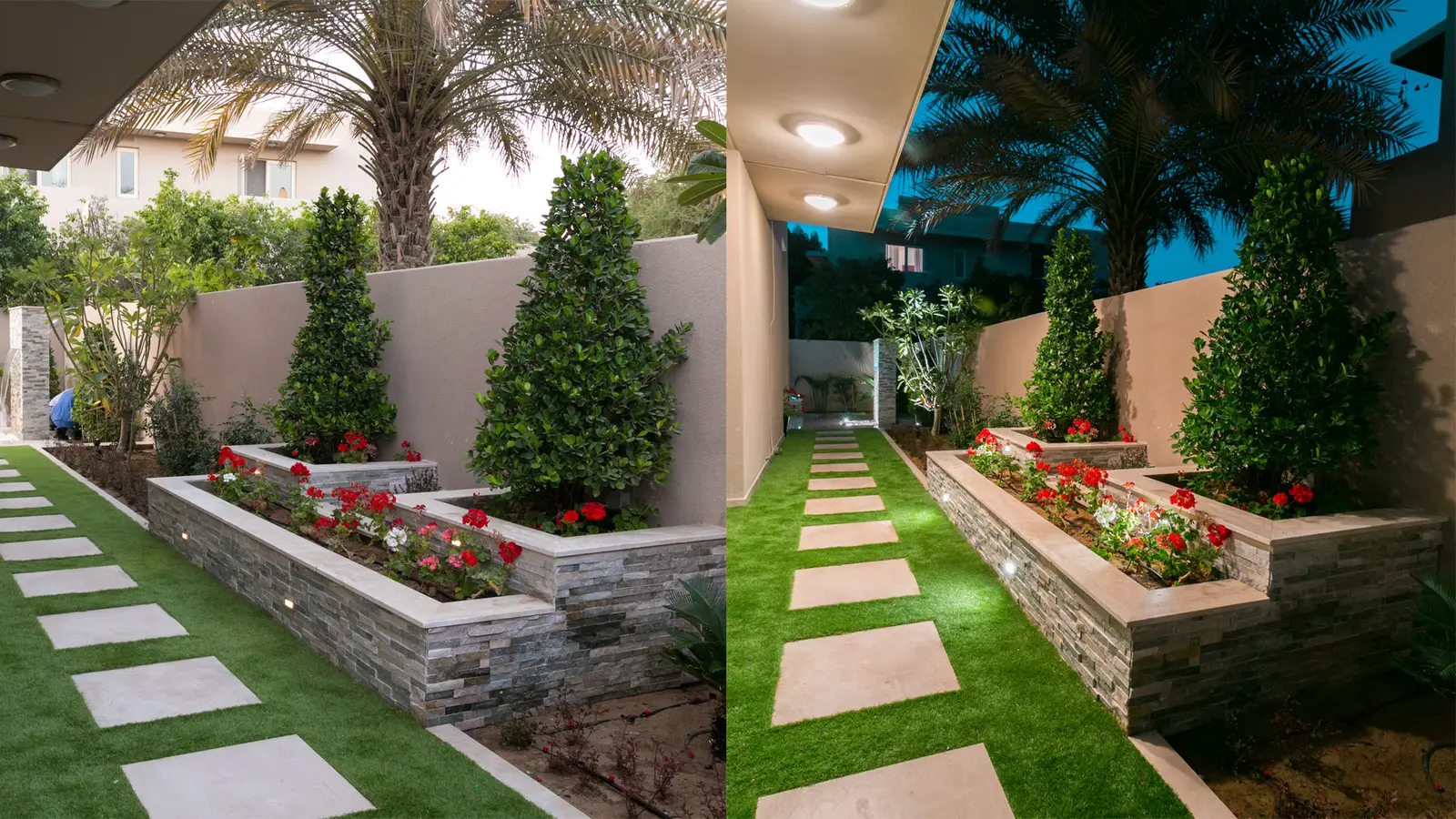
Small garden design in Dubai works best when you plan the space in clear zones, choose plants that cope with heat, and use walls, shade and light to add depth. You do not need a large plot to get a garden you enjoy. The key is to decide what the space is for before you choose any plants or materials.
Most small gardens in Dubai sit behind villas, townhouses or ground-floor apartments. In these spaces, the sun, the heat and the glare reflected from pale walls matter as much as the layout. The approach below suits most small plots, and you can build it in stages if your budget is limited.
What makes a small garden design work in Dubai?
A small garden design works when every part of the space has a job. A seating area, a planting bed, a path and a play or pet area can all fit into a small plot if each one has a clear place. When too many features compete for the same space, the garden feels cramped even if the total area is reasonable.
The climate shapes the design too. Average daily highs in July and August are about 43°C, based on 1991 to 2020 climate normals for Dubai, according to climate averages for Dubai, so most people use their garden in the early morning, in the evening, or in the cooler months of the year. Your design should give shade where people sit at those times, and it should use plants and materials that can handle strong sun and dry air.
How do you plan the layout of a small garden?
Good layout starts with measuring the space and deciding how you will use it. Follow these steps before you buy anything.
- Measure the plot and draw it to scale on paper. Include walls, doors, drains, existing trees and the edge of any pool.
- Note which parts get the most sun. Walls that face west usually receive the strongest afternoon sun, so these are good places for shade or for plants that need some protection.
- List the uses you want, such as dining, lounging, children playing, a barbecue, or a small lawn for a pet.
- Mark a zone for each use on your drawing. Connect the zones with one clear path, so people do not have to walk through a seating area to reach the plants.
Once the zones are on paper, check that each one has enough room to be used. A seating area for four people needs more space than a single chair and a small table, so measure the furniture you plan to buy before you fix the layout. For more ideas on compact spaces, see our small garden ideas guide.
Use one main path and a clear view
A straight or gently curved path from the back door to the far corner makes a small garden feel organised. The eye follows the path, which makes the space seem longer. Avoid many short paths that break up the planting beds, because each break makes the garden look smaller.
Which features make a small garden look bigger?
Three features help most: a limited number of materials, a clear view line and open ground in the centre. Using the same paving across the garden makes it read as one space rather than several small ones. A view from the house into the garden, with a planting bed or a feature at the far end, gives the eye a place to rest.
Light colours can help, but they need care in Dubai. Pale surfaces reflect more sunlight than dark ones, so they usually stay cooler in the sun. Check the product data for any paving or tile you plan to use, because the finish and colour both affect how hot it gets. Light colour works best alongside shade and planting, not instead of them.
Which plants suit a small garden in Dubai?
For a small garden, choose plants that stay a manageable size and can handle heat and dry air. Taller plants can block light and fill the space quickly, so check the mature height before you plant. A local nursery or landscaper can confirm which options suit your sun, wind and soil.
| Option | Why it suits a small garden | What to watch for |
|---|---|---|
| Compact shrubs | Fill a bed without spreading onto the path | Trim them regularly to keep their shape |
| Climbers on walls | Add colour and greenery without using floor space, such as bougainvillea | Need regular pruning and a support such as a trellis or wires |
| Succulents and other desert plants | Handle heat and need less water once established | Need fast-draining soil, since many dislike ground that stays wet |
| Herbs in pots | Can be moved to find the right amount of sun or shade | Pots dry out faster in heat, so check them often |
| Artificial grass | Gives a green look in a very small space without mowing | Can get hot in direct sun, so choose a shaded area or check the product's heat performance |
Plant new beds only once the watering system is ready. New plants need regular water while their roots settle, so the irrigation matters as much as the plant choice. If your outdoor space is a balcony rather than a ground-level plot, our balcony garden ideas guide covers the same planning steps for a smaller footprint.
How can you use walls, shade and height?
In a small garden, height is often more useful than extra floor area. Climbers on a wall, a trellis on a fence, or a pergola over the seating area all add greenery or shade without taking up ground space. A pergola also creates an outdoor room, which makes a small garden feel like a place to sit rather than a strip to walk past.
Shade matters most where you sit. A pergola, a shade sail or a planted screen can cut direct sun on a seating area. For more on shade styles, read our guide to pergola and shade ideas for Dubai gardens. If you want a built structure, NAM Landscaping's pergola and shade service covers aluminium, timber, louvred and shade sail options.
Place taller plants at the edges
Put taller plants along a boundary wall or in a corner, not in the middle, so they do not shade the seating area or the path. Keeping the centre open is what makes the garden feel spacious.
What lighting suits a small garden?
Lighting makes a small garden usable after sunset, and it can make the space look deeper. Low lights along the path help people move safely. Lights on a wall or behind a plant add depth without taking up floor space. Keep the light in the seating area soft, because harsh light can make a small garden feel more like a yard than a retreat.
Outdoor fittings should be rated for dust and moisture. An IP rating shows how well a fitting resists solid objects such as dust, and liquids such as water, under the IEC 60529 standard. Check the rating on each fitting before you buy, especially if it sits near a sprinkler or in a sandy area. You can read more in our garden lighting ideas guide, and NAM Landscaping also plans landscape lighting for villa gardens.
Can a small garden have a water feature?
A small water feature can be a strong focal point. A wall fountain, a raised bowl or a pot-sized fountain takes up little space, and the sound of moving water can make a small garden feel calmer. Choose a size that fits the space, because a large feature can dominate a small plot.
Open water needs more attention in the heat. Water evaporates faster in hot, dry weather, so the level drops and needs topping up. Check it often, and keep the pump and power connections protected from dust. If the feature is near a pool, plan its position so it does not get in the way of the pool edge.
What does a small garden design cost in Dubai?
A small garden costs less overall because the area is smaller, but the price per square metre is the figure to compare between quotes. NAM Landscaping publishes indicative starting prices, which are confirmed in writing after a free site visit. Garden landscaping, covering design and build, starts from AED 120 per square metre. At that rate, a 30 square metre garden would start from about AED 3,600, before extras such as a pergola, lighting or a water feature.
Other published starting points include a garden water feature from AED 6,000 per project, a smart irrigation system from AED 2,500 per villa, and garden maintenance from AED 240 per month for a small villa garden. These are starting figures, not final prices. The real cost depends on your materials, access and chosen plan.
How do you build a small garden on a budget?
Build the garden in stages so the most important parts come first. Working in the wrong order can mean paying twice, for example by laying paving before the drainage or irrigation is fixed. Follow this order:
- Fix drainage, irrigation and any damaged walls first, because they are hard to reach once paving and planting are in place.
- Build shade over the main seating area next, so you can use the space while the rest of the garden is finished.
- Lay the paving for the paths and seating area, using one material where you can.
- Plant the beds once the watering system works, so new plants get water from the start.
- Add lighting last, once the paths and planting are set, so each fitting sits where it is needed.
Choose the irrigation system carefully, because it affects both plant health and your water bill. Drip irrigation delivers water slowly to the root zone, which reduces the overspray and runoff that spray heads can cause. How much water you save depends on the site, the plants and how the system is set up, so ask your installer to show you the zones and run times before you commit.
What mistakes should you avoid in a small garden?
- Trying to fit in too many features. A bench, a fountain, a barbecue and a lawn can fill a small plot, so pick the two or three that matter most.
- Choosing furniture that is too big. Oversized sofas and dining sets block paths and make the garden feel cramped.
- Planting shrubs too close to a wall. A plant that outgrows its spot can take over the space within a few years.
- Skipping a clear path. Without one, people walk across the planting beds, which damages plants and makes the layout feel random.
- Ignoring heat on hard surfaces. A bare, dark patio in full afternoon sun can be too hot to use.
A small garden rewards careful planning, and a free site visit is a good place to start if you are unsure of the layout. A designer can measure the space, check the sun and suggest a plan that fits your budget. You can read about the garden design service and what it includes before you book.