Growing vegetables in Dubai works best from October to April, when daytime temperatures are low enough for most crops to flower and fruit. Sow leafy greens, herbs, root crops, tomatoes and peppers in autumn, harvest through winter and spring, and switch to a short list of heat-loving crops such as okra, sweet potato and eggplant for the summer.
The other two things that decide success are soil and water. Native sand holds almost no water or nutrients, so most home growers use raised beds or containers filled with a proper soil mix, watered by drip irrigation on a timer. Get timing, soil and water right, and a small villa garden or even a balcony can give you a steady supply of salad, herbs and vegetables.
Why timing matters more than anything else in Dubai
Heat, not cold, is what limits a Dubai vegetable garden. In summer, coastal cities like Dubai regularly reach highs in the mid-40s °C, according to National Centre of Meteorology data reported by Reuters, and nights stay warm too.
That heat stops many fruiting crops from producing, even when the plants look healthy. University of Maryland Extension notes that tomato flowering and fruiting drop off above about 35°C, peppers shed flowers when nights stay above about 24°C, and bean plants stop flowering above about 29°C.
So the calendar does most of the work for you. Plant cool-season and fruiting crops as the weather cools in autumn, and they flower during the mild winter months when temperatures sit comfortably below those limits.
Dubai's vegetable growing seasons at a glance
- Main season (October to April): the window for almost everything, from salad leaves and root crops to tomatoes, peppers, cucumbers and most herbs.
- Shoulder months (late February to May): sow heat-loving crops such as okra, eggplant, sweet potato and melons so they are established before the worst heat. Cool-season crops start to bolt (run to seed) or turn bitter as temperatures rise, so finish them first.
- Summer (June to September): only heat-tolerant crops, protected by shade cloth, mulch and reliable drip watering. Many gardeners use these months to rest the beds, top up compost and repair irrigation.
These months are a guide, not fixed dates. If October stays hot, waiting two or three weeks before sowing is better than losing a tray of seedlings to one hot afternoon.
Planting table: what to grow and when
The table below gives approximate sowing or planting windows for Dubai. Adjust by a few weeks either way depending on the weather in a given year and how much shade your garden gets.
| Crop | Sow or plant | Typical harvest | Notes for Dubai |
|---|---|---|---|
| Lettuce, rocket, spinach | October to February | November to April | Sow small batches every 2 to 3 weeks for a steady supply. Bolts quickly once spring heats up. |
| Kale, Swiss chard | October to January | December to April | Pick outer leaves and the plant keeps producing for months. |
| Broccoli, cauliflower, cabbage | October to November | January to March | Need the whole cool season, so start early. |
| Carrots, radish, beetroot | October to January | December to April | Sow directly in deep, stone-free beds. Radish is ready in about a month. |
| Tomatoes | Seedlings September to November | January to April | Cherry types are the most forgiving. Stake or cage early. |
| Peppers and chillies | October to November | January to May | Hot chillies often carry on into early summer with afternoon shade. |
| Cucumbers, courgettes | October to November, again February | December to April | Grow cucumbers up a trellis to save space and keep fruit clean. |
| Peas, green beans | October to December | December to March | Beans stop flowering in heat, so finish them before spring warms up. |
| Okra | March to May | May to October | One of the most reliable summer crops. Pick pods young and often. |
| Eggplant | February to April | April to October | Long, slim varieties tend to cope with heat better than large round ones. |
| Sweet potato | March to May (slips) | August to November | Trails across the bed and shades its own soil. Leaves are edible too. |
| Basil, mint, parsley, coriander, chives | October to February | November to May | Basil and mint can survive summer in pots with afternoon shade. Coriander bolts first. |
Vegetables to grow in summer in Dubai
A small group of crops actually likes hot weather. University of Florida's IFAS Extension lists heat-tolerant vegetables such as okra, sweet potato, amaranth, Malabar spinach, yardlong beans, southern peas and roselle, and many of them are worth trying in a Dubai summer bed with shade and mulch.
The same source warns that carrots, beets, turnips and potatoes cannot take summer heat. Leave root crops and salad leaves for the cool season.
Three habits make the difference between a summer bed that survives and one that produces:
- Plant in spring, not summer. Okra, eggplant and sweet potato sown in March or April have deep roots by June. Seeds sown in July struggle to establish.
- Shade the hottest hours. Even heat-tolerant crops benefit from shade cloth over the bed from about May to September.
- Mulch thickly. A 5 to 8 cm layer of bark, straw or compost keeps the soil cooler and slows evaporation between drip cycles.
Raised bed garden plans and designs that work in Dubai
A raised bed is a box or mound of improved soil that sits above the ground. In Dubai it solves the biggest problem directly: instead of working with native sand, you fill the bed with a soil mix that holds water and nutrients.
Size and layout
Keep beds no wider than about 1.2 m (4 ft) so you can reach the centre from either side without stepping on the soil. Use a narrower bed if you can only reach it from one side, such as one built against a wall.
For depth, aim for at least 30 cm of soil for salad leaves and herbs, and 40 to 45 cm for tomatoes, eggplant and carrots. Deeper soil holds more water, which gives roots a buffer on hot days.
Leave paths of at least 45 cm between beds, and wider (around 60 to 90 cm) if you want to kneel or use a wheelbarrow. Gravel, pavers or bark make clean paths that don't turn to mud when the drip system runs.
Choosing a bed design
Most raised garden bed designs fall into a few types. Each has trade-offs in a hot climate.
| Bed type | Good points | Watch out for |
|---|---|---|
| Timber frame | Easy to build, looks warm and natural, simple to fix drip lines to. | Use durable or heat-treated timber. Untreated softwood weathers fast in sun and irrigation water. |
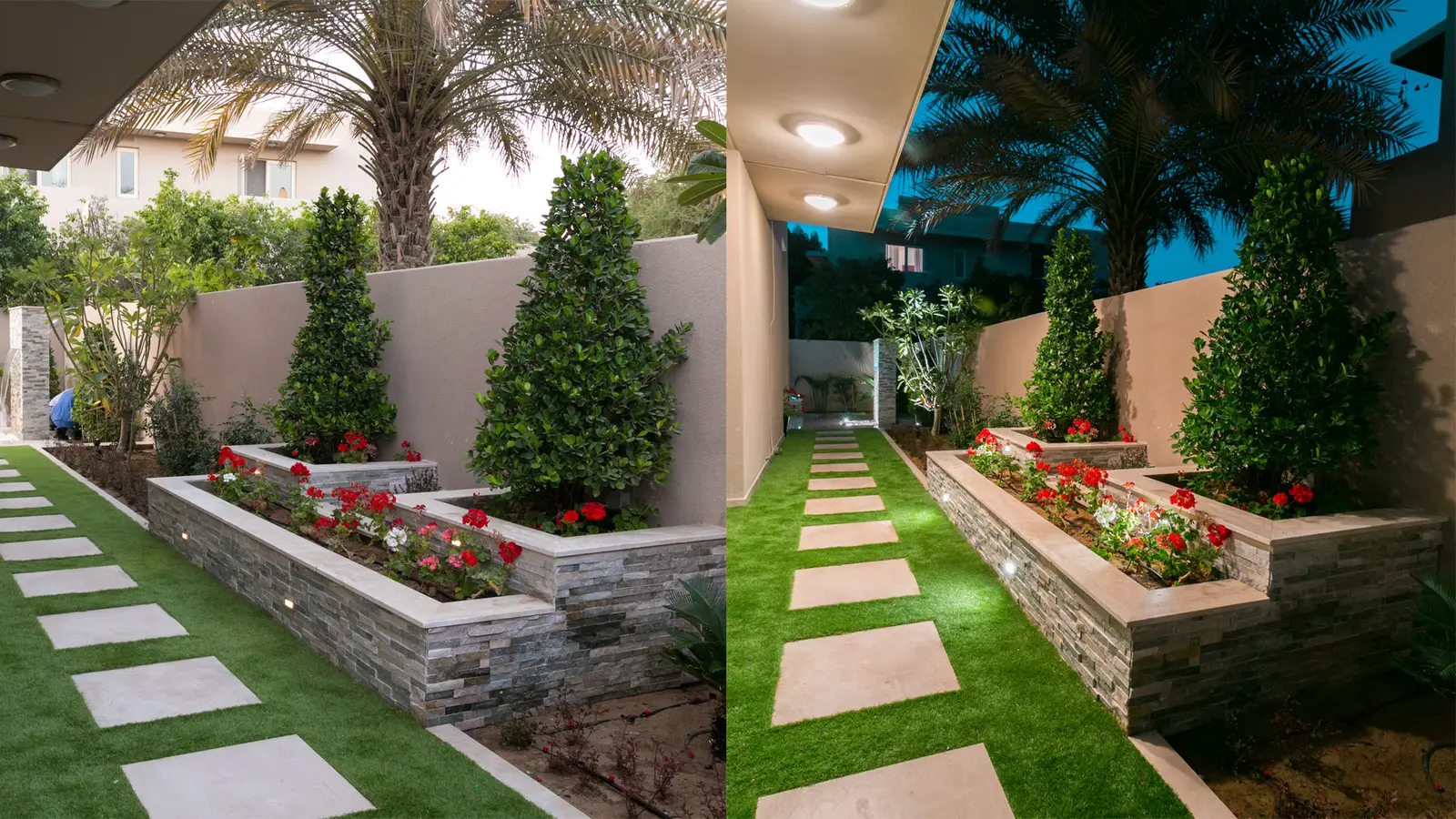
| Concrete block or rendered masonry | Very long-lasting, can match villa walls, wide tops double as seating. | Blocks absorb heat and can warm the soil at the edges. Hard to move or change once built, so plan the layout carefully. |
| Galvanised steel or aluminium | Modern look, quick to assemble, comes in round and oval shapes. | Metal gets hot in direct sun. Place in partial shade or paint a light colour. |
| Circular or keyhole bed | Attractive centrepiece, easy reach from all sides. | Drip layout is harder to plan. Keep the diameter at about 1.2 to 1.5 m. |
| Tiered or stepped beds | Fit sloping gardens and look good in front of a wall. | Upper tiers dry out faster, so they need their own drip zone or extra emitters. |
Flower and mixed raised beds
Raised flower bed plans follow the same size and soil rules as vegetable beds. A mixed bed puts flowers where they help the vegetables: marigolds and nasturtiums along the edges, trailing herbs over the sides, and a tall centre of tomatoes or beans on a trellis.
For a flower and vegetable garden layout that looks good all year, plant colour in the front rows and vegetables behind. Pick flowers that tolerate the same cool-season window, and replace them as spring heats up. A contemporary look comes from low, clean-edged beds in one material, planted in blocks instead of random rows.
Orientation and sun
Most vegetables need at least six hours of direct sun in winter. In Dubai that is easy to get from October to March, but too much sun becomes the problem from April onwards.
Place tall crops such as tomatoes and climbing beans on the north side of a bed so they don't shade shorter plants. A bed with morning sun and some afternoon shade from a wall or tree often performs best across the season.
Soil mix for vegetable beds in Dubai
Native Dubai sand drains fast and holds very little water or plant food, so it is a poor growing medium on its own. A raised bed needs a blend that holds moisture without becoming waterlogged.
A practical starting mix is roughly:
- about 50 to 60 percent good garden soil (often sold locally as "sweet soil");
- about 30 to 40 percent well-rotted compost or aged manure;
- a small amount of perlite or coarse sand if the soil is heavy.
Treat these proportions as a guide rather than a recipe. What matters is the result: soil that crumbles in your hand, stays moist for a day after watering and drains without puddling.
Compost breaks down quickly in heat, so top each bed up with 3 to 5 cm of fresh compost at the start of every season. Before planting, check the bottom of the bed drains freely. If it sits on compacted soil or a concrete slab, water will collect at the base and roots will rot.
Watering: why drip irrigation is the standard
Drip irrigation delivers water slowly through small emitters right at the base of each plant. That suits Dubai well, because very little water is lost to evaporation or wind, and the leaves stay dry.
Penn State Extension notes that drip gives high water-use efficiency because plants receive more precise amounts of water, and that disease pressure can be lower because foliage stays dry. It also points out the main drawback: emitters have tiny holes, so a filter is needed to stop them clogging.
A simple drip setup for a vegetable area looks like this:
- Connect a separate zone to your irrigation controller, so vegetables are not watered on the same schedule as lawn or shrubs.
- Add a filter and pressure regulator at the start of the zone to protect the emitters.
- Run inline drip lines along each bed, roughly 30 cm apart, so the whole bed is wetted rather than single spots.
- Cover the lines with mulch to slow evaporation and protect the tubing from sun damage.
- Water early in the morning, and add a second short cycle in late afternoon during the hottest months if plants wilt.
To check the system, make sure every emitter drips steadily and the soil 10 cm down feels moist a few hours after a cycle. Dry patches usually mean a blocked emitter.
For more detail on controllers, zones and run times, see our garden irrigation guide for Dubai. If you'd rather have it installed, NAM Landscaping fits smart irrigation systems for villa gardens, from AED 2,500 per villa as an indicative starting price, confirmed after a free site visit.
Shade cloth: how much and when
Shade cloth is a woven or knitted net that blocks a set share of sunlight, labelled by percentage. A 40 percent cloth blocks about 40 percent of the light.
A SARE-funded fact sheet on shade cloth gives 30 to 50 percent as a general rule for protecting vegetables from summer heat, and notes it can slow bolting in lettuce and spinach. That guidance comes from a milder climate, so in Dubai's stronger sun the upper end of that range is the sensible starting point for fruiting and leafy crops.
Fit the cloth from around late April or May, when spring crops start to stress, and take it down in October so winter crops get full light. Hoops or a simple frame 60 to 90 cm above the bed let air move underneath, which matters in humid coastal weeks.
For a more permanent option, a pergola or shade structure over part of the garden can protect a vegetable and herb area year round. You can compare options in our guide to pergola and shade ideas for Dubai gardens.
Greenhouses in Dubai: what to expect
A traditional glass or plastic greenhouse traps heat. That is the point in cold countries, but in a Dubai summer temperatures inside can climb well above the air outside, which can quickly damage plants unless there is powered ventilation and cooling.
Evaporative coolers work best in dry air. University of Florida IFAS Extension notes that evaporative cooling has limitations in hot, humid climates, so in humid coastal weather they cool less. Running a sealed greenhouse through summer can therefore be costly in electricity and water.
For most home gardens, these options make more sense:
- A shade house: a light frame covered in shade net on the roof and sides. It cuts sun and wind, keeps birds off, and stays usable most of the year.
- A small seedling greenhouse: useful from October to March for raising seedlings, then opened up or covered with shade net for summer.
- Insect mesh tunnels: low hoops over a bed covered with fine mesh, which keep out whitefly and caterpillars during the main season.
Small greenhouse and shade-house layout
A DIY small greenhouse or shade house for seedlings does not need to be big. A frame about 2 m by 1.5 m with a door at one end fits two tiers of shelves and a work shelf, and it is easy to cover with shade net in summer.
Put the door on the side away from the strongest afternoon sun and add vents or mesh panels high and low so hot air can escape. Slatted shelves along the long sides leave a central walkway. Face the frame so it gets winter morning sun, and keep it close to a tap.
Before installing any permanent structure, check your community developer's rules. Many villa communities require approval for garden structures, and the rules vary between communities.
Vegetable garden ideas for different spaces
The same principles apply to a large backyard and a small balcony. Only the layout and container size change.
Easy and DIY small-space vegetable gardens
For an easy small vegetable garden, start with one raised bed or a few grow bags, a trellis and a drip line on a timer. Grow bags of 30 to 40 litres are cheap, light and easy to move out of the sun.
Go vertical to save space: cucumbers, beans and cherry tomatoes on a trellis or wall frame. Good beginner crops for Dubai's cool season are lettuce, radish, spring onions, herbs and cherry tomatoes, because they are quick and forgiving.
Backyard vegetable garden layout
A typical villa backyard can fit two to four raised beds of about 1.2 m by 2.4 m, which is enough for salad, herbs and a few fruiting crops. Put the beds where they get winter sun, close to a water point and away from tree roots.
A layout that works well is a row of parallel beds with a trellis along the north edge for cucumbers and beans, a compost bin in a shaded corner, and a gravel path wide enough for a wheelbarrow. Mixing flowers such as marigolds and nasturtiums into the edges adds colour and attracts pollinators. For more layout ideas in tight spaces, see our small garden ideas for Dubai.
Front yard vegetable gardens
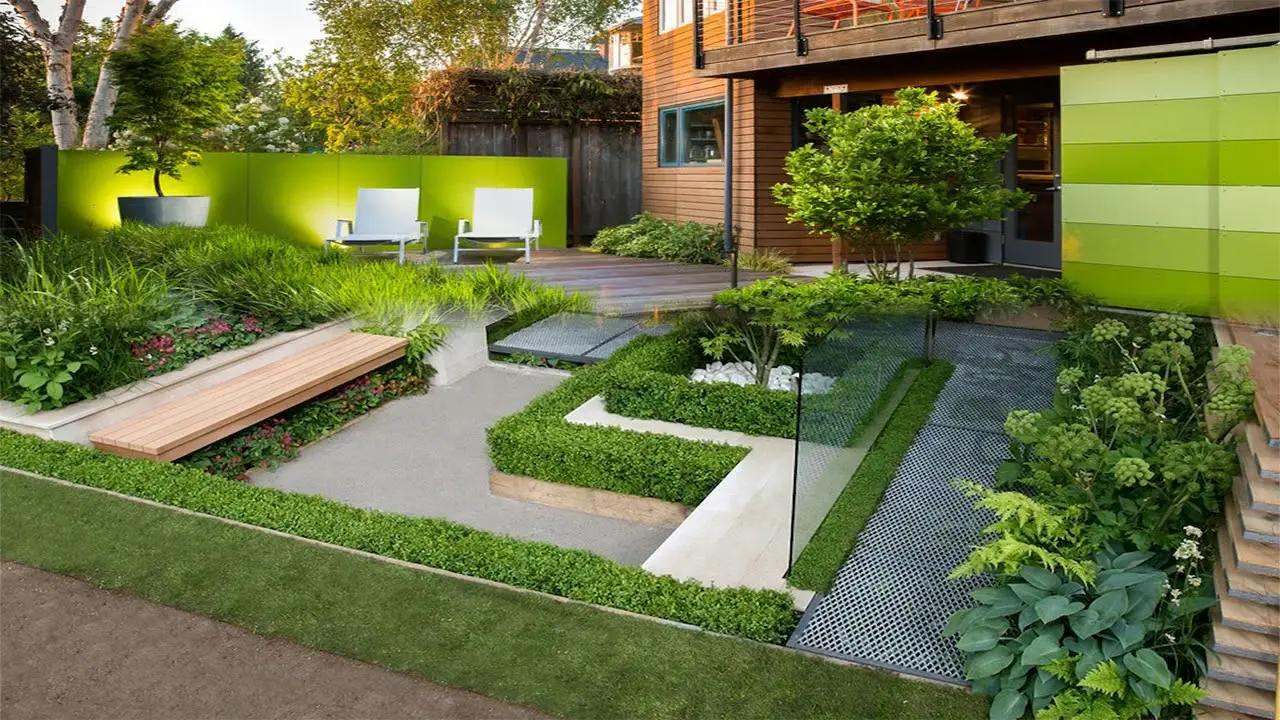
Front yard raised beds can look formal and tidy if you treat them as part of the landscape design. Matching bed materials to the villa's paving or walls, using clean edges and mixing herbs with ornamental plants keeps the front garden attractive even between harvests.
If you want to replace part of a front lawn, start with a bed along the sunniest edge instead of removing it all. A potager-style layout, with clipped herbs, leafy vegetables and flowers in a symmetrical pattern, gives a creative vegetable garden design that looks planned and ornamental. Check community rules before changing a front garden visible from the street.
Lavender is a popular choice for front yard herb borders, but it prefers dry air and very sharp drainage. In Dubai it tends to do best as a cool-season plant in pots or well-drained beds, and many gardeners replace it after summer.
Balcony and container vegetable gardens
Containers let apartment residents grow herbs, cherry tomatoes, chillies, lettuce and spring onions. The key is container size: small pots dry out in hours on a sunny balcony.
- Herbs and salad leaves: pots at least 20 to 30 cm wide and deep.
- Cherry tomatoes, peppers, eggplant: at least 30 to 40 litres per plant.
- Grouping: clustering pots together creates a little shade and humidity between them, which cuts water loss.
Use saucers or a drip tray to protect the floor and neighbours below, and check your building's rules on watering and items near railings. Our balcony garden ideas for Dubai covers wind, weight and building rules in more detail.
Herb garden layout
A basic herb garden layout groups plants by their water needs. Mint, basil, parsley and coriander like regular moisture. Rosemary, thyme and oregano prefer to dry out between waterings.
Mint spreads aggressively through a bed, so give it its own pot. Place the herb pots or bed as close to the kitchen as you can, because herbs you can reach easily are the ones that get used.
For a container herb garden on a small patio, use a tiered shelf or a wall planter and give each pot drainage holes. Put the thirsty herbs at the bottom, where water runs down, and the drier Mediterranean herbs at the top.
Indoor herbs work on a bright windowsill with a few hours of sun. Basil, chives and parsley manage indoors in the cooler months, but air-conditioned rooms are dry, so check the pots often and rotate them for even light.
Common problems and how to fix them
Most problems in a Dubai vegetable garden trace back to heat, water or pests.
- Flowers but no fruit on tomatoes or peppers: usually heat. If days are above about 35°C, the plant drops flowers. It often recovers when the weather cools, so keep the plant watered rather than pulling it.
- Yellowing lower leaves: often too much water in a bed that does not drain, or a lack of nitrogen. Check drainage first, then feed.
- Sticky leaves and tiny white insects: whitefly or aphids, common in warm weather. Spray with water, use insect mesh, and remove badly infested leaves.
- Lettuce and coriander suddenly growing tall and bitter: bolting, triggered by rising heat in spring. Harvest early and resow in autumn.
Keeping a vegetable garden going through the year
A vegetable garden needs small, regular jobs: in the main season, weekly drip checks, frequent harvests and new salad sowings every few weeks; in summer, shade cloth up, mulch thick and unused beds rested. Each autumn, add fresh compost before replanting.
If you'd like help, NAM Landscaping's garden maintenance service in Dubai covers routine garden care, with a photo report sent to WhatsApp after each scheduled visit. For ideas on ornamental plants to grow alongside your vegetables, see our guide to the best outdoor plants for Dubai.