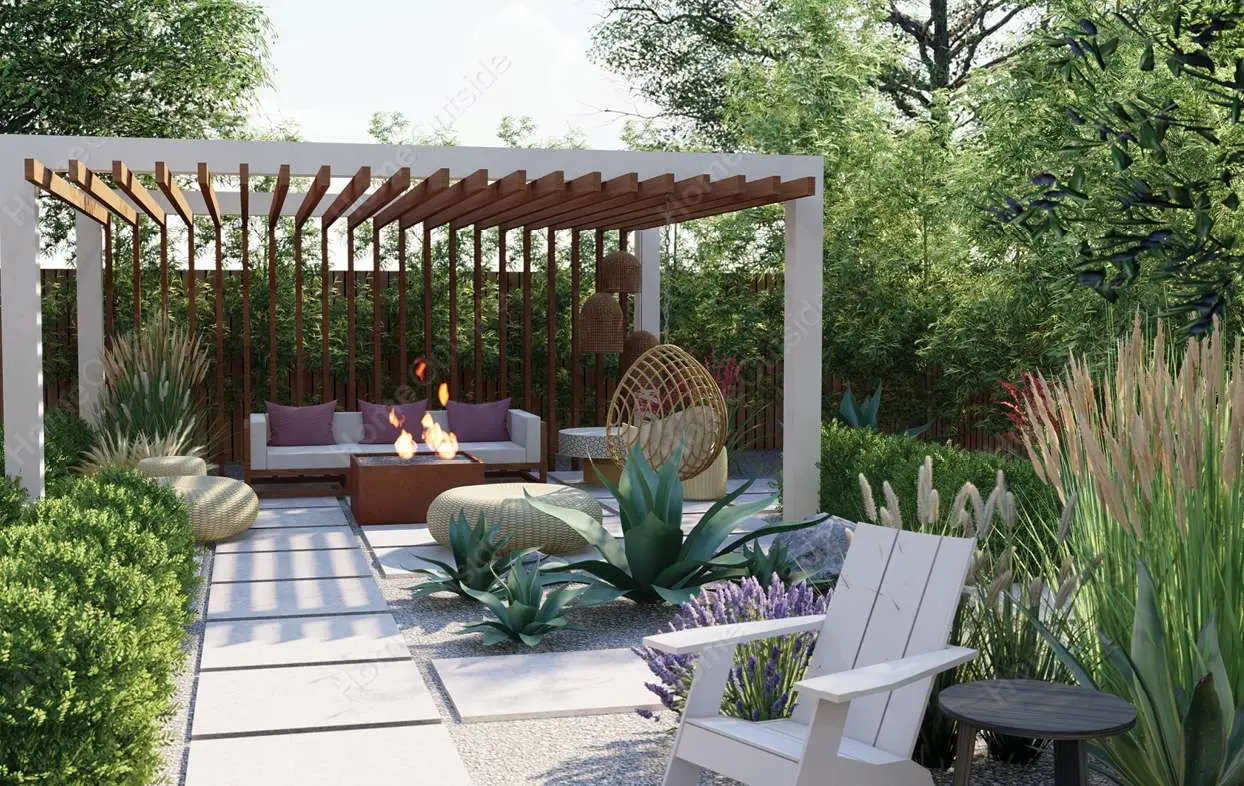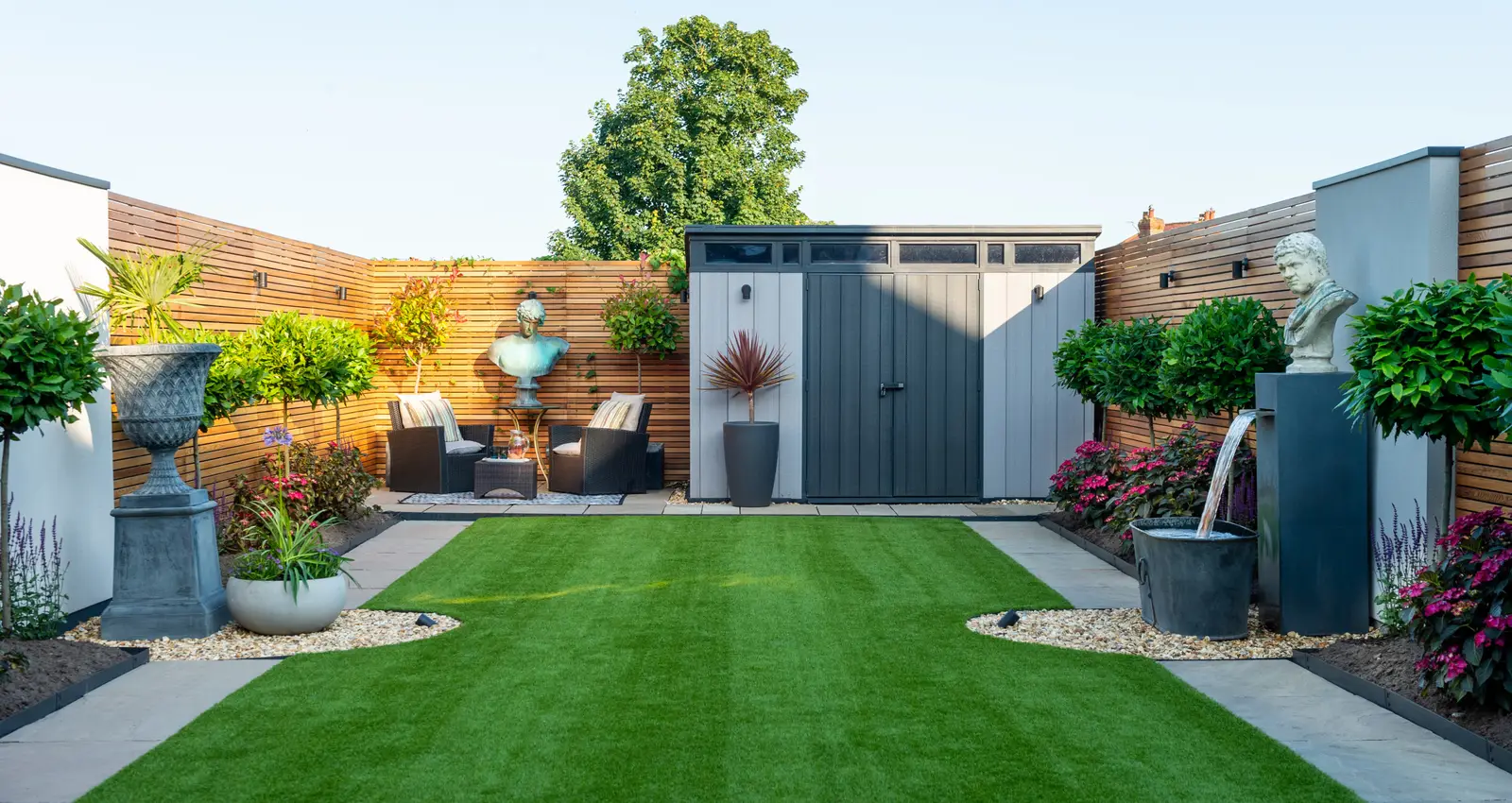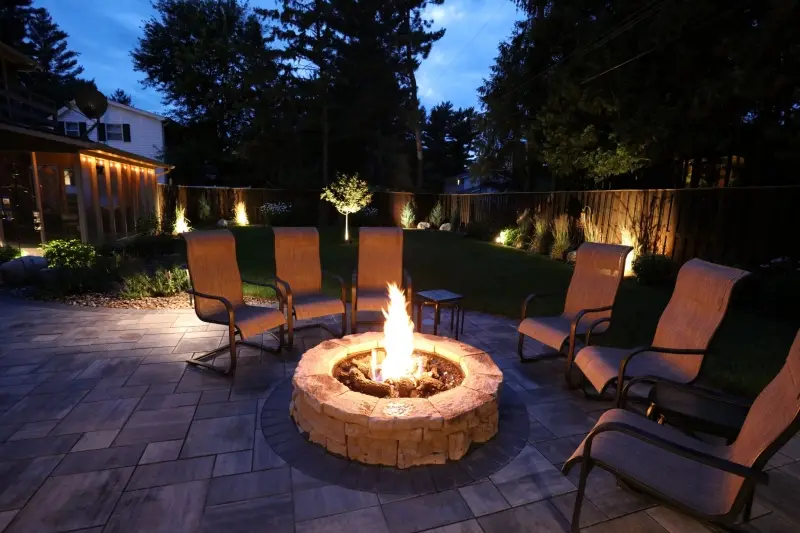
Good outdoor lighting in Dubai lights the paths, steps, entrances and seating areas you use after dark. It uses fittings that can handle fine dust, strong sun and the occasional splash from a sprinkler. Most gardens work best with LED fittings on a simple plan: light the places people walk, then add a few accent lights for trees and walls.
How to plan outdoor lighting in Dubai gardens
Start by walking the garden after sunset with a torch. Mark the path from the gate to the front door, any steps, the edges of a pool or water feature, and each seating area. These are the places where a light prevents trips and falls. Then note the features you want to show off, such as a palm, a wall or a pergola. NAM Landscaping's landscape lighting service covers lighting as part of its garden landscaping and design work, and it starts with a free site visit.
Next, decide what each light is for. A path light should sit low and have a shield so it lights the ground without shining into your eyes. An uplight on a tree or wall adds mood, but it needs more fittings to look even and uses more power. Keeping these two jobs on separate switches makes the garden easier to use.
Lights near a pool need extra care. Plan the edge so people can see the water line and the steps clearly. For more layout ideas around water, see pool landscaping ideas.
Types of outdoor lights in Dubai gardens
Outdoor lights fall into a few main types, and each one does a different job. The table compares them by use and by the detail to check before you buy.
| Type | Common use | What to check |
|---|---|---|
| Path and bollard lights | Walkways, steps and driveway edges | A shield over the lamp, and a sealed housing for ground-level spots |
| Wall lights | Entrances, side gates and villa walls | Mounting height, and a housing that resists heat |
| Spike or ground lights | Planting beds, trees and feature plants | Stake depth, sealed connections, and IP67 where water can pool |
| Lamp posts | Front gardens and long driveways | The post base, the cable route, and how well the post handles wind |
| String lights | Terraces, pergolas and dining areas | An outdoor rating, UV-resistant cable, and fixing points |
| Solar lights | Small spots where no cable is run | Panel position, battery quality and warranty |
Lamp posts and string lights are mainly decorative. They give a welcoming look at the entrance or over a dining area, but they light less ground than path lights. Use them as an addition to your main path lighting, not as the only light in the garden. If you want to combine string lights with shade, see pergola and shade ideas for Dubai.
For more layout ideas, see garden lighting ideas.
Solar outdoor lights in Dubai
Solar outdoor lights need no cable, which makes them simple to place. A small panel charges a battery during the day, and the battery powers the light at night. In Dubai the sun is strong for much of the year, so a panel in full sun can gain a good charge.
The weak points are the panel position and the battery. A panel in the shade of a wall or tree may not charge enough to last through the night. The battery is the part to check first, because it limits how long the light runs and how long the fitting lasts. Solar lights suit spots where running cable is hard, but most garden plans still rely on mains or low-voltage lights for the main paths.
IP ratings for outdoor lighting in Dubai
The IP rating is a two-digit code printed on many outdoor fittings. IP stands for Ingress Protection, and the code is defined by the international standard IEC 60529. The first digit rates protection against solid things such as dust. A first digit of 6 means the fitting is dust-tight. That matters in Dubai, where fine sand and dust can settle into loose housings and cloud the lens.
The second digit rates protection against water. IP65 means the fitting can handle water jets from any direction, such as rain and hose splashes. IP67 adds protection against temporary immersion, up to 1 metre deep for 30 minutes, without harmful water entering the housing. The IP code overview on Wikipedia sets out these levels.
Which one you need depends on where the light sits. For a wall light above ground that only sees rain and hosing, IP65 is usually enough. For a light near a lawn that gets sprinkler spray, a light at ground level, or a spot where water can collect, IP67 is the safer choice. Ask the manufacturer for a datasheet or test certificate that shows the rating, because a printed label alone does not show how the test was done.
Low-voltage or mains: which power supply suits your garden?
Garden lights run on one of two supplies. Mains fittings run directly on household voltage. Low-voltage fittings usually run on 12V or 24V, supplied through a transformer that steps the mains supply down. Low-voltage systems use thinner cable and are easier to extend, and the lower voltage on the cable run lowers the shock risk for people, children and pets.
The transformer connects to the mains supply, so that connection should be made by a licensed electrician. Running the low-voltage cable is the part many homeowners can handle, but check the local requirements first. Longer runs lose more voltage, which can make the fittings at the far end look dim. Choose a transformer rated for the total wattage of your fittings, with some headroom for later additions.
Mains fittings avoid the transformer and suit a new build where the wiring is already planned. The work is more involved, though, and it should be checked against local rules. Whichever you choose, confirm the requirements with the community developer or the relevant authority before you start.
Choosing outdoor lights for Dubai's heat and dust
Average daily highs in Dubai sit at around 41 to 42 °C in July and August, according to the climate of Dubai overview. Heat is hard on plastics, seals and batteries, so a fitting that works well in a cool climate may age faster in a Dubai garden.
Look for a housing made from UV-stable material and a clearly stated operating temperature range on the datasheet. Pay attention to seals around the lens and cable entry, because these are where dust and water usually get in. Wiping lenses and checking seals every few months keeps the light bright and protects the fitting.
How to keep outdoor lighting energy use low
Lighting energy use depends on how many fittings you run, how bright they are and how long they stay on. LEDs use less electricity than older halogen or incandescent bulbs for the same light, so LED fittings are a sensible choice for most of the garden.
Timers and photocells cut the run time. A photocell, also called a dusk-to-dawn sensor, switches lights on at dusk and off at dawn. A timer runs the lights for fixed hours. Use a photocell for entrance and path lights, and use a timer for decorative lights you want off late at night. Put uplights and decorative lights on their own switch so you can turn them off while keeping path lights on.
A quick check: walk the garden after dark with the lights at their planned brightness, then switch off any fitting that does not help you see a path, step, gate or seat.
What affects the cost of garden lighting in Dubai
The cost of garden lighting depends on the number of fittings, the cable length, the transformer, the type of fittings and whether the work is part of a new build or an existing garden. A plan with many uplights and a long cable run costs more than a short path with a few path lights.
NAM Landscaping does not publish a starting price for lighting. The company offers a free site visit and a written, itemised quote before work starts, so you can see each part of the cost. Our landscape lighting service in Dubai covers lighting as part of garden landscaping work. For a wider view of garden costs, read what landscaping costs in Dubai.
Common outdoor lighting problems and how to fix them
Most lighting faults show up in a few predictable ways. Check the symptom first, then the likely cause.
Fittings at the far end of the cable run are dim
This usually means voltage drop along a long cable. Note the brightness of the fittings near the transformer and those at the far end. If the difference is clear, shorten the run, use thicker cable for the main line, or move to a higher tap on the transformer if it has one. An electrician can confirm the right fix.
Fittings fog up or fail after a few months
Moisture inside a fitting usually comes from a poor seal or a damaged gasket. Check the IP rating against where the fitting sits, and look for cracks around the lens or the cable entry. A ground-level fitting in a lawn that gets sprinkler spray needs IP67 or a well-sealed housing. Reseal or replace a fitting that lets water in, rather than leaving it open to the weather.
Lights come on in daylight or stay on all night
A photocell that sees a lamp, a window or reflected light will switch at the wrong time. Move the sensor to a spot that sees the open sky at dusk and is away from other lights. If the lights stay on after dawn, check the timer settings and the photocell position before you change the fittings.