A vertical garden in Dubai can thrive, but only if three things are in place from day one: an automatic drip system, plants matched to how much sun the wall gets, and a plan for summer, when a thin layer of growing medium dries out within hours. Rooftop gardens and terrace gardens add a fourth requirement: the structure must be able to carry the weight of wet soil and stay watertight underneath.
This guide explains the main green wall systems, how to water them, which plants cope with the heat, what a roof needs before you plant on it, and when an artificial green wall is the more honest choice.
What Is a Vertical Garden in Dubai, and Why the Heat Makes It Harder
A vertical garden (also called a green wall or living wall) is a planting system fixed to a wall, so plants grow upward instead of across the ground. It can be as simple as a climber on a trellis or as complex as a full wall of modular planting panels with their own irrigation.
The challenge in Dubai is heat and water loss. Summer daytime highs regularly pass 40°C, and National Centre of Meteorology records for Dubai show a record August maximum of 48.8°C (1977 to 2016), as reported by Gulf News. A wall-mounted pocket holds only a few litres of growing medium, so it has very little water in reserve on a day like that.
Coastal humidity, dust and hard water add to the workload. Humid nights slow drying and can encourage fungal problems in dense planting. Dust settles on leaves and blocks light, and mineral-rich water can leave scale in small drip emitters over time.
Vertical Garden Ideas: Which System Suits Your Wall
Most vertical wall garden ideas fall into four types. The right one depends on the size of the wall, how much sun it gets, your budget and how much maintenance you can commit to.
| System | How it works | Best for | Main limitation |
|---|---|---|---|
| Trellis or cable with climbers | Climbing plants grow from a bed or large planter at the base, up wires, mesh or a trellis | Large boundary and compound walls, sunny walls, low budgets | Takes one or more seasons to cover the wall; coverage is never as uniform as a panel system |
| Modular panels or trays | Rigid plastic or metal modules hold individual plants in soil or substrate, with drip lines built in | Feature walls, entrances, designs that need full coverage from day one | Higher upfront cost; modules dry quickly and depend completely on irrigation |
| Felt pocket systems | Plants sit in fabric pockets fixed to a waterproof backing, watered from a line along the top | Shaded or covered walls, lighter installations | Very little growing medium, so the least forgiving in full summer sun |
| Stacked planters and wall pots | Shelves, ladder planters or hanging pots arranged vertically | Balconies, apartment terraces, small spaces, renters | Hand watering is hard to keep up in summer unless you add a drip kit |
For many Dubai villas, the trellis-and-climber approach gives the best result for the money on large sunny walls, because the plant roots sit in a deep bed at ground level rather than in a small pocket on a hot wall. Modular panels make more sense for a smaller feature wall where you want instant, even coverage and you are prepared to maintain the irrigation carefully.
Which wall should you choose?
Choose a north- or east-facing wall if you have the option, because orientation matters more than the system. A north-facing wall gets the least direct sun and an east-facing wall gets only the gentler morning sun, so both are easier to keep green.
A west-facing wall takes the afternoon heat and is the hardest place for a living wall. If west is the only option, use tough sun-loving plants or a climber rooted in the ground rather than delicate foliage in pockets.
Irrigation and drainage: the part that decides success
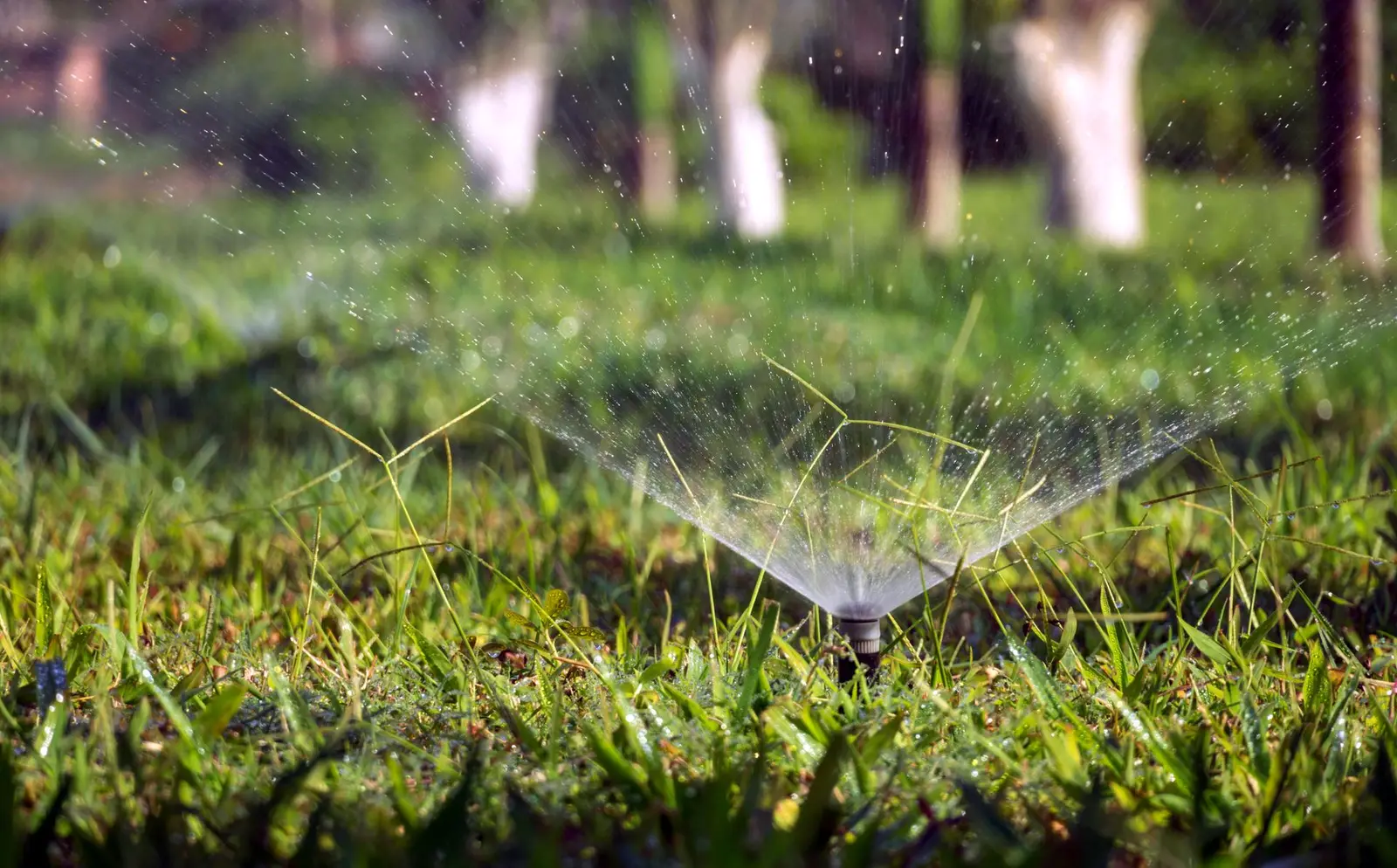
A living wall in Dubai needs automatic drip irrigation on a timer or controller. Hand watering is not reliable enough, because a single missed summer day can kill plants in shallow pockets.
A good setup usually includes:
- Drip lines or emitters at each row, so water reaches every level rather than draining past the top plants.
- A filter at the start of the line to reduce clogging from sediment and scale.
- Several short watering cycles rather than one long one, because a thin layer of medium cannot absorb a large volume at once and the excess just runs off.
- Early morning and evening timings in summer, when less water is lost to evaporation.
- A catch tray or drain at the base, so runoff does not stain paving or pool around the wall foundation.
- A waterproof backing between the system and the wall, so constant moisture does not soak into plaster or block.
Hard water is worth planning for. Check the emitters regularly and flush the lines, because one blocked emitter can leave a whole column of plants dry while the rest of the wall looks fine. Our garden irrigation guide for Dubai explains drip systems, timers and summer schedules in more detail, and a smart irrigation system can adjust watering as the season changes.
Best plants for vertical and rooftop gardens in Dubai
The best plants for a green wall here are the ones that match the light on that exact wall and can tolerate drying out a little between waterings. Group plants with similar water needs on the same irrigation line, so one thirsty plant does not force you to overwater everything else.
| Plant | Light | Best use | Notes |
|---|---|---|---|
| Bougainvillea | Full sun | Trellis on sunny walls, roof terraces | Drought tolerant once established and flowers best in full sun; needs well-drained soil (NC State Extension). Thorny, so keep it away from seating. |
| Creeping fig (Ficus pumila) | Sun to shade | Covering boundary walls | Its adhesive pads make it hard to remove, and UF IFAS advises against growing it on house walls, so keep it to boundary walls (University of Florida IFAS). |
| Succulents (aloe, portulaca, sedum types) | Bright light (check each type) | Modular panels, rooftop planters | Store water in their leaves, so they usually cope with short gaps in watering. Too much water can cause rot. |
| Sansevieria (snake plant) | Part shade to shade | Covered terraces, stacked planters | Slow-growing and tolerant of dry spells. |
| Pothos and philodendron | Shade or bright indirect light | Shaded walls, covered courtyards, felt pockets | Lush trailing foliage, but the leaves can scorch in direct summer sun. |
| Herbs (rosemary, thyme, mint) | Morning sun, afternoon shade | Kitchen terraces, wall pots | Easiest in the cooler months; mint needs more water than rosemary or thyme. |
Expect some losses in the first summer, even with good choices. Treat the first year as a trial, and replace failing plants with the species that is doing best on that wall. For a wider list of heat-tough species, see our guide to the best outdoor plants for Dubai.
Rooftop Garden Design: Load, Waterproofing and Approvals
A rooftop garden is a different project from a wall planter, because the roof has to carry the weight and keep the water out. Get these checks done before you buy a single plant.
Structural load
Wet soil is heavy. The Minnesota Pollution Control Agency's stormwater manual puts shallow (extensive) green roofs at roughly 49 to 171 kg per m² when fully saturated, and deeper (intensive) roof gardens at about 171 kg per m² up to more than 1,400 kg per m² (Minnesota Stormwater Manual). Large planters, raised beds, paving, water features and people all add to that.
That is why a structural engineer should confirm what your roof or terrace slab can carry before you design anything. Heavy items such as large planters and raised beds are best placed over beams or close to columns and walls, as the engineer advises, rather than in the middle of a slab span.
Waterproofing and drainage
A roof garden keeps the roof wet for much longer than rain ever does in Dubai, so any weak point in the waterproofing will show up as leaks in the rooms below. Before planting, have the waterproofing membrane inspected and repaired or replaced if needed, and protect it with a root barrier so roots cannot work into joints.
Drainage matters as much as waterproofing. Raised planters should drain into a drainage layer or tray, roof outlets must stay clear of soil and leaves, and nothing should sit on top of a drain. Using raised containers rather than soil spread across the roof also makes future waterproofing repairs much easier.
Shade, wind and safety
Roofs are hotter and windier than the garden below. Shade sails, pergolas or tall planters give plants and people a break from the afternoon sun; our guide to pergola and shade ideas compares the options. Secure tall pots and furniture against gusts and sandstorms, and keep planters away from parapets so children cannot climb onto them.
Approvals
Rules vary by community and building type. Check with your community developer, and with Dubai Municipality where relevant, whether a NOC or permit is needed for roof structures, shade, plumbing or significant planters. In an apartment, the building management usually has rules on terrace planters, water use and drilling into walls.
Does a roof garden cool the building?
It can cool the roof surface. Plants shade the roof, and evaporation from the plants and soil cools it further. The US Environmental Protection Agency reports that green roof surfaces can be up to 56°F (about 31°C) cooler than conventional roofs (US EPA).
That benefit only lasts while the plants stay alive and watered, so weigh it against the water and upkeep a Dubai roof garden needs.
Home Terrace Garden Design and Ideas for Dubai
The best home terrace garden design starts with shade and seating, then adds plants around them. A terrace that is pleasant to sit on in the cooler months will get used, while a terrace packed with plants but no shade often gets ignored.
Ideas for a small terrace or apartment terrace
- Use a few large planters instead of many small pots. Larger pots hold more water and keep roots cooler.
- Put a slim trellis or wall planter on the sunniest wall to free up floor space.
- Choose light-coloured pots and paving, which absorb less heat than dark surfaces.
- Add a small drip kit with a battery or tap timer so plants survive while you travel in summer.
- Use rail or ladder planters for herbs near the kitchen door.
Our balcony garden ideas for Dubai covers smaller spaces, privacy screens and apartment rules in more depth.
Low budget terrace garden ideas
The cheapest approach that still lasts is a climber on a trellis, a handful of tough plants in large pots, and one shade sail. Spend first on the things that prevent losses, meaning shade, drainage and a basic drip timer, and add decorative plants later. Thin plastic pots are a false saving on a sunny terrace, because they heat up quickly and may not last.
Front terrace garden ideas
A front or entrance terrace is seen by every visitor, so keep the planting simple and neat. Use a pair of large planters beside the door, a climber on a trellis for privacy from the street, and a shade sail or pergola over any seating.
Choose plants that tolerate sun and reflected heat from paving, and put the drip line on a timer so the entrance never looks dry. Our guide to villa entrance ideas covers the wider layout.
Small roof garden design for a villa
For a house roof garden, a simple layout works well: a shaded seating zone, a line of raised planters along the edge (kept clear of the parapet), and a narrow path to maintenance points such as drains and AC units. Lighting makes the roof usable in the evening, and it is easier to plan cable routes before the planters go in.
Compound Wall Garden Design and Vertical Wall Garden Ideas
A boundary or compound wall is often the best place for a vertical garden at a villa, because it is usually away from the house structure and there is space for a planting bed at its base.
- Climbers on cables: stainless steel wires fixed a few centimetres off the wall let climbers grow without clinging to the plaster.
- Planting bed plus trellis panels: a deep bed along the base with timber or metal trellis panels above, which also softens a long, plain wall.
- A green feature panel: one modular living panel at the gate or entrance, with the rest of the wall left plain, keeps maintenance manageable.
- Wall lights between climbers: uplighting on textured planting looks good after dark without needing many fittings.
For other wall treatments and privacy options, see our garden wall and fence ideas for Dubai.
How much maintenance a living wall needs
A living wall needs more regular attention than a garden bed of the same area. Plan for these tasks before you commit:
- Irrigation checks: look for dry patches or blocked emitters often, especially at the start of summer and after any power or water interruption.
- Feeding: small pockets run out of nutrients quickly, so light, regular feeding works better than occasional heavy doses.
- Trimming: cut back overgrown plants so they do not shade out their neighbours below.
- Plant replacement: replace failed plants promptly, because gaps dry out the medium around them.
- Cleaning: rinse dust off leaves, and check the catch tray and drains for debris.
- Pest checks: dense, damp planting can hide mealybugs and fungal problems, so look under leaves.
If nobody in the household has time for this, include the wall in a regular garden maintenance schedule, or choose a lower-maintenance option such as climbers on a trellis.
Artificial green walls: when they make sense
An artificial green wall makes sense where irrigation is impossible, the wall gets no light, or nobody will look after living plants. It uses plastic foliage panels fixed to a frame, and it needs no water and very little care.
The trade-offs are real. An artificial wall does not cool the air or the wall the way living plants do, it collects dust and needs washing, and cheaper products can fade or turn brittle in strong sun. If you go artificial, ask for a UV-stabilised product with a fire rating, especially near a building or a barbecue area, and check that it is fixed securely for windy days.
Is a vertical or rooftop garden worth it in Dubai?
A vertical or rooftop garden is worth it when you can keep the irrigation running, the wall or roof suits it, and you accept some plant losses in summer. It is usually not worth it on a scorching west wall with no water supply, or on a roof that has not been checked by an engineer.
| Pros | Cons |
|---|---|
| Adds greenery where there is no ground space | Depends completely on irrigation in summer |
| Shades walls and roofs and can cool surfaces | Higher maintenance per m² than a garden bed |
| Softens plain boundary walls and adds privacy | Roof gardens need structural checks and sound waterproofing |
| Makes terraces and roofs more usable | Expect some plant losses in the first summer |
If you are planning a green wall or roof garden as part of a wider garden project, start with a site visit to check the wall orientation, water supply and drainage. For design and build work on villa gardens, see our garden landscaping service in Dubai.