A good backyard design in Dubai starts with how you plan to use the space, not with the plants or the materials. Most villa backyards work best when they are split into a few clear zones, with shade over the areas you use most. Heat, glare and water use matter more here than in many cooler countries, so they should shape the plan from the start.
Backyard design ideas for Dubai: start with how you will use the space
A backyard design is the plan for how the space is laid out. It covers where people sit, eat and play, which surface goes on the ground, where plants and water features go, and how the space gets shade and light at night. In Dubai, the plan also has to cope with heat. Afternoon temperatures in July and August often pass 40°C, and the hottest days run higher still.
Before you choose any materials, write down the main jobs the backyard needs to do. Think about children playing, family meals, a pool, a barbecue, a quiet place to sit, and any pets. Then look at the space at different times of day and mark which areas get the most sun. That list and sun map tell you how much room each zone needs and where shade should go.
How to split a backyard into zones
A zone is an area with one main job. Clear zones stop one activity from getting in the way of another, and they make even a small backyard feel more ordered. A dining zone needs a flat surface and enough room to pull out chairs. A play zone needs a surface that can take wear, and a clear view from the kitchen or living room. A lounge zone needs shade, a comfortable seat and a small table.
Place the zones in the order you use them. The area nearest the back door is usually the best spot for dining or a quick sit-out, because it is easy to reach with food and drinks. Quieter zones, such as a reading corner, can go further from the house. If you have a pool, keep a clear path around it, so people can reach the water without crossing the lawn or the dining area.
In a small backyard, the same rules apply, but each zone has to be smaller. Two zones done well usually work better than four zones that are squeezed together.
Shade ideas for a hot backyard
Shade is usually the first thing a Dubai backyard needs. It protects people, furniture and plants from direct sun, and it makes the space usable for more hours of the day. Shade does not need to cover the whole garden. It only needs to cover the zones you use most.
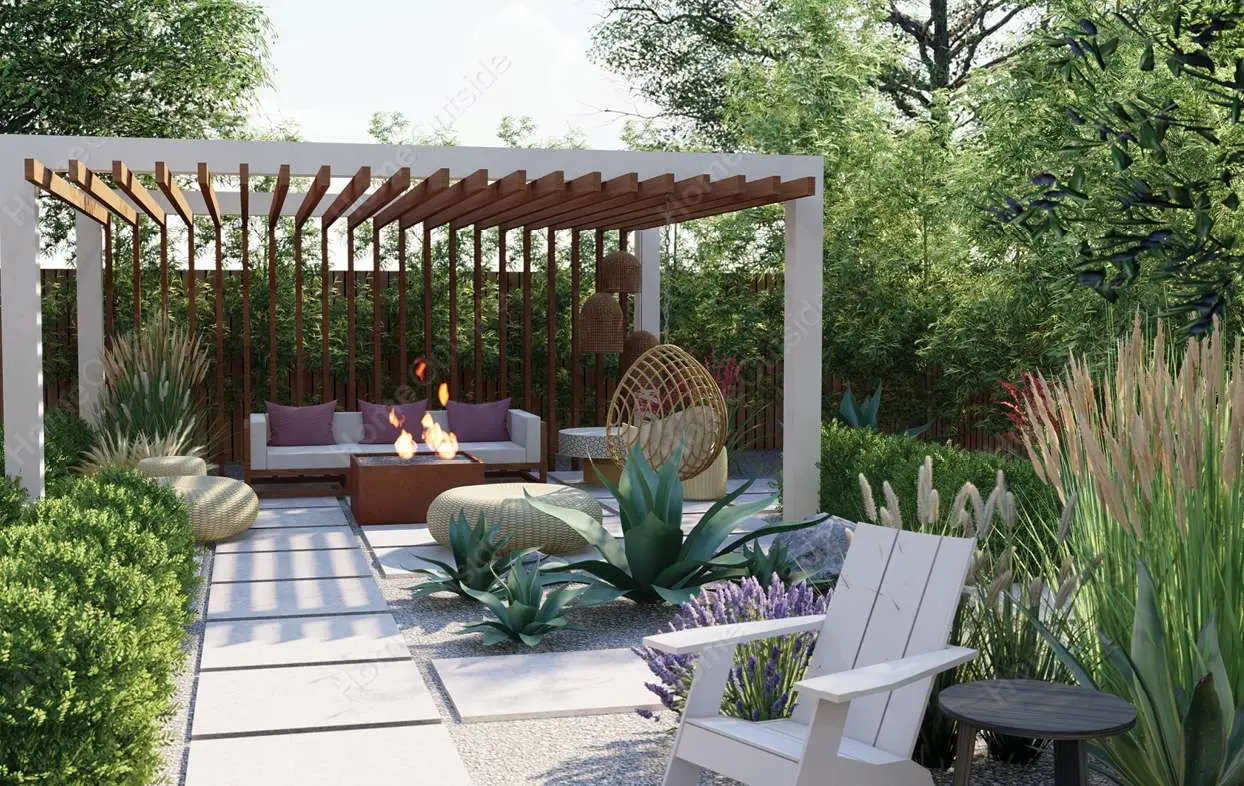
The most common options are a pergola with a solid or louvred roof, a shade sail, a covered seating area next to the house, and a tree planted to block the afternoon sun. Trees give the most natural shade, but they take years to grow. A structure gives shade much sooner. If you want to compare styles and roofs, our guide to pergola and shade ideas for Dubai gardens covers the main choices.
Think about the direction of the sun. The west side of a backyard gets the strongest afternoon heat, so shade on that side often makes the biggest difference. Check where the shade falls at around 4 pm as well as at midday, because that is when many people want to sit outside.
Lawn or artificial grass for a backyard?
Most backyards in Dubai use either natural grass or artificial grass, and each has trade-offs. Natural grass feels softer and looks like a traditional garden. It also needs regular watering, feeding and mowing, and grass in full sun can struggle in summer. The right choice depends on how much shade you have and how much water you can give it. Our guide to the best grass for Dubai lawns compares the options in more detail.
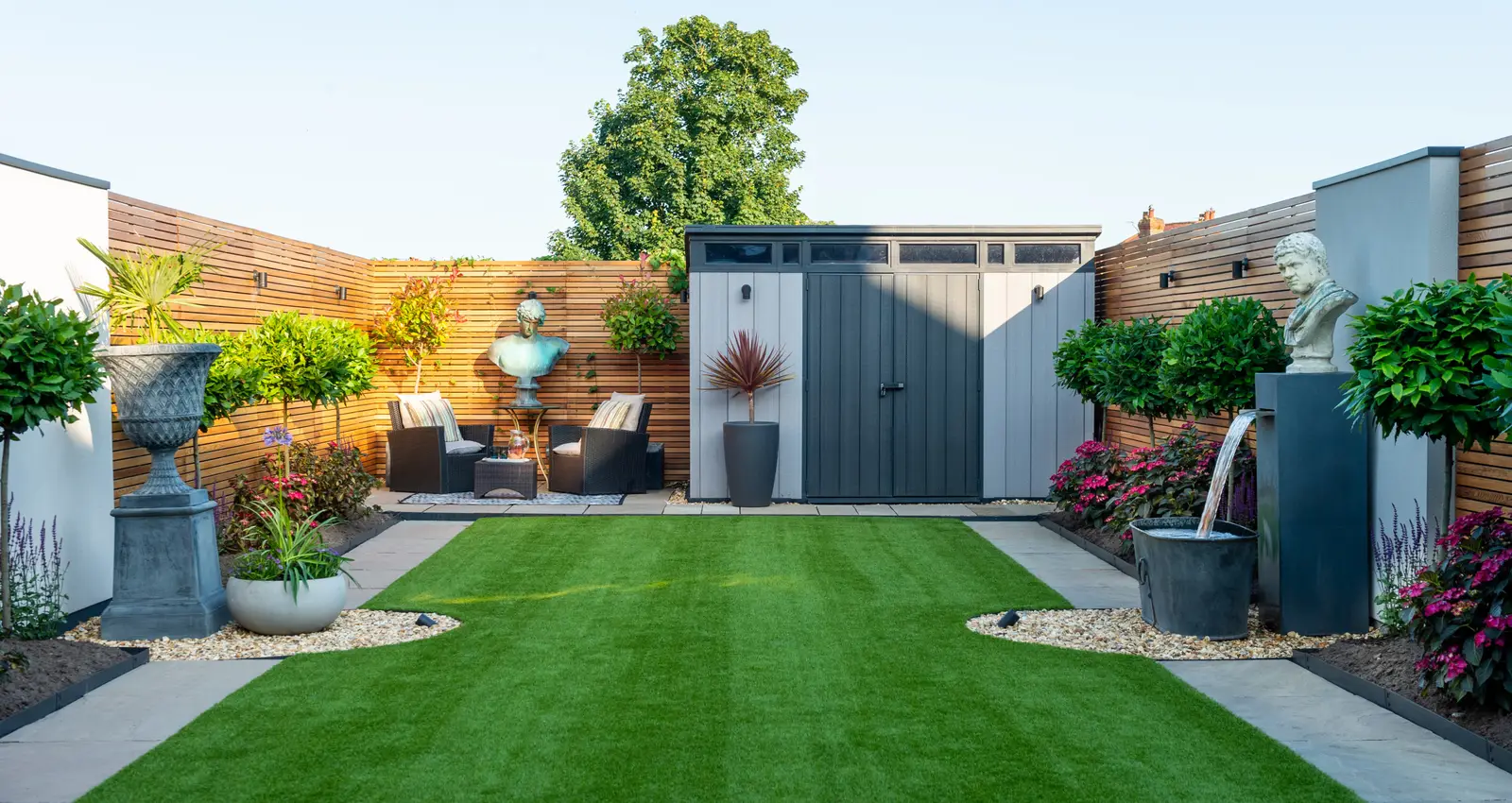
Artificial grass needs much less water and no mowing. It stays green all year, which suits a backyard that gets heavy use. The main issue is heat. In direct sun, synthetic turf can get hotter than natural grass, so a light colour and some shade help. Ask any supplier for the surface temperature of the grade they offer, and test a sample outdoors before you commit.
Mixing grass and paving
Many backyards use both. Paving or stone can take the heavy traffic near the door, while grass or artificial grass covers the play and lawn areas. Paving should have a slip-resistant finish, because wet or polished surfaces are slippery around a pool. Light-coloured paving also tends to feel cooler underfoot than dark stone, which absorbs more of the sun.
Designing a backyard with a small pool
A pool is often the centre of a villa backyard, so it should be placed early in the plan. Where possible, put the pool where it gets morning sun and some afternoon shade. Keep the pool away from tall trees with heavy leaves, because falling leaves and seeds add to the cleaning work.
Leave room for a pool deck or walkway that is wide enough for two people to pass. Keep large plants clear of the pool edge and the filter area, so roots and fallen leaves do not block access. Check set-back and fencing rules with your community developer and Dubai Municipality before you fix the pool position. These rules can change where the pool can go, and this guide cannot confirm the exact requirements for your plot.
Water features in a Dubai backyard
A pond, fountain or small waterfall adds sound and a cooler feel to a backyard. In a hot climate, the sound of moving water is often the feature people notice most. Water features also add upkeep. They need a pump, a power supply, a filter and regular cleaning, and open water can collect dust and debris in windy weather.
Plan the pump and power before you choose the feature, and check the current DEWA tariffs for electricity. Decide where the electrical outlet or cable will run, and keep the pump easy to reach for cleaning. A small raised fountain usually takes less upkeep than a large pond. If you want a backyard fish pond, the water needs more filtration and regular testing, so it helps to start small and learn how the system behaves first.
Choosing plants for a backyard in Dubai
Plants give the backyard its structure and colour, but they need to match the heat, the sun and the soil. Much of Dubai has sandy soil, which drains quickly and holds few nutrients. That is one reason many gardens use plants that tolerate dry conditions once they are established.
Desert rose, date palm, bougainvillea, agave and cacti are commonly used in Dubai gardens, and many of them tolerate heat and dry conditions better than lawn grass. Each plant has different needs for sun, space and feeding, so check the expected mature size before you plant. A young palm or bougainvillea can grow larger than it looks in the nursery, so leave it room to grow.
Group plants by water need
Group plants by how much water they need, and place the lowest-water plants in the hottest spots. This stops you from watering the whole garden at the same rate. A simple way to start is three groups: plants that need regular water near the house, moderate plants in the middle, and drought-tolerant plants along the edges and slopes.
Watering a backyard efficiently
Good irrigation keeps the backyard healthy without wasting water. The right method depends on what you are watering. Drip irrigation delivers water slowly to the root zone of beds, shrubs and trees. The US Environmental Protection Agency's WaterSense guidance on microirrigation states that it can use 20 to 50 percent less water than conventional sprinkler systems.
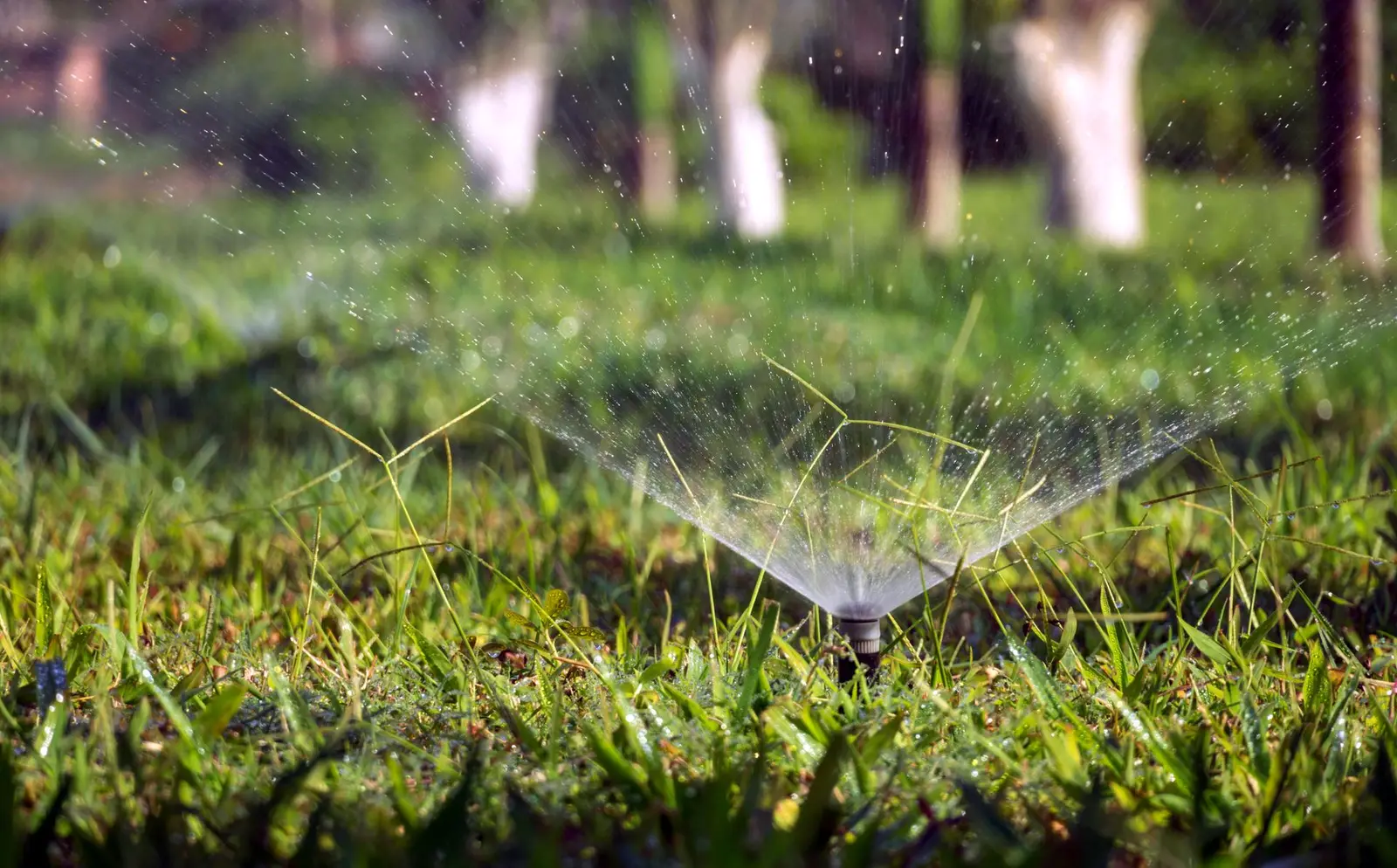
Lawns need a different approach. Sprinkler heads suit grass because they cover a wide area evenly. Efficient heads, correct pressure and a controller that adjusts watering are more effective than a new system alone. Check the system every month for leaks, blocked nozzles and heads that spray the path or a wall.
Plan irrigation at the same time as the planting. Add a drip line to each bed before the plants go in, and place the controller where you can reach it easily. Our garden irrigation guide for Dubai covers the main system types. If you would rather have the system installed, our irrigation service covers smart systems for villas.
How much does backyard design cost in Dubai?
Costs depend on the size of the backyard, the materials, the planting, the shade and any water features, so no single price fits every backyard. As a starting point, garden landscaping (design and build) at NAM Landscaping starts from AED 120 per square metre. This is an indicative price, and the written, itemised quote follows a free site visit. Our garden landscaping and design service covers the full backyard plan.
A phased plan helps if the budget is limited. Start with the layout, drainage, shade and any power or water connections, because these are hard to add later. Plant and finish the zones afterwards. Lighting can come later, although it is easier to plan the cables at the start. Our landscaping cost guide for Dubai explains what affects the price in more detail.
Common backyard design mistakes in Dubai
The most common mistake is leaving out shade. A backyard can look finished on the day it is completed, then get little use in summer because it is too hot. Add shade in the first phase, not as a later extra.
The second mistake is planting too close together or too close to walls. Plants grow, and crowded beds need more water and more pruning. Leave space for each plant to reach its mature size.
The third mistake is poor lighting. Good lights along paths, steps and seating areas make the backyard safer at night and extend the hours you can use it. Planning the light positions alongside the power and water runs makes the work simpler and tidier.