The best desert plants for UAE gardens are species that already live with the local heat, salty water and sandy soil. The Ghaf, Sidr and Samr trees are native, the date palm is a traditional crop of the region, and tough shrubs such as henna and desert thorn grow wild across the country. Planted well and watered with drip irrigation, they give a Dubai villa shade and greenery with far less water than a lawn-and-hedge garden.
This guide covers planting in the desert for villa gardens in Dubai and the wider UAE.
What makes a plant suitable for a UAE garden?
A plant suits the UAE when it can handle four things at once: extreme summer heat, very little rain, salt in the soil and water, and dry, dusty wind. A plant that copes with only one or two of these will struggle or need a lot of extra water.
The heat is the obvious challenge. A UAE University summary of the national climate gives a mean July maximum of about 40°C for Abu Dhabi and absolute highs up to 49°C on the Gulf coast. The same source describes the climate as low rainfall and high temperatures, so irrigation, not rain, keeps most gardens alive.
Salt matters more than many new gardeners expect. Sandy coastal soils can hold salt, and irrigation water can add more over time. Salt makes it harder for roots to take up water, so a sensitive plant can wilt even in wet soil. Native and long-adapted species usually tolerate salt better, which is one reason they last longer here.
Native desert trees for UAE gardens
Three native trees stand out for villa gardens: Ghaf, Sidr and Samr. Dubai Municipality plants them too. Its 2024 tree-planting report lists Ghaf, Sidr and Samar as indigenous species in its public planting, alongside ornamental trees and palms.
| Tree | Scientific name | Best use | Main thing to plan for |
|---|---|---|---|
| Ghaf | Prosopis cineraria | Large shade tree, windbreak | Needs space; deep, spreading roots |
| Sidr | Ziziphus spina-christi | Medium tree, edible fruit | Thorny branches near paths |
| Samr | Acacia tortilis (also listed as Vachellia tortilis) | Light, umbrella-shaped shade | Sharp thorns; slow to fill out |
| Date palm | Phoenix dactylifera | Upright accent, avenues, courtyards | Regular frond and fruit cleaning |
Ghaf (Prosopis cineraria)
The Ghaf is the UAE's national tree. The Environment Agency Abu Dhabi's Ghaf profile says it was declared the national tree in 2008 for its cultural and traditional significance, and that it stays green in harsh desert conditions. In Arabic it is simply called ghaf (غاف).
In the wild, Ghaf trees survive harsh conditions thanks to a deep, broad root system, as described in an ICBA article on the Ghaf. People once ate its leaves and pods and fed its branches to livestock. Today it is valued as a shade tree and a natural windbreak.
In a garden, give a Ghaf room. Plant it well away from the house, boundary walls, pool shells and irrigation mains, because a tree with a deep, broad root system needs room underground as well as above. It suits larger villa plots and front setbacks better than small courtyards.
One legal point: the same EAD page notes that UAE Federal Law No. 24 of 1999 prohibits cutting, uprooting or collecting wild plants illegally. If an existing Ghaf stands on or beside your plot, check with your community developer or Dubai Municipality before removing or moving it.
Sidr (Ziziphus spina-christi)
Sidr is a thorny shrub or tree that can reach about 10 m. The Abu Dhabi Department of Health's plant leaflet on Sidr says it grows naturally in UAE wadis and describes its fruit as edible.
Sidr makes a good medium-sized garden tree because it casts useful shade and has cultural meaning for many Emirati and Arab families. Its thorns are the main drawback, so plant it away from paths, play areas and pool decks, or keep lower branches pruned.
Samr and other acacias
Samr is the common local name for the umbrella-shaped acacia that grows on gravel plains and wadi banks. It casts light, dappled shade rather than deep shade, so plants can grow underneath it, and it looks right in a natural desert-style garden.
The local name "Samr" or "Samar" is used for more than one acacia species, so ask the nursery for the scientific name when you buy. Every type has sharp thorns, which makes them better for boundaries and open areas than for spaces where children play.
Desert palm trees: date palms and other choices
The date palm (Phoenix dactylifera) is the classic desert palm tree for the UAE. It handles heat, wind and salt better than most garden trees, and it gives a villa an instantly local look along a driveway or in a courtyard.
Its salt tolerance is well documented. The International Center for Biosaline Agriculture (ICBA), based in Dubai, has tested 18 date varieties under saline irrigation since 2001. It reports that salt-tolerant varieties can be grown with saline water when salinity is managed well, although even the most tolerant varieties lose about half their yield at around 12 dS/m, a salinity well above normal irrigation water. For a garden, that means date palms forgive slightly salty water, but they still grow best with good irrigation and drainage.
Plan for upkeep. Fruiting date palms drop fruit and need old fronds and fruit stalks removed, usually by someone with the right equipment for tall palms. If you want the look without the fruit mess near a pool, ask a nursery about non-fruiting (male) palms.
Dubai Municipality also lists Washingtonia and Bismarckia palms among the evergreen species it plants. Neither is native, but both are widely used in Dubai. Washingtonia suits tall, slim avenues, and Bismarckia has a broad silver-blue fan that works as a single feature palm.
For backyard palm tree ideas, a pair of date palms framing a seating area, or a row along a boundary wall, gives height without blocking the whole garden. Our guide to backyard landscaping ideas for Dubai shows how palms fit into a wider layout.
Desert shrubs and flowering plants
Desert shrubs fill the space between trees and ground level, and they decide how green your garden feels. Mix a few native shrubs with well-adapted ornamental plants to get colour without a high water bill.
The UAE Ministry of Climate Change and Environment maintains an official list of indigenous plants under Cabinet Resolution No. 18 of 2018. When the ministry launched its Gheras plant microsite, Gulf News reported that the list covered 72 species, including ghaf, acacia, henna, sidr, desert thorn and caprifig, and named 54 nurseries that supply native seeds and saplings.
Native shrubs to look for
- Henna (Lawsonia inermis): a dense, leafy shrub with scented flowers that works as an informal screen or low hedge.
- Desert thorn (Lycium shawii): a tough, spiny shrub for boundaries and wild-style corners, where its thorns become a benefit.
- Young Sidr and acacia: kept pruned, both can act as large shrubs before they grow into trees.
Well-adapted ornamental plants
Many popular Dubai garden plants are not native but have proven themselves in local heat. Bougainvillea, desert rose (Adenium), aloe, agave and other succulents all suit a sunny, well-drained desert flower bed. The common mistake with these plants is overwatering, not underwatering.
The desert rose deserves special care because its sap is toxic and its swollen trunk rots in wet soil. Our desert rose care guide for the UAE covers watering and safety, and our list of the best outdoor plants for Dubai compares flowering shrubs and climbers by sun and water needs.
Desert grass: native grasses versus lawns
Desert grass means two different things: native grasses and lawn turf.
Native desert grasses, such as Panicum turgidum (thumam), grow wild across the UAE in clumps. They look good in gravel beds, dune-style borders and rock gardens, and they move in the wind, which softens hard landscaping. They are not a lawn: you cannot walk, play or lay a picnic on them.
A lawn, by contrast, is a dense turf grass that needs frequent irrigation in Dubai's summer. If you need a green surface for children or pets, keep the lawn small and in the area where you will actually use it, then plant the rest of the garden with lower-water plants. Our comparison of the best grass for Dubai lawns covers turf types and artificial grass.
Xeriscaping: drought-tolerant garden design for Dubai
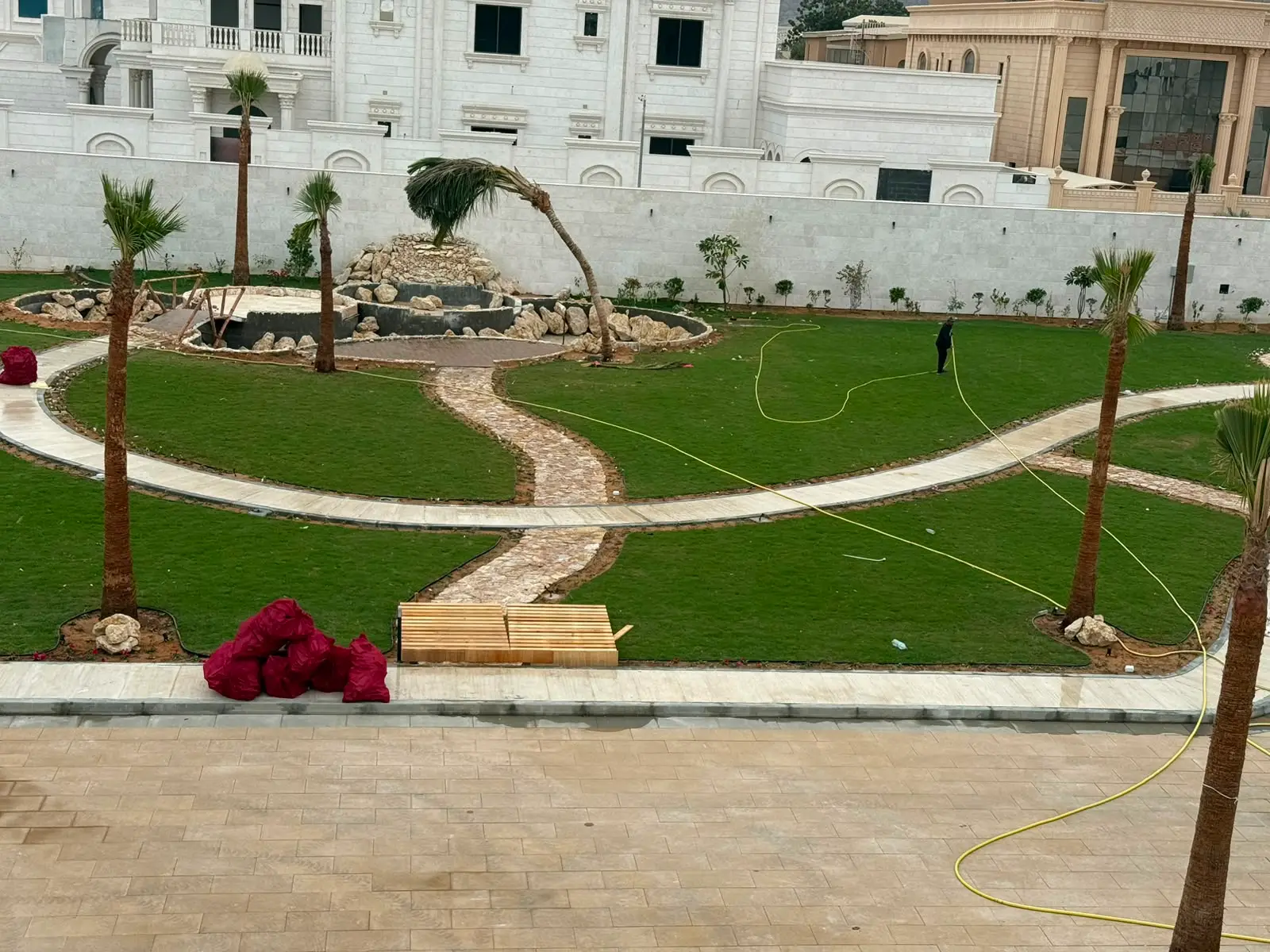
Xeriscaping means designing a garden around low water use from the start. It does not mean a garden of only sand and cactus. A xeriscaped Dubai villa can still have shade trees, flowers and a small lawn. It simply puts water only where it earns its place.
Six principles cover most of it:
- Group plants by water need. Put thirsty plants together near the house, and low-water natives further out. Each group then gets its own irrigation zone, so you never overwater a cactus to keep a lawn green.
- Improve the planting holes, not the whole garden. Sandy UAE soil drains fast and holds few nutrients. Mixing compost or a good planting mix into each hole helps roots establish without importing soil for the entire plot.
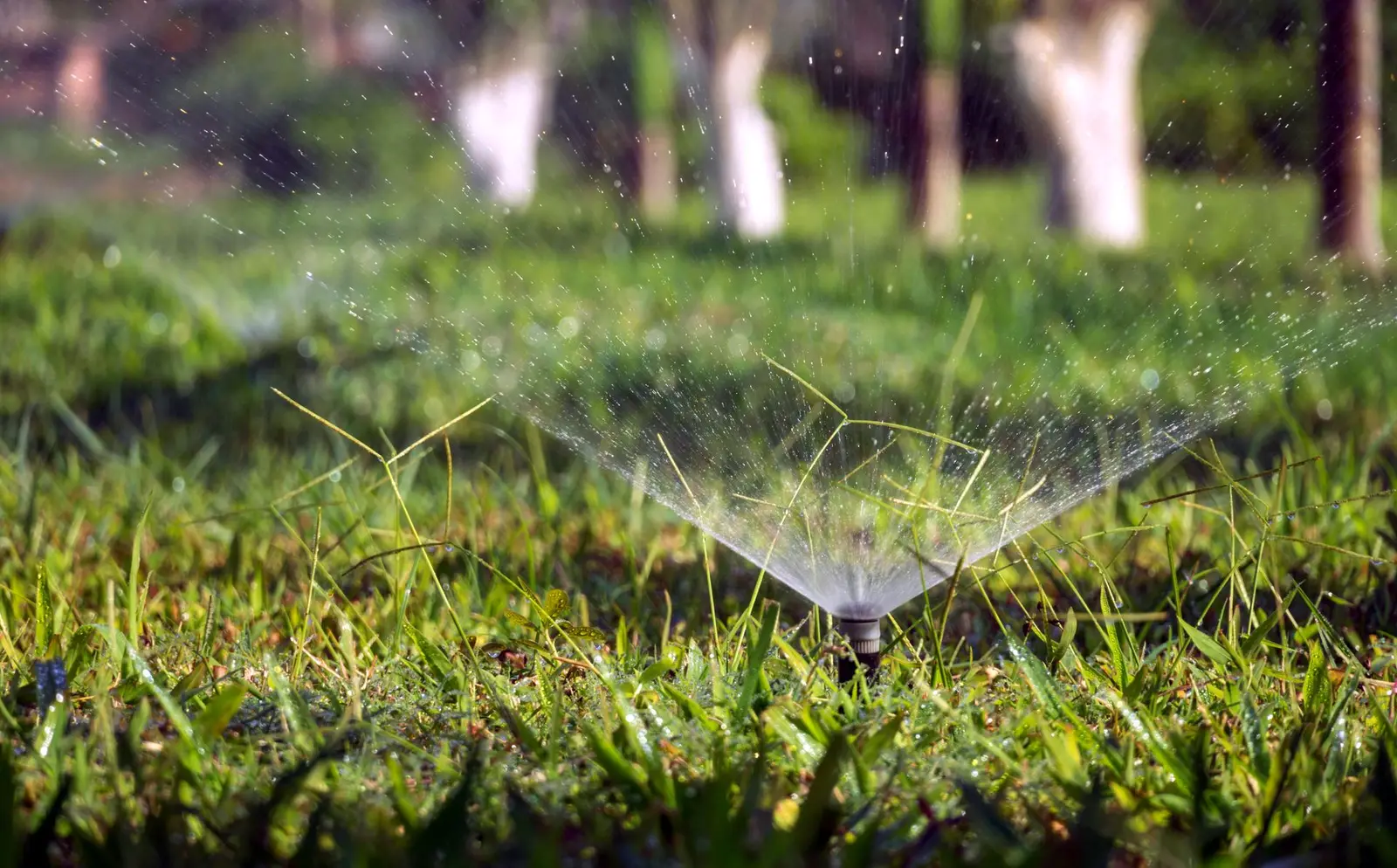
- Use drip irrigation for trees and shrubs. Drip lines put water at the roots, where it is needed, instead of spraying it into hot, windy air. Our garden irrigation guide for Dubai explains drip, bubblers and timers.
- Cover bare soil. Mulch, gravel or decorative stone slows evaporation, keeps roots cooler and reduces weeds and dust.
- Keep turf small and purposeful. A lawn is often the biggest water user in a villa garden, so size it for real use.
- Add shade where people sit. A tree, pergola or shade sail makes the garden usable for more of the year and protects plants underneath from the harshest sun.
Dubai Municipality's Greenery and Plantation Manual 2026, written mainly for public parks and open spaces, follows the same direction. According to the Dubai Municipality launch announcement (3 September 2026), it covers water-efficient landscape design, sustainable irrigation, biodiversity and a preference for native and adaptive plant species.
Desert landscape ideas for Dubai front yards and backyards
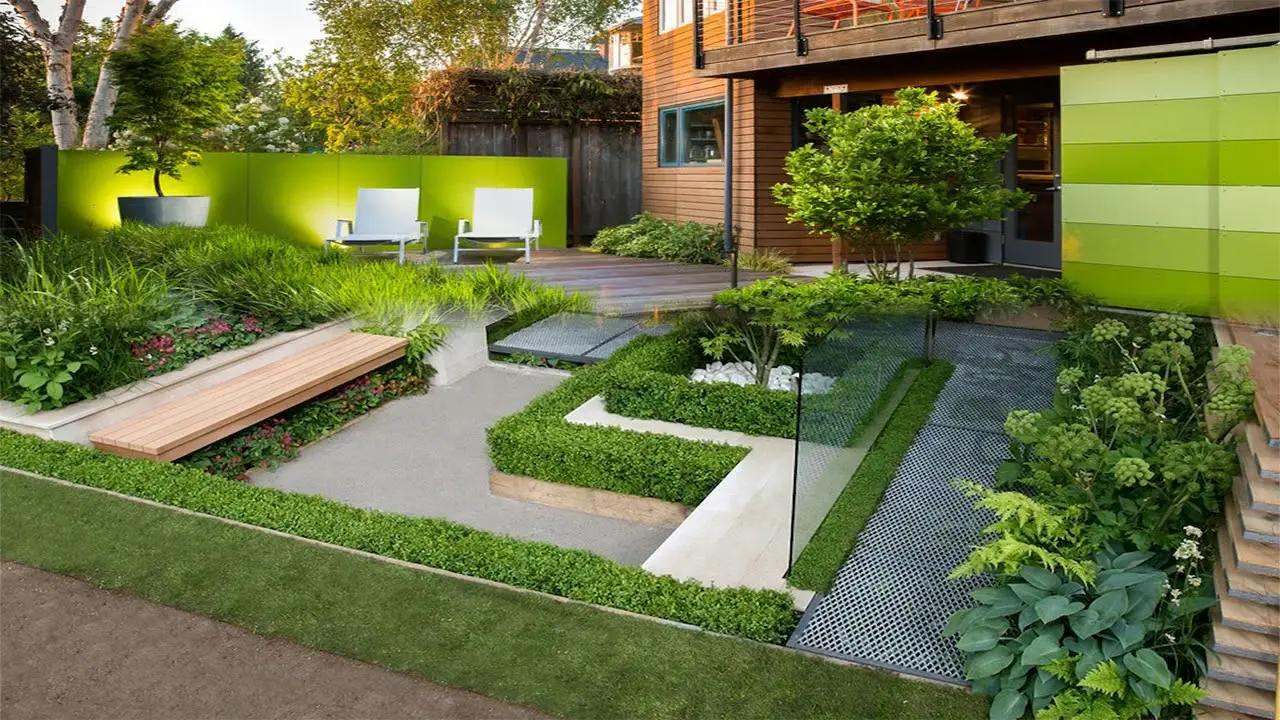
A desert-style garden can look formal, natural or modern. The common thread is a limited plant palette, plenty of texture from stone and gravel, and a few strong focal points.
Front yard ideas
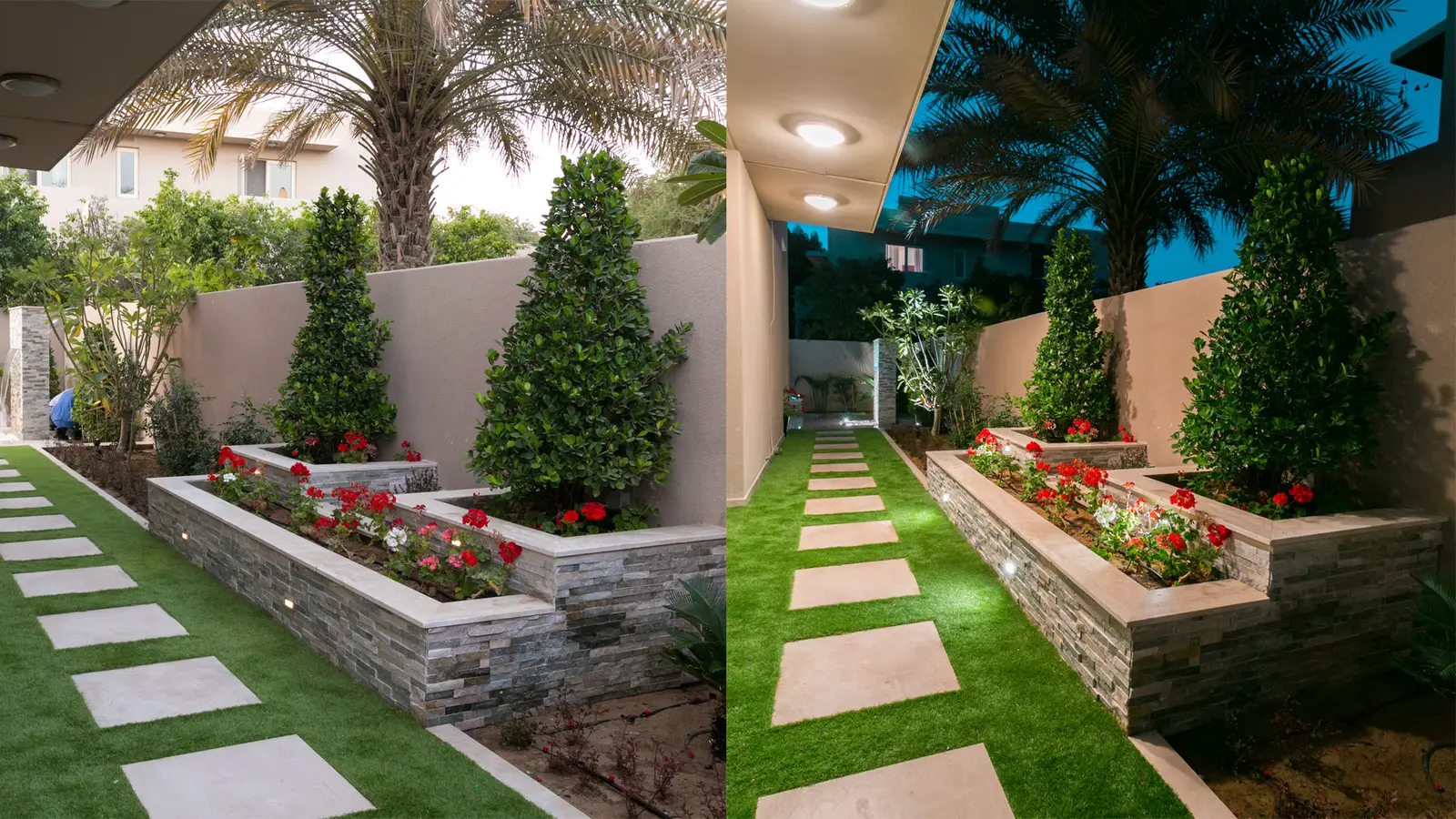
- Single feature tree: one Ghaf or Bismarckia palm in a gravel bed, lit from below at night, gives strong kerb appeal with little upkeep.
- Palm-lined entrance: date palms in a row along the driveway, underplanted with aloe or low succulents. Agave works well as a sculptural accent at the gate.
- Small front yards: raised planters with agave or desert rose and a clean gravel surface look tidy and need far less water than a strip of lawn.
Our guide to front yard and villa entrance ideas has more layouts for the approach to the house.
Backyard ideas
- Desert rock garden: boulders, gravel in two or three tones and clumps of native grass and succulents between them.
- Desert zen garden: raked gravel, a few large stones and one sculptural tree, ideal for a quiet corner.
- Shaded patio: paving or decking under a pergola, framed by Sidr or acacia for dappled shade. See our pergola and shade ideas for Dubai.
- Desert flower bed: bougainvillea against a wall, with lantana, desert rose and succulents in front for year-round colour.
How to plant and water desert plants in Dubai
Plant in the cooler months (as a rule of thumb, roughly October to April), and water generously while plants establish. Even the toughest native tree starts as a nursery plant with a small root ball, and it cannot survive a Dubai summer on desert rainfall in its first year.
When to plant
Autumn and winter planting gives roots several months to grow into the surrounding soil before summer heat returns. Summer planting is possible with careful watering and temporary shade, but losses are higher and plants need much more water to recover from transplant stress.
How to water
Water deeply and less often, rather than a little every day. Deep watering pushes roots downward, where the soil stays cooler and moister. Light daily sprinkling keeps roots near the hot surface, which makes the plant more dependent on irrigation.
- First months after planting: water frequently, because the root ball dries out fast in sandy soil.
- Once established (often after one to two years for trees): reduce frequency gradually, and increase it again in peak summer.
- Timing: run irrigation early in the morning or after sunset so less water evaporates.
- Salt build-up: if leaf edges brown and crisp despite moist soil, salt may be building up. An occasional long, deep watering can wash salt below the root zone, as long as the soil drains.
A smart controller that adjusts run times by season takes much of the guesswork out. NAM Landscaping installs smart irrigation systems for Dubai villas, which makes it easier to give natives less water and thirstier plants more.
Common mistakes when planting in the desert
Most desert plants that die in Dubai gardens fail because of the wrong water, the wrong place or the wrong timing, not heat alone.
- Overwatering succulents: desert rose, agave and aloe rot in soil that stays wet. Give them their own drip zone or water them by hand.
- Planting big trees too close to structures: Ghaf and large palms need distance from walls, pools and pipes. Check the mature size before you dig.
- Mixing water needs in one zone: a lawn and a native shrub on the same valve means one of them is always getting the wrong amount.
- Stopping water too early: "drought tolerant" applies to established plants. New natives still need regular irrigation until their roots spread.
- Thorns in the wrong place: Sidr, acacia and desert thorn belong on boundaries and open areas, not next to pool decks or play zones.
- Skipping community approval: some Dubai communities require developer approval (NOC) for landscaping changes, so check your community's rules before starting.
Hiring a desert landscape company in Dubai
For DIY desert landscaping, a homeowner can realistically plant small natives and succulents, spread gravel and lay mulch. Design, irrigation zones, soil preparation and large tree planting are easier to get right when the layout and water plan are designed together.
When you compare a desert landscape company in Dubai, ask which native plants they would use, how they will split irrigation into zones, and whether they will handle your community's NOC process.
If you would like help, NAM Landscaping offers garden landscaping and design in Dubai, from an indicative AED 120 per m² for design and build, confirmed in a written, itemised quote after a free site visit. After planting, a regular garden maintenance plan keeps the garden looked after through the first hot summers.