The best backyard landscaping ideas for a Dubai villa start with shade, then add a clear layout, surfaces that stay usable in the heat, and plants that cope with dry air and hard or salty water. Once those four are right, the extras (seating, fire pit, lawn, lighting) are easy to add later.
This guide follows the order you would plan in: divide the space, shade it, choose the ground surfaces, then phase the build so you can spread the cost.
What makes a Dubai backyard different?
Heat decides almost everything. Long-term climate records show average daily highs of about 42°C in July and August, and the hottest days go well beyond that (climate data for Dubai). A backyard with no shade will sit empty for several months of the year, however good it looks in a photo.
Three other local conditions also shape the design:
- Dust and sand. Summer north-westerly shamal winds lift desert sand and can last several days, so light furniture, fine gravel and delicate foliage take a beating.
- Coastal humidity and salt. Near the sea, salty air is hard on metal, so choose fittings made for outdoor and coastal use.
- Water. Irrigation is a running cost on your DEWA bill, and a large thirsty lawn adds to it every month. Hard or salty water can also clog small drip emitters, so ask your installer about filters and flushing.
Most ideas below come back to one test: will this still be comfortable at 4 pm in August?
How do you plan a backyard layout?
Start by dividing the space into zones, then connect them with paths. A zone is an area with one job, such as eating, lounging, playing or swimming. Draw the zones on paper before you buy anything, so you do not fill the yard with features that have no room to work.
Common backyard zones
- Dining area: closest to the kitchen door so food and drinks travel a short distance.
- Lounge or fire pit area: further from the house, where you can relax away from the kitchen and enjoy the view.
- Play area: an open, flat patch with a soft surface and a clear line of sight from the house.
- Pool deck: if you have a pool, it often anchors the whole layout (see pool landscaping ideas). A hot tub or spa also belongs here, close to the pool and shaded.
- Service strip: a hidden side for bins, the AC unit and storage.
Backyard layout ideas by size
In a small yard, around 500 sq ft (about 46 m²), pick two zones rather than five. A shaded seating corner and one planted edge feel better than five cramped features. In a larger yard of 1,500 sq ft (about 140 m²) or more, add a separate quiet corner to the main entertaining area so people have somewhere to go.
As a rule of thumb, leave walking routes around 1 m wide. Narrower paths feel tight and are awkward for wheelbarrows and maintenance crews.
Backyard design plans and apps
You do not need special software to plan a backyard. Measure the plot, sketch it on graph paper at a simple scale, and draw the zones, paths, trees and services as shapes. If you prefer a screen, a free backyard design app or a basic drawing tool does the same job. Mark the sun's path, the AC unit, drains and any underground pipes, then share the plan with your landscaper for a firm quote.
Sloped or uneven backyards
A small slope can be a feature. Use terraced beds, low retaining walls or steps to turn a hill into level seating and planting areas. Plan drainage first, so rain and irrigation water move away from the house, and ask a professional about any wall that holds back a lot of soil.
Why should shade come first?
Shade makes the space usable, and it is easier to design in at the start than to add later. It comes from three sources: built structures, trees and fabric.
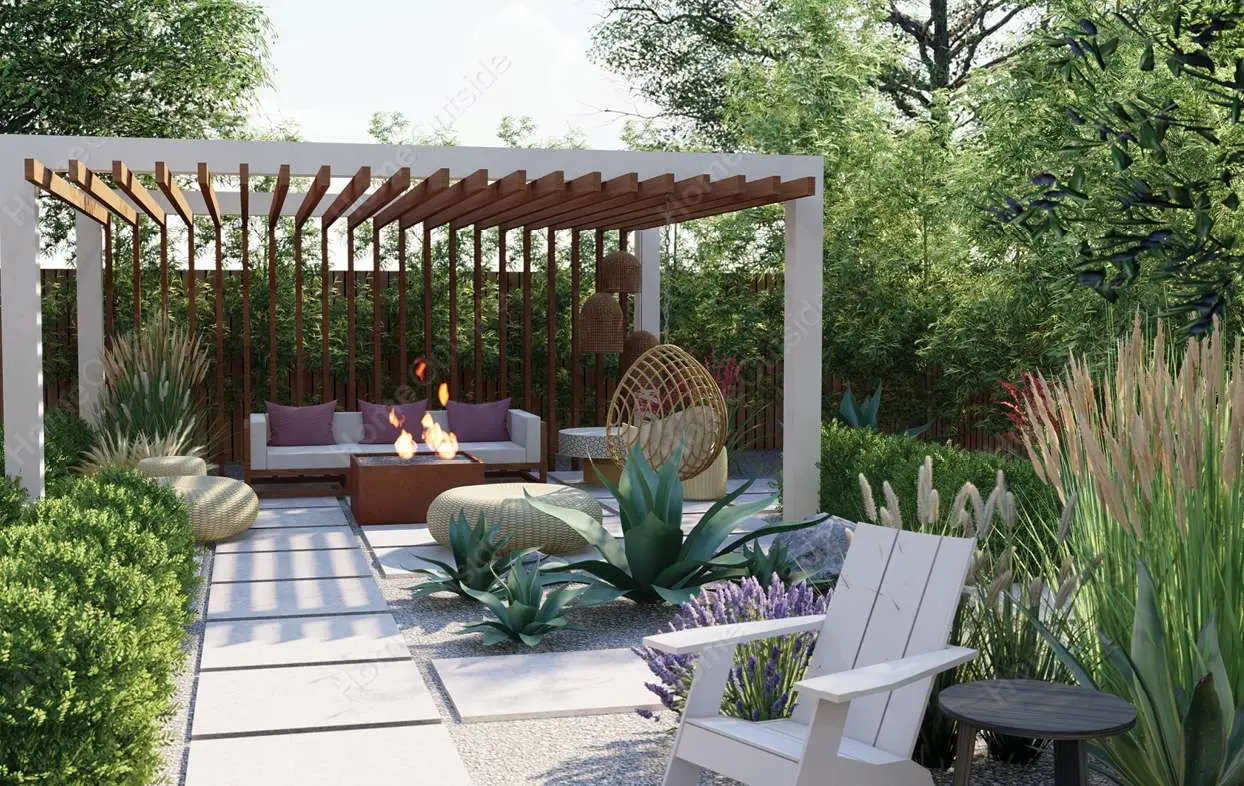
- Pergolas and louvred roofs: best over a dining or lounge area. Adjustable louvres let you choose between sun and shade.
- Shade sails: a cheaper, quicker option, good for play areas and corners. Fix them tightly, because loose fabric flaps and wears in wind.
- Trees: slower, but they cool the air around them as they release water. Plant them on the west side of the yard, where the afternoon sun is strongest.
For ideas on each structure, see our guide to pergola and shade ideas in Dubai. Pergolas and shade structures come in aluminium, timber and louvred versions, and each needs different upkeep in dusty, humid conditions.
Check approvals before you build anything permanent. Your community developer may need to approve pergolas and similar changes, and larger works may also need a Dubai Municipality building permit. Dubai Municipality lists private and investment villas among its building permit procedures, but the rules depend on your community, so ask your developer first.
Covered patios and back porch ideas
A covered patio gives you a shaded room outside the back door. A solid roof, a louvred pergola or a lean-to cover attached to the house all work as a backyard cover, and a paved floor keeps the area tidy and easy to sweep. See our guide to patio and paving ideas in Dubai for layouts and materials.
What should you put on the ground?
Ground surfaces cover most of a backyard, so they shape comfort, cost and upkeep more than any other choice. This table compares the main options.
| Surface | Best for | Main limitation |
|---|---|---|
| Natural grass | Soft, cool play space | Needs regular watering, mowing and feeding |
| Artificial grass | Play areas and small lawns with little upkeep | Gets much hotter than natural grass in direct sun |
| Light-coloured pavers | Dining and paths | Can be slippery when wet near a pool; dark colours hold more heat |
| Gravel | Fire pit areas and planted borders | Moves underfoot and needs edging; not ideal for bare feet |
| Timber or composite decking | Raised seating areas | Dark or solid boards get hot in direct sun, so choose lighter colours and shade them |
| Ground cover plants | Filling beds between larger plants | Needs regular watering until established |
Natural or artificial grass?
Natural grass stays cooler because it releases water, and artificial grass does not. Researchers at UNLV and the Desert Research Institute measured green artificial turf surfaces about 69°F (roughly 38°C) hotter than irrigated natural grass in a desert city, with peaks of 169°F (about 76°C) (UNLV study on artificial turf heat). The study did not cover the two hottest months of the year, so summer peaks may be higher.
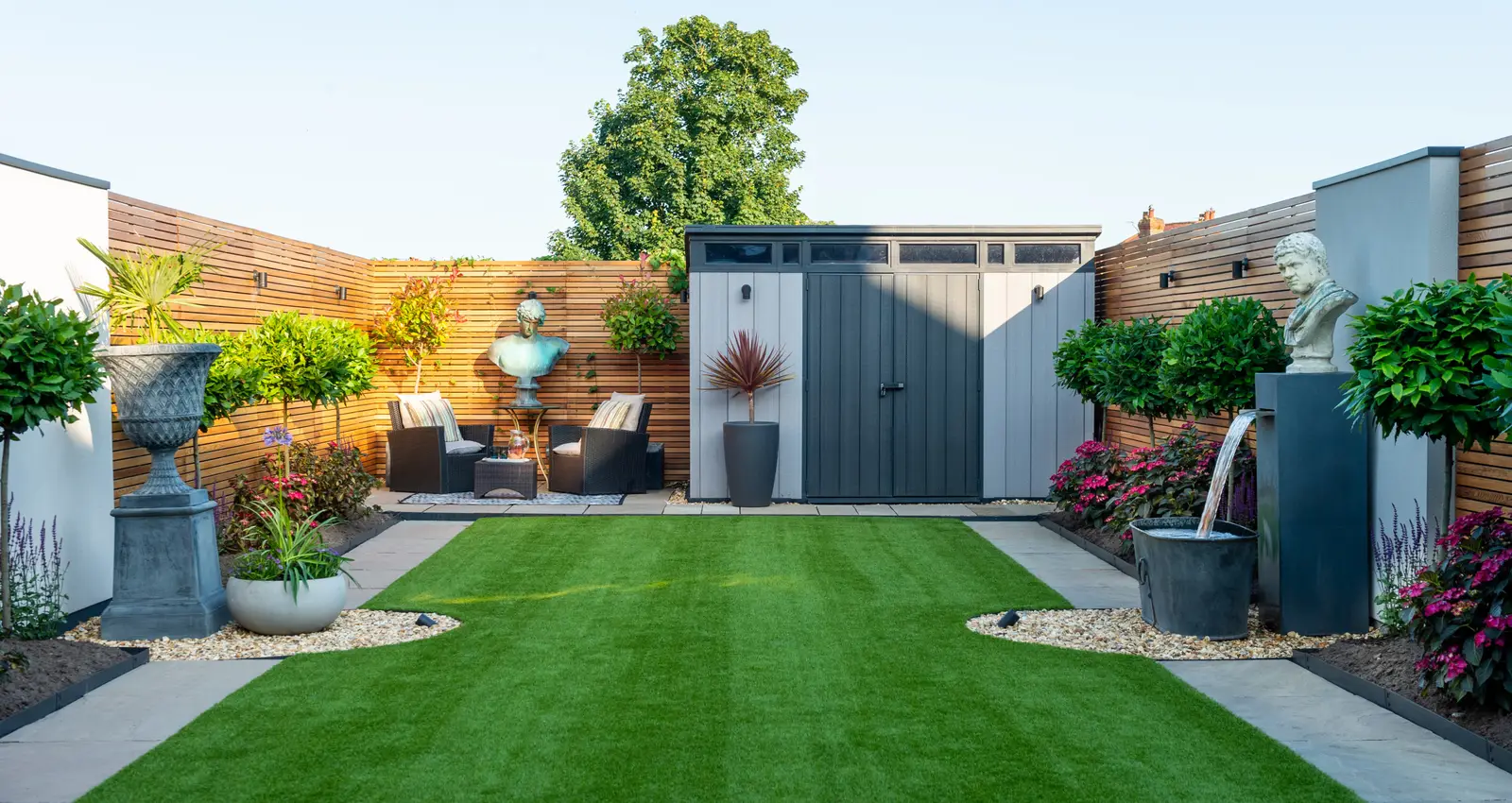
That does not make artificial grass a bad choice. Place it in shade where possible, avoid it for bare feet at midday, and choose a lighter shade of green or a quality product designed for heat.
For a kids' play area with artificial grass, pick a soft, dense pile with a shock-absorbing underlay, put it in shade or under a sail, and rinse it down before use on hot days. Keep it in view of the house so you can watch from the dining area.
If you want a natural lawn, our guide to the best grass for Dubai lawns compares the varieties that cope with heat and salt. Extension research from Texas A&M, for example, describes seashore paspalum as notably salt-tolerant compared with bermudagrass (Texas A&M turf guide to seashore paspalum), which matters if your irrigation water is salty.
For artificial grass, NAM Landscaping lists indicative installed prices on its artificial grass installation page, from AED 35 per m² for an economy grade up to AED 90 per m² for a sports and pet grade. These are starting prices, confirmed in writing after a free site visit.
Backyard ideas with no grass
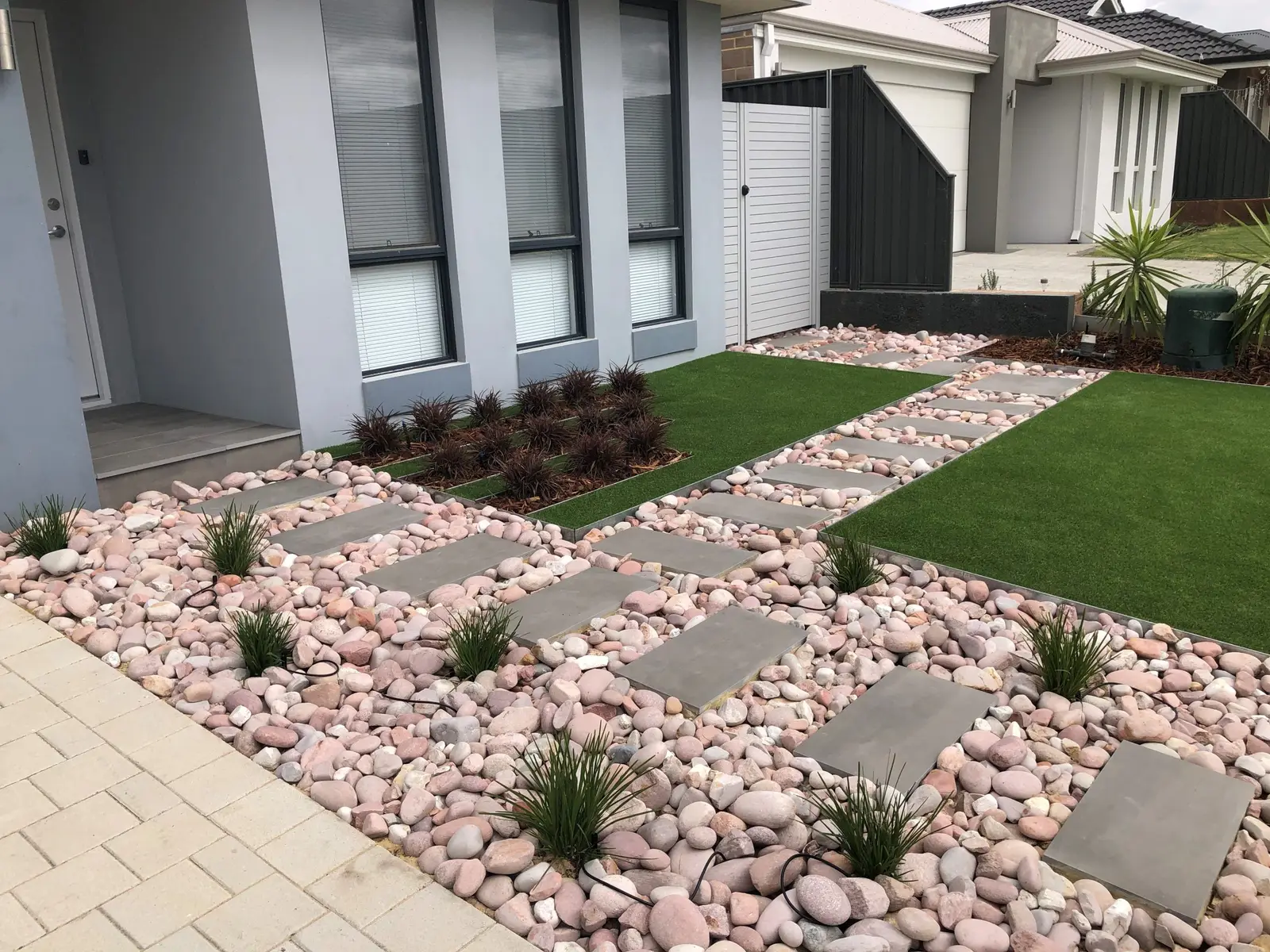
A no-grass backyard is a practical choice in Dubai. Use pavers for the main living areas, gravel or decomposed granite for informal areas, and planted beds for colour. Decomposed granite packs down into a firm, natural-looking surface, but it needs solid edging and is not ideal for bare feet.
Concrete also works, but plain grey slabs hold heat and look flat. If you like the concrete look, choose a light finish, add expansion joints, and break up large areas with planting strips. A hardscaping and paving team can lay the surfaces, edging and steps together.
A modern backyard look
A modern backyard design relies on clean lines: large-format pavers, straight edges, a limited palette of materials and a few bold plants such as agave or a single specimen tree. Fewer, simpler elements also mean less to clean and water.
How do you add seating, a fire pit or a bar?
Place seating where you will use it most, which in Dubai means shaded and positioned to catch the evening breeze. Built-in benches along a boundary wall save floor space and can include storage underneath. For dining, a fixed bench and a table under a pergola is easier to keep tidy than loose chairs in windy, dusty weather.
Fire pits suit winter evenings. Keep them well away from shade sails, pergola roofs, fabric and dry plants, and check your community's landscaping guidelines first, including any rules on gas or wood-burning units. A gravel or paved circle with a few built-in seats is simple and low-maintenance.
A backyard bar or outdoor kitchen is a bigger project that needs power, water and often gas. Plan its position early so services are laid before paving. Our outdoor kitchen guide covers layouts, materials and ventilation.
How do you get privacy in a backyard?
Privacy matters on compact villa plots where neighbours' windows overlook the garden. You can combine several methods:
- Screening plants such as tall shrubs or hedges, planted a little way from the wall so they have room to grow.
- Slatted screens or louvred panels that block sightlines but let air through.
- Raised walls or fences, subject to your community's height rules.
- A pergola with side panels to create a private room outdoors.
Plants take time to fill in, so a screen can cover the first year or two until the planting grows.
Which plants work in a Dubai backyard?
Choose plants adapted to heat and dry air, then group them by how much water they need so irrigation is simple. The ghaf (Prosopis cineraria) is the UAE's national tree and a drought-tolerant native, and deep roots help it survive dry conditions. Palms, succulents, agave and ornamental grasses are other dependable options. Our guides to the best outdoor plants for Dubai and desert plants and trees cover individual species.
Flower beds, ground cover and containers
Flower beds work best when they are small and close to a path or seating area, where you will see them. Mulch bare soil to reduce evaporation, and plan seasonal colour for the cooler months. Ground cover plants fill gaps between larger plants, but they need regular watering until established.
Containers suit renters, small yards and anyone who wants flexibility. Large pots keep soil cooler than small ones, and you can move pots into shade or indoors during the hottest weeks. Group them so they share shade and are easy to water.
How should you water a backyard in summer?
Drip irrigation delivers water to the roots with less loss than sprinklers, which is why it suits beds, trees and containers. DEWA advises watering before 8 am or after 6 pm to reduce evaporation, and adjusting the controller for the season (DEWA irrigation advice).
A smart controller adjusts run times automatically. Our garden irrigation guide for Dubai covers zones, timers and leak checks, and irrigation system installation can put a smart controller and drip lines in during the build.
How can lighting make the backyard usable at night?
In summer, evenings are often the only comfortable time outdoors, so good lighting extends how much you can use the space. Use warm, low-level lights along paths and steps for safety, uplighting on trees for atmosphere, and a dimmable fitting over the dining area.
Choose fittings rated for outdoor use, dust and humidity, and keep wiring protected from the irrigation lines. Our garden lighting ideas cover fixture types and layouts.
What does a backyard cost, and how do you do it on a budget?
Backyard design cost depends on the size of the plot, how much of it is hard surface, whether you add shade structures or a kitchen, and how mature the plants are. Our landscaping cost guide for Dubai explains the main drivers. As a rough starting point, NAM Landscaping publishes an indicative price of AED 120 per m² for garden landscaping (design and build), confirmed in writing after a free site visit.
Cheap backyard ideas that still work
- Spend first on shade and a path, since these affect daily use the most.
- Use gravel and a few paving stones for the seating area instead of full paving.
- Choose small, young plants and let them grow rather than buying large specimens.
- Use containers for colour instead of building large beds.
- Skip or shrink the lawn, which has the highest ongoing water and upkeep cost.
- Do any heavy work (levelling, drainage, irrigation lines) once, early, so you do not dig up finished areas later.
Be cautious about doing drainage, electrics or structures yourself. Mistakes there can cost more to fix than you saved.
How should you phase a backyard project?
Building in stages spreads the cost and shows you how you actually use the space. A sensible order is:
- Plan and approvals. Draw the layout and check developer rules before work starts.
- Groundwork. Levelling, drainage falls and irrigation pipes, because these are buried and hard to change later.
- Shade and hard surfaces. Pergola, paving, walls and steps.
- Planting. Trees and shrubs first, then smaller plants and ground cover, ideally in the cooler months when young plants settle more easily.
- Lighting and extras. Lights, fire pit, bar and decor can be added as budget allows.
If you want one team for design and build, NAM Landscaping's garden landscaping service starts with a free site visit and a written, itemised quote. Once the backyard is finished, a garden maintenance plan keeps lawns, beds and irrigation in shape.