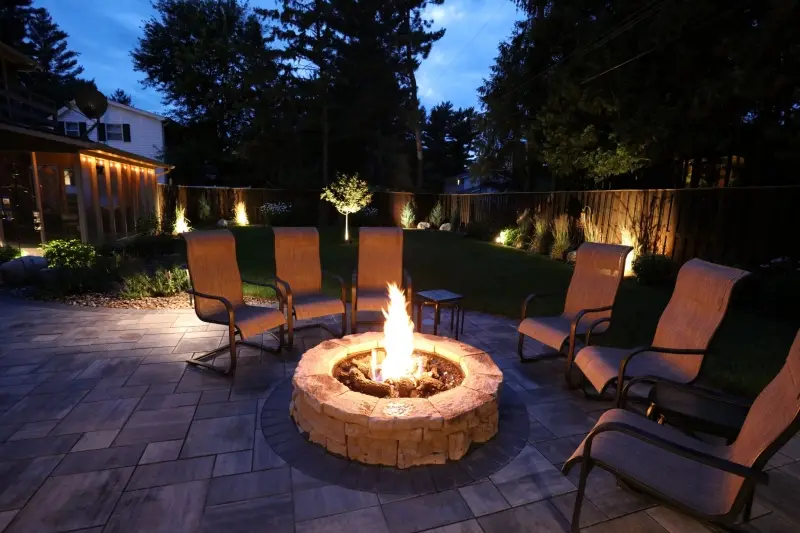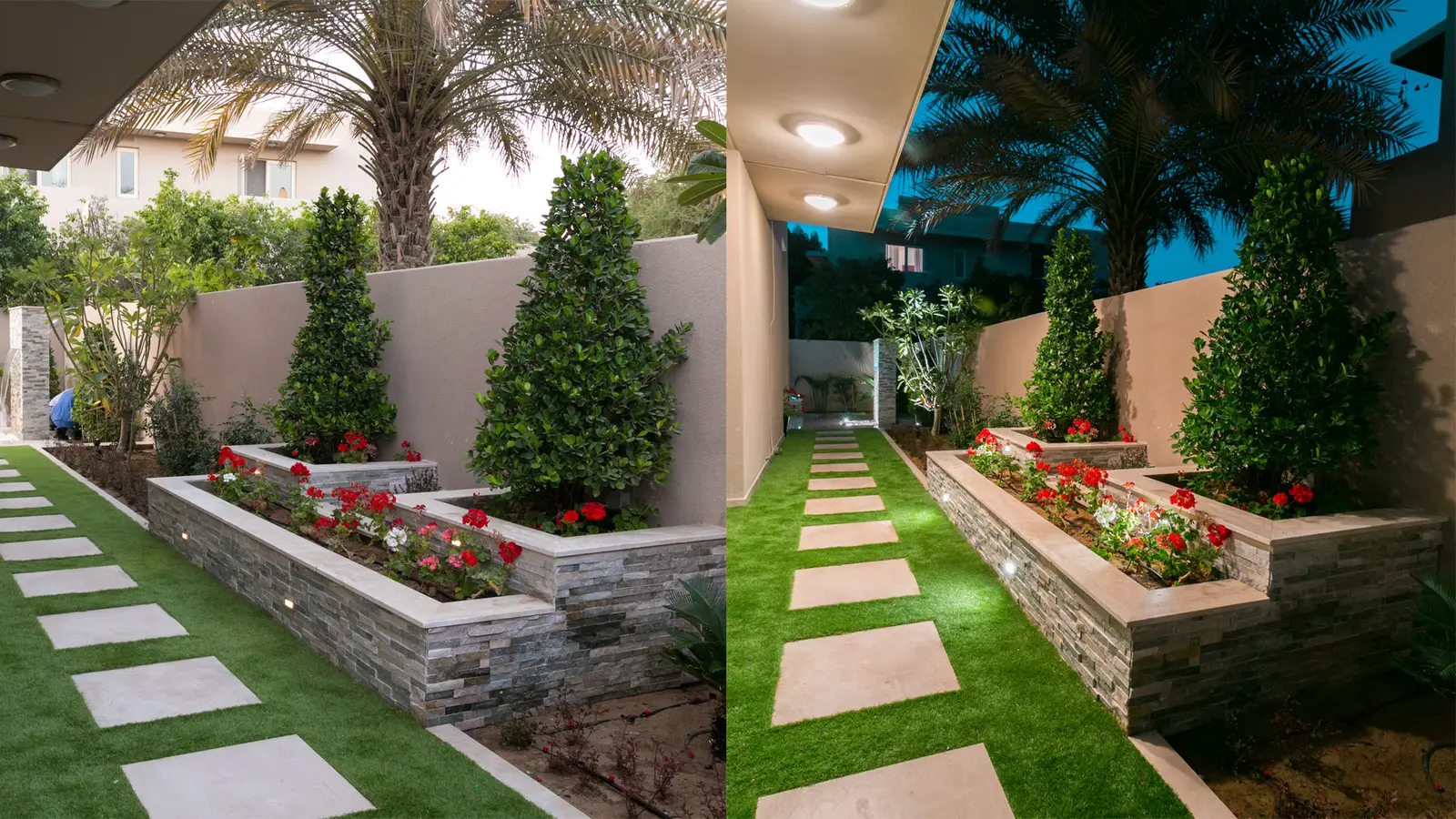
Modern garden design in Dubai is a simple, well-planned outdoor space. It uses clean lines, clear areas for different uses, a small group of plants that suit the climate, and materials that cope with heat and dust. For most villas, a modern garden looks calm and uncluttered, and it is easier to keep healthy than a garden filled with many plant types and features.
This guide explains what the style means in practice, how a design is planned step by step, which materials and plants work in the Dubai climate, and what design work typically costs. It is written for villa owners who are starting from a plain plot or want to update an older garden. If you want a team to design and build the garden, see the garden landscaping and design service.
What does modern garden design mean in Dubai?
Modern garden design is a style that focuses on simple shapes, straight or gently curved lines, and a limited number of materials and colours. Instead of filling every corner with decoration, a modern garden uses space and structure to create its look. Contemporary gardens follow the same idea, with the details updated to current tastes.
In Dubai, the style also has a practical side. Hot summers, strong sun and fine dust make busy gardens harder to clean and keep healthy. A simple layout with fewer, well-chosen plants usually needs less water, less pruning and less replacement planting over time.
Clean lines and simple shapes
Most modern gardens use rectangles, straight edges and smooth curves. A paved terrace might have square edges, while a planting bed has one clear curve. Repeating the same shapes across the garden makes it look planned, even when the space is small.
A small group of plants and materials
Designers usually choose a short list of plants and repeat them across the garden. Repetition helps the eye read the space as one design. Using the same paving or stone in two or three places does the same job for hard surfaces. You can add a seasonal flower or an accent plant, but the base of the garden should stay simple.
How a modern garden design is planned
A good design starts with the site, not with the finishes. The steps below are the usual order for a villa project. Each step shapes the next, so skipping one often leads to changes later.
- Survey the site. Measure the plot, note where the sun falls during the day, and mark existing trees, walls, drains and utility points.
- Agree on the brief. Decide what the garden must do, such as dining, play, a pool area, a lawn for children or low-effort planting.
- Plan the zones. Divide the space into areas for each use, then decide how people will move between them.
- Draw the layout. Place paths, walls, beds and focal points on a plan so the proportions can be checked before building starts.
- Choose materials and plants. Select them for heat tolerance, maintenance needs and how they look together.
- Plan the water and lighting. Decide where irrigation lines, drainage and light fittings will sit before any paving goes down.
Once the design is clear, a written and itemised quote lets you compare the plan with the price. NAM Landscaping offers a free site visit and a written, itemised quote before any work starts.
Zoning: deciding what each part of the garden is for
Zoning means dividing the garden into areas with clear jobs. A typical villa garden might have a shaded seating area near the house, a lawn or play area, a planting border along the boundary and a pool or water feature. Each zone should have a clear edge, such as a change of paving, a low wall or a planting bed, so people know where one area ends and the next begins.
Zoning also helps with heat. Shade is most useful over the zones people use in the evening, while plants that need more sun go in the brightest spots. Put the seating zone where the afternoon shade falls, not where it is easiest to reach from the kitchen door.
Which materials work well in a modern Dubai garden?
Materials matter more in Dubai than in many cooler places. Summer highs are often around 41 to 42°C in July and August, according to the climate summary for Dubai, and strong sun heats hard surfaces quickly. The table compares common options. Real performance depends on the product, colour and finish, so ask the supplier for the technical data sheet.
| Material | Heat in direct sun | Upkeep | Typical use |
|---|---|---|---|
| Porcelain pavers | Lighter colours stay cooler; check the finish | Low; sweep and rinse | Terraces, paths, pool surrounds |
| Natural stone | Varies with the stone type and colour | Medium; some stones need sealing | Feature walls, steps, accents |
| Concrete pavers | Light grey stays cooler than dark tones | Low | Driveways, paths, large areas |
| Timber or composite decking | Can become hot underfoot in full sun | Timber needs regular care; composite needs less | Seating areas, raised decks |
| Artificial grass | Can warm up in direct sun; choose a heat-rated product | Low; occasional brushing and rinsing | Lawns, play areas |
Lighter colours reflect more sunlight, which is why they usually feel cooler underfoot. For more on lawn choices, the guide to the best grass for Dubai lawns compares natural and artificial options.
Plants for a modern garden in Dubai
Modern gardens in Dubai often use plants that tolerate heat, drought and sandy soil. Many designers use a restrained palette of desert-adapted shrubs, grasses and a few trees, then add colour with seasonal flowers. For plant choices that suit the UAE climate, see our guide to desert plants and trees in the UAE.
Choose plants by the amount of sun and shade
Plants need the right light. A bed on the west side of a wall may receive hard afternoon sun, while a bed on the north side may stay shaded for much of the day. Check each bed at different times of the day before you buy plants, and match each plant to the light it actually gets.
Use drip irrigation for planting beds
Many designers use drip irrigation for planting beds, because it delivers water slowly to the root area. Sprinklers suit lawns better. Putting both on the same timer can waste water or leave some plants dry, so keep them on separate lines.
Water features and lighting
A water feature can be the focal point of a modern garden. A simple wall fountain or a small, still pool with clean edges suits the style better than many small ornaments. Open water loses some water to evaporation in the heat, so it needs regular topping up and a pump that is kept clean.
Lighting should be planned at the same time as the layout. Uplights on a palm or a feature wall, and low path lights along edges, show the shape of the garden at night. Choose fittings with a suitable IP rating for dust and outdoor use. The guide to garden lighting ideas explains the main options.
Do you need approval before you start?
Some garden work in Dubai may need approval, and the rules depend on your property, your community and the type of work. Community developers often have their own rules on boundary walls, planting and external changes. Dubai Municipality may also have requirements for landscaping and irrigation. Its website, dm.gov.ae, is the place to check current requirements. Check both before you commit to a design.
What modern garden design costs in Dubai
Design costs depend on the size of the plot, the materials and how much of the work is built on site. NAM Landscaping publishes an indicative starting price of AED 120 per square metre for garden landscaping, design and build. This is a starting point only. The final price is confirmed in writing after a free site visit, once the scope is clear.
Other parts of the garden can be priced separately. A smart irrigation system starts from AED 2,500 per villa, and a garden water feature starts from AED 6,000 per project. Paving and hardscaping start from AED 75 per square metre, supplied and laid. A phased plan lets you build the most important zones first and add lighting or water features later.
Common mistakes in modern garden design
- Too many plant types. Each extra species adds watering and pruning needs, so a small palette is easier to keep healthy.
- Large paved areas with no shade. Wide paving in full sun can make the garden hard to use at midday in summer.
- Planting before checking the light. Plants placed in the wrong spot often struggle, even if they suit the climate.
- Leaving out the utilities. Drainage, power and irrigation lines are harder to add once paving is laid.
What to ask a garden design company
Ask for a written design plan, a materials list and a quote that separates design, build and maintenance. Ask who will carry out the work. One team for the garden and the pool can make coordination easier, because a single contract covers both. For a full checklist, see our guide on how to choose a landscaping company in Dubai.