An outdoor kitchen in Dubai works best when you plan it around shade, wind and your material choices first, and the appliances second. The sun, humidity and dust here will wear out a kitchen that was designed for a milder climate, so the structure and finishes matter more than the grill brand.
This guide is for villa owners planning a built-in BBQ area, from a small patio grill to a full kitchen with a fire pit nearby.
Where should you put an outdoor kitchen in a Dubai villa?
Put it where you get the most shade in the evening and where smoke will not drift into your living room or your neighbour's garden. In most villas that means a spot near the back door, away from the prevailing wind direction, and close to existing water and power points.
Dubai summers are hot enough to shape every decision. One Khaleej Times forecast for July 2026 showed a high of 42°C, with humidity swinging between about 20 and 60% (see the Khaleej Times weather forecast for Dubai). A cook standing in direct sun at a grill in those conditions will not stay long, so shade is part of the kitchen, not an extra.
Check the practical limits first
- Community rules: most villa communities ask for developer approval (a no objection certificate, or NOC) before you build a permanent structure. Roofs, built-in gas lines and chimneys are the items most often questioned.
- Distance from walls and plants: leave clear space around the grill and any fire so heat does not damage fences, trees or a timber pergola.
- Services: a sink needs a water supply and drain, and a fridge or lights need power. Running these in a finished garden costs more than planning them before paving goes down.
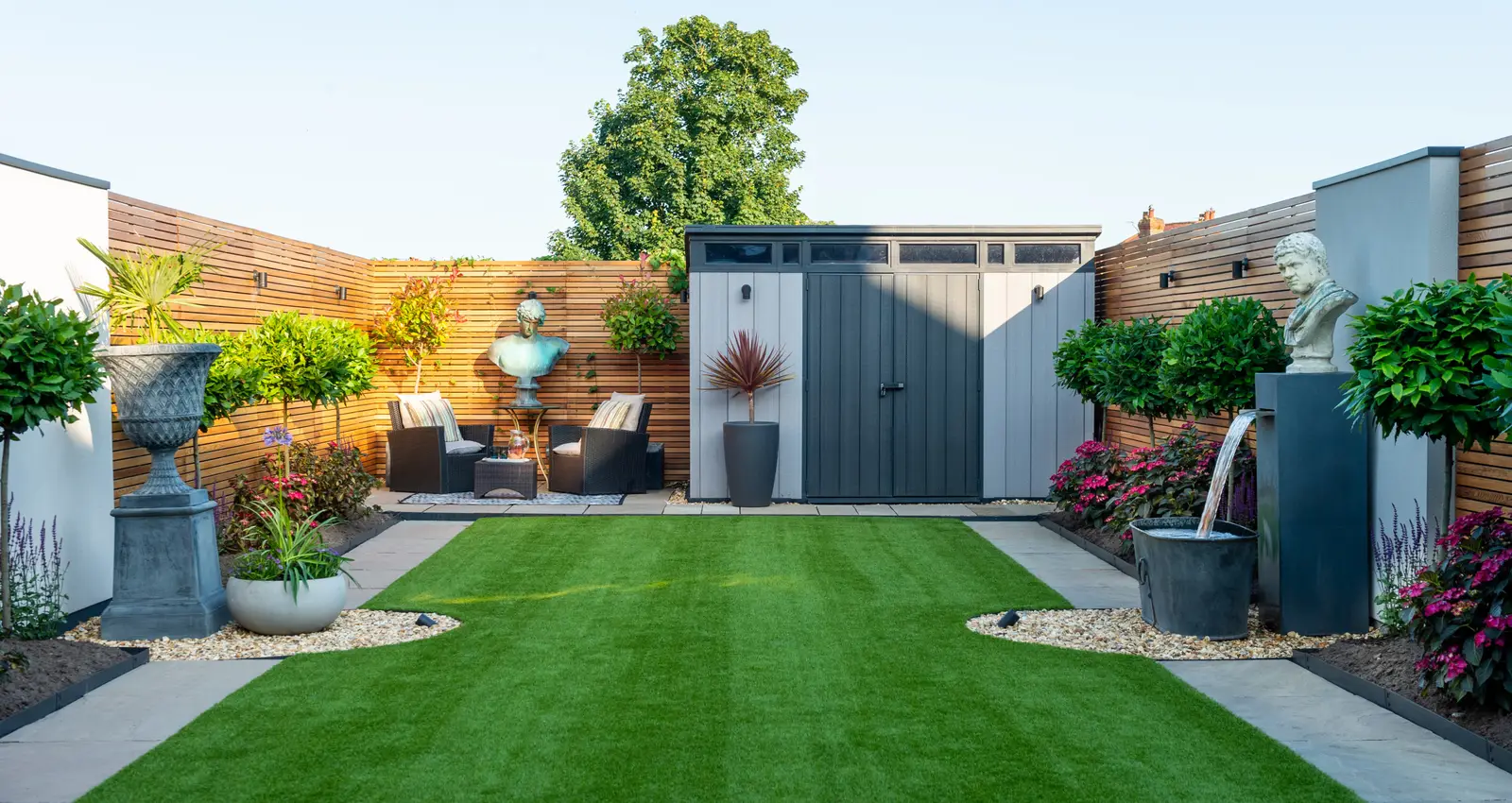
If you are still deciding how the whole garden fits together, the backyard landscaping ideas for Dubai guide shows how a kitchen zone sits alongside lawn, planting and seating. For a kitchen on a patio, the patio and paving ideas guide helps you match the cooking area to the surrounding layout, which also works for outdoor patio BBQ ideas on a smaller scale.
Which layout suits your space?
The right layout depends on how much room you have and how you cook. These are the four most common shapes for villa gardens.
| Layout | Best for | Main limitation |
|---|---|---|
| Straight run (one line of units against a wall) | Small patios and narrow gardens | Limited counter space and the cook faces the wall |
| L-shape | Corner spots with room for a prep area | Needs more floor space and careful traffic flow |
| Island with a bar counter | Larger gardens where guests sit while you cook | Takes the most space and the most services |
| Freestanding grill cart with a prep table | Renters or anyone testing the idea first | Less storage, and carts left in the sun age faster |
Outdoor kitchen for a small patio
A compact straight run with a built-in grill, a short counter and one storage cabinet is enough for most families. Keep the cooking zone to one side so there is still room for a table. Using a single material for the counter and the paving makes a small area look larger.
BBQ area in a small garden
If you have only a narrow strip, a wall-mounted shelf with a freestanding grill can work better than built-in units. Corner positions help because two walls give shelter from wind and a place to attach shade. Keep the grill away from the boundary wall and any climbing plants.
What does a modern outdoor kitchen design look like?
A modern outdoor kitchen usually has clean, flat-fronted cabinets, a single stone or porcelain top, concealed storage and simple, built-in lighting. Dark, matt finishes and slim lines are popular, but they need more thought in Dubai because dark surfaces absorb more heat from the sun.
A practical compromise is a light or mid-tone counter, which stays more comfortable to touch, with darker accents on cabinet doors or the back wall. Open shelves collect dust quickly during sandy weather, so closed cabinets are the better choice for anything you want to keep clean.
Which materials last in Dubai heat and coastal air?
Choose materials that do not fade, crack or rust in strong sun and salty humidity. Four parts of the kitchen need separate decisions: the stainless steel, the counter, the floor and the cabinet bodies.
Stainless steel: 316 or 304?
Stainless steel is the standard for grills, sinks, door fronts and fridge housings. The two grades you will hear about are 304 and 316. Grade 316 contains molybdenum, which makes it better at resisting the pitting that salt causes.
The Nickel Institute's stainless steel in architecture guide suggests 316 for marine and salt exposure, treats sites within about 16 km of salt water as coastal, and accepts 304 for milder conditions. As a rule of thumb, choose 316 if your villa is close to the coast, such as on Palm Jumeirah or in Jumeirah, and consider 304 only if you are well inland and willing to rinse it regularly.
Whichever grade you pick, a smooth finish, regular rinsing and wiping horizontal surfaces slow down staining. Sheltered corners that rain never reaches collect the most salt and dust, so rinse those too.
Counters and cladding: stone and porcelain
Porcelain and dense natural stone both handle outdoor use. Porcelain is very hard and most glazed types need no sealing (check with your supplier, since unglazed or polished finishes can differ), while natural stone usually needs a sealer to resist grease and stains. Ask your supplier for a product rated for outdoor use, since indoor tiles may not cope with sun and temperature swings.
Floors
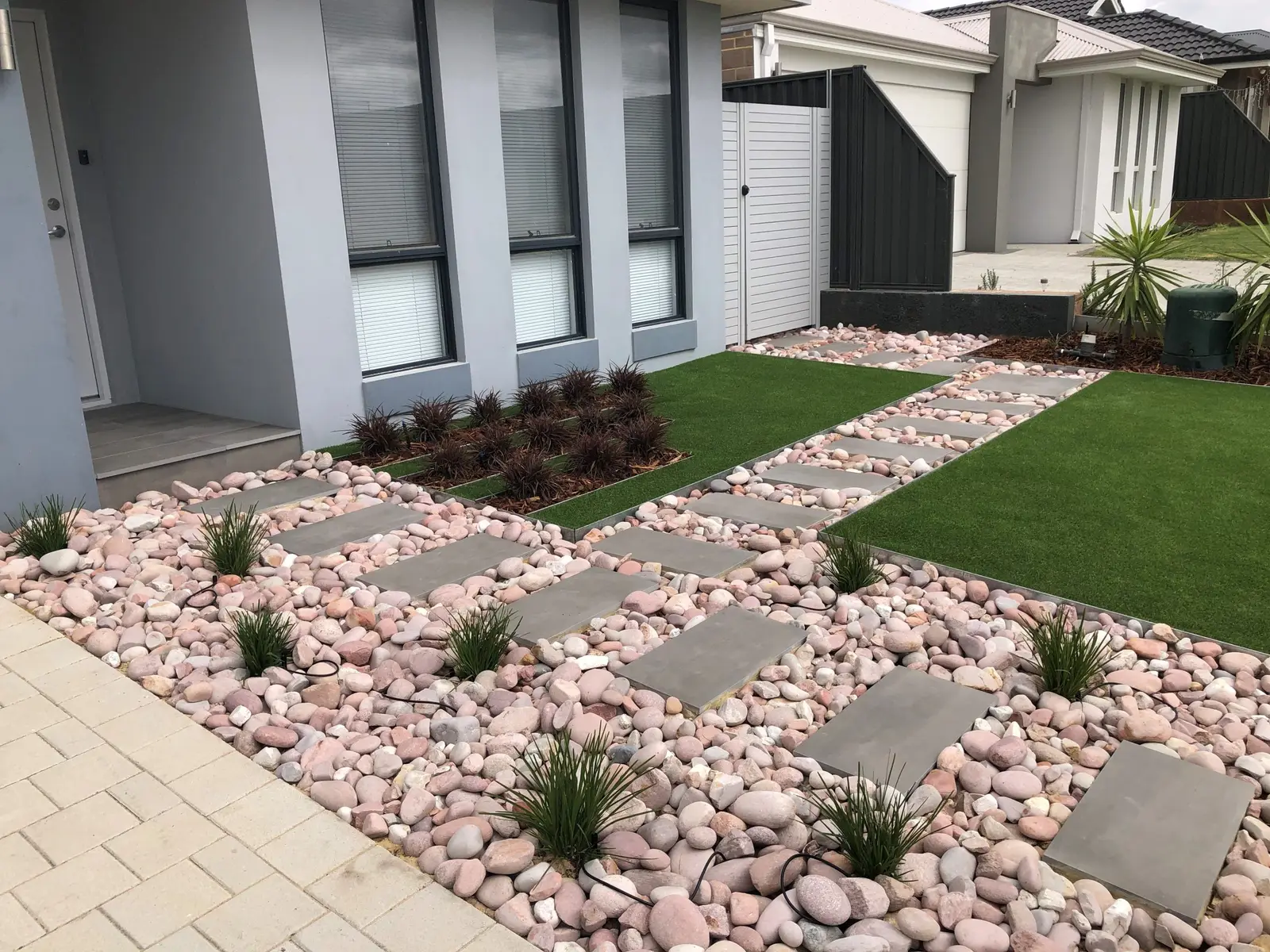
The floor around a cooking area should be non-slip, easy to hose down and not painful to walk on barefoot. Light-coloured pavers or outdoor porcelain are practical choices. For more options, see the guide to patio and paving ideas in Dubai.
Cabinet bodies
Marine-grade materials, masonry or stainless steel cabinet bodies hold up better than ordinary wood or board, which can swell in humid air. Whatever you choose, leave small gaps for ventilation so moisture does not sit inside closed cabinets.
How do you add shade and cover?
Add a roof over at least the cooking and prep zone. Shade protects the cook, keeps counters cooler and extends the number of hours you can use the space. A covered outdoor kitchen also keeps dust and the occasional rain off the equipment.
Common options include:
- Aluminium pergola: low maintenance and does not rot in humid air.
- Louvred roof: the blades open for air and close for shade or a shower.
- Timber pergola: warm in look, but needs regular treatment and should be kept well clear of flame and hot flue gases.
- Shade sail or canopy: a lighter, lower-cost option for seating areas, but not the best choice directly above a grill.
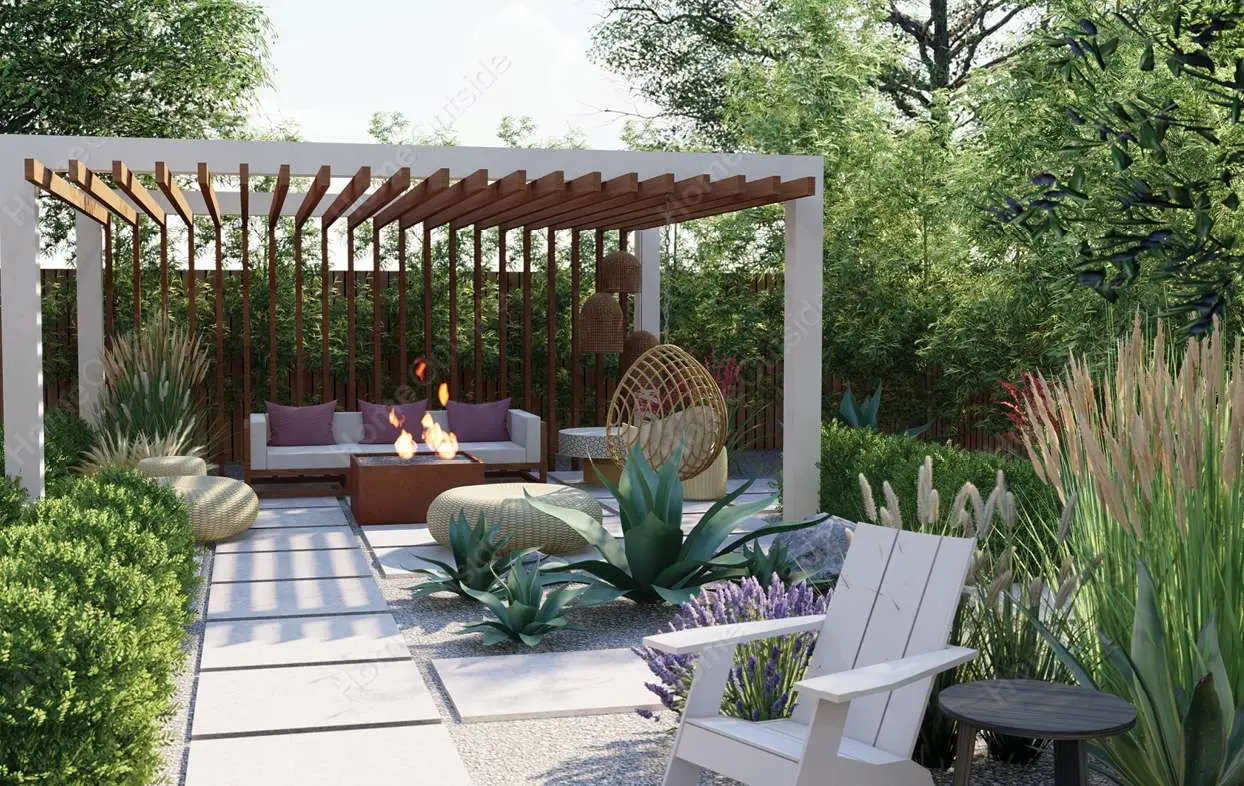
Cooking under any roof needs space for heat and smoke to escape. Place the grill near an open edge of the roof, or choose a design with an open section above the hood. If the cooking area is enclosed on several sides, ask your contractor about an extraction hood and ventilation so smoke and heat can leave, and keep charcoal out of enclosed spaces altogether. The pergola and shade ideas for Dubai villas guide compares these options in more detail, and you can see how the structures are built on the pergolas and shade structures page.
Should you choose gas, charcoal or electric?
Choose the fuel that matches how often you cook, the rules in your community and the space you have. All three can work in Dubai, but each has a different safety and maintenance profile.
| Fuel | Best for | Main limitation |
|---|---|---|
| Gas (LPG or piped) | Quick, controllable weeknight cooking | Cylinder storage and piping must follow safety rules and community guidelines |
| Charcoal | Smoky flavour and high-heat searing | Slow to light, messy ash, and carbon monoxide risk in any enclosed space |
| Electric | Covered or tight spaces and anyone avoiding open flame | Needs a safe outdoor power point and usually sears less strongly |
Gas: check the rules before you plan
Dubai Municipality publishes a technical guideline on LPG cylinders covering storage and handling, aimed mainly at suppliers and workplaces. It is a useful safety reference, but it is not a permit for your villa. Your community developer may add its own rules on cylinders, piped gas and where they can sit.
If you use cylinders, store them upright in a ventilated spot away from direct sun and ignition sources, and buy only from licensed suppliers. If you smell gas, move away from the cylinder and, only if it is safe, close the valve. Then call your gas supplier's emergency line or Civil Defence on 997, as advised in this Gulf News guide to LPG cylinder safety in the UAE. Before you commit to a built-in gas line, confirm what is allowed with your developer and the gas supplier.
Charcoal: keep it in open air
Charcoal produces carbon monoxide, a gas you cannot see or smell. The US Consumer Product Safety Commission warns never to burn charcoal in enclosed areas such as homes, garages or tents (CPSC charcoal safety guidance). In a garden, that means a fully open area, not a closed-in room with a roof and three walls.
Plan a metal bucket or a hole in the counter for cooled ash, and keep a water source close.
Electric: simplest for covered spaces
Electric grills and induction hobs avoid flames and fuel storage, so they suit covered spaces, though you should still check your community rules. You will need a weatherproof outdoor socket, installed by a qualified electrician.
What else belongs in the kitchen: sink, fridge and storage?
Add a sink and a fridge if you plan to cook there more than occasionally. A sink saves trips indoors with greasy tools, and a fridge keeps drinks and marinated food cold when the weather is hot.
- Sink: needs a cold-water supply and a drain. Adding these after paving is complete is much more disruptive than planning them early.
- Fridge: choose a model sold for outdoor use and place it in the shade, since a fridge works harder in high heat.
- Storage: closed, sealed drawers keep dust out of utensils and plates.
- Waste: a built-in bin cabinet helps keep food waste away from insects and birds.
How do you add a fire pit to a Dubai garden?
Treat the fire pit as a separate seating zone, a few metres from the kitchen, on a flat, non-combustible base. A fire pit gives you a place to sit after the cooking is finished, and it keeps the cook's area free of guests standing around.
In Dubai, fire pits are mostly an evening feature from about November to March, when nights are cooler. In summer the heat makes a fire unappealing, though a gas fire table can still work as a lit focal point on a cooler, breezy night.
Base, edging and seating
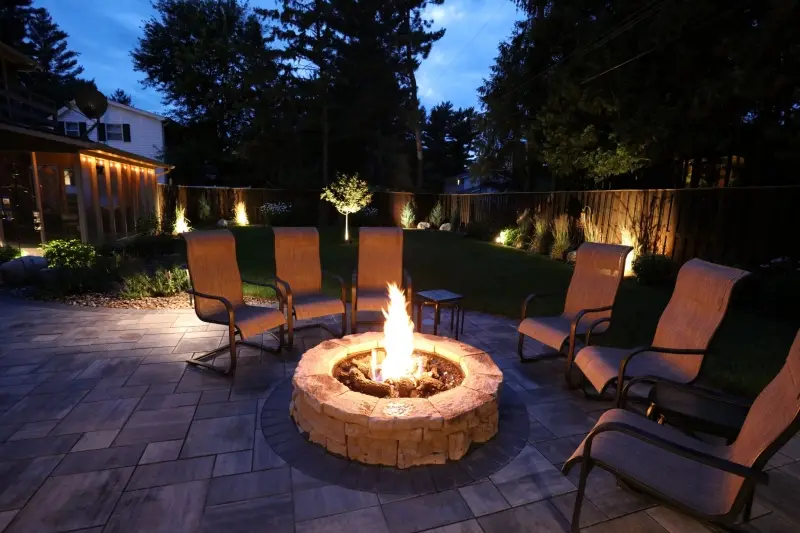
Pavers are a good non-combustible base for a fire pit because they are flat and level. Concrete pavers can crack or spall under direct heat, so line the pit with a steel or fire-rated insert and follow the manufacturer's clearance distances. Then leave a clear paved zone around it. A circular layout makes it easier to arrange built-in benches or movable chairs so people sit evenly around the fire.
For edging, a ring of natural stone or boulders gives a rugged look, while a low block wall or metal edge gives a cleaner, more modern line. Rock and boulder fire pit ideas work best when the stones sit on a level base and are rated for heat, since some natural stone can crack when heated.
For seating, built-in stone benches with cushions stored elsewhere handle sun and dust better than loose furniture. If you prefer fire pit chairs, choose sun- and heat-resistant materials such as powder-coated aluminium frames with outdoor-rated fabric. Low walls around the pit also provide a visual edge for the zone and a little shelter from wind.
Budget and DIY fire pit ideas
A low-cost backyard fire pit can be as simple as a metal fire bowl or a ring of fire-rated blocks on a paved base. DIY fire pit ideas are fine for small projects, but keep them well away from walls, plants and roofs, never use them in an enclosed space, and check your community rules first. For a permanent gas feature or a built-in pit, ask a professional to install it.
Landscaping around a fire pit
- Keep plants, hedges and any pergola roof clear of flames and rising heat.
- Use gravel or paving rather than lawn directly beside the pit, since grass and artificial turf should not sit close to a fire.
- Add low screens or tall planters at the edge for privacy, using plants that tolerate the climate.
Choose between gas and wood based on community rules and how much smoke you can accept. Gas burners start and stop instantly, and a gas tabletop fire table is a compact option for a small patio. Wood fires smell better but need more clean-up. As with charcoal, never use a wood fire in a covered or enclosed space.
How should you light an outdoor kitchen?
Use layered lighting: task lights over the grill and counter, soft lights for walking paths and seating, and a few accent lights to highlight walls or planting. In Dubai you will use the kitchen mostly after sunset, so lighting is a core part of the design.
Place task lights so the cook does not stand in their own shadow, and use warm white bulbs in seating areas so the space feels relaxed. Choose fittings rated for outdoor use so dust and humidity do not damage them. The garden lighting ideas article covers fixtures, placement and safe wiring in more detail.
What drives the cost of an outdoor kitchen in Dubai?
The main cost drivers are the size of the kitchen, the finish of the counter and cabinets, the appliances, the services you need to run, and any roof or shade structure. These factors matter more than the brand name of the grill.
- Size and layout: an island with a bar costs more than a single straight run because it needs more materials and services.
- Materials: 316 stainless steel, porcelain and natural stone are usually priced above basic finishes.
- Services: adding water, drainage, gas and power lines increases groundwork and labour.
- Appliances: a grill, hob, sink, fridge and extraction each add to the total.
- Shade and paving: a pergola and new paving can be a large part of the project.
- Approvals: drawings and a developer NOC take time and may require changes.
For reference, NAM Landscaping's published starting price for supplied and laid hardscape paving is from AED 75 per m², and pergolas start from AED 650 per m². These are indicative starting prices that are confirmed in writing after a free site visit, and a full kitchen is quoted per project.
How do you get an outdoor kitchen built?
Start with a site visit and a clear brief: how many people you cook for, which fuel you want and whether the space needs a roof. A good contractor will measure the space, check the services and give you an itemised quote so you can compare options line by line.
NAM Landscaping handles hardscaping and outdoor upgrades, including paving, seating areas and outdoor kitchens, with an in-house team and a written quote before work starts. If you also want planting or lighting alongside the kitchen, the garden landscaping and lighting service keeps the design in one plan, and a pool can sit under the same contract (see swimming pool construction).
Before you sign off on a design, run through a short checklist:
- Confirm your community's rules on roofs, gas, chimneys and fire pits.
- Pick 316 stainless steel if you are near the coast.
- Place the kitchen in shade and keep flames clear of any roof.
- Plan water, drainage and power before paving starts.
- Allow for task and ambient lighting for evening use.